
Hello from Seoul Newgen Urology Clinic. When flank pain from a urinary stone settles, it is easy to think treatment is finished. But relief from pain and confirmation that the stone is gone are different matters. Here is what is considered when planning the next test and which records to bring.

The photograph of Dr. Ji Hyun Park is an actual photograph owned by the clinic. The cover is AI-generated, and the inline diagrams are explanatory illustrations. They do not depict actual patients, test results, or recovery progress.
No Pain Does Not Necessarily Mean No Stone
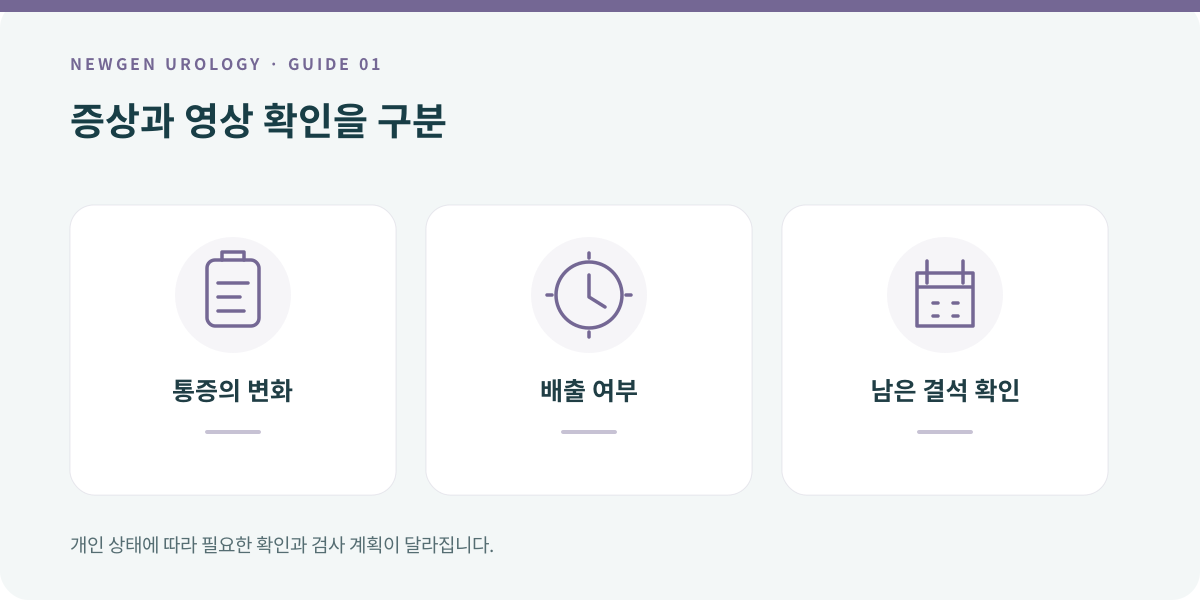
Stones can remain without obvious symptoms. Feeling better after pain medication or experiencing less pain after lithotripsy does not confirm passage. The previous stone’s location and size, treatment performed, and follow-up imaging findings are considered together.
Check your planned follow-up whether or not you saw a stone pass or collected fragments. Other stones may remain even when a fragment has passed. Ask which test or record confirms that the stones are gone.
The Next Test Date Depends on Residual Stones and Risk
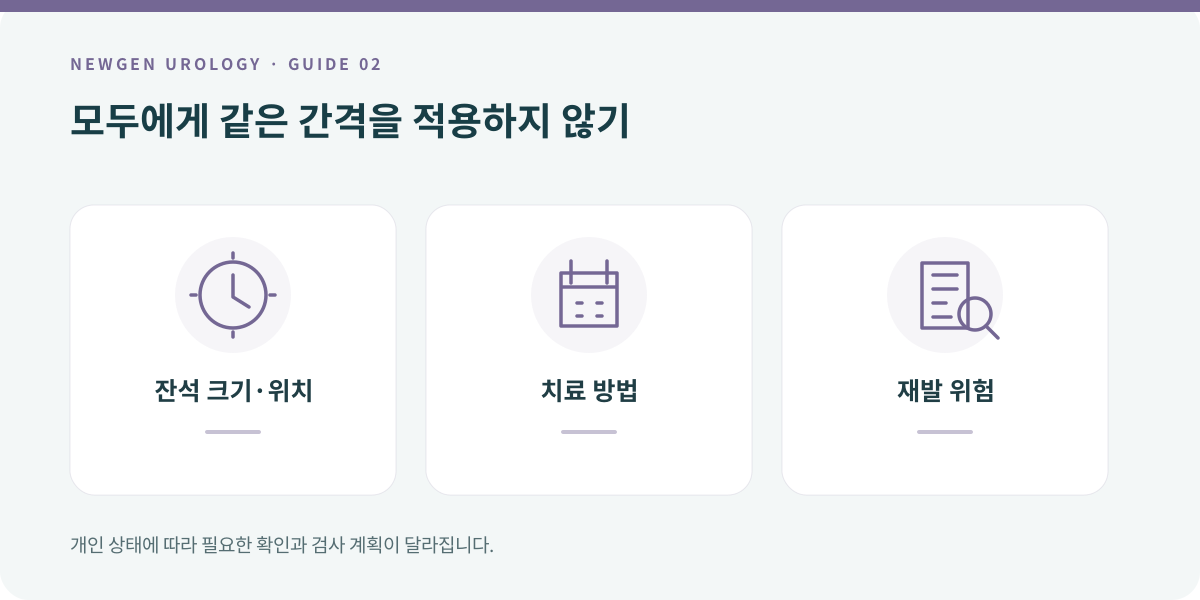
The European Association of Urology explains that there is no single correct follow-up interval after treatment. Plans differ between people who are stone-free on imaging, those with residual fragments, and those with metabolic abnormalities or high-risk stone types.
At the end of treatment, write down the first review date separately from the longer-term plan. If stones remain, ask whether they will be observed or further treatment considered, and which changes would alter the plan. Do not postpone your appointment because another patient was tested several months later.
CT Is Not Needed at Every Follow-Up
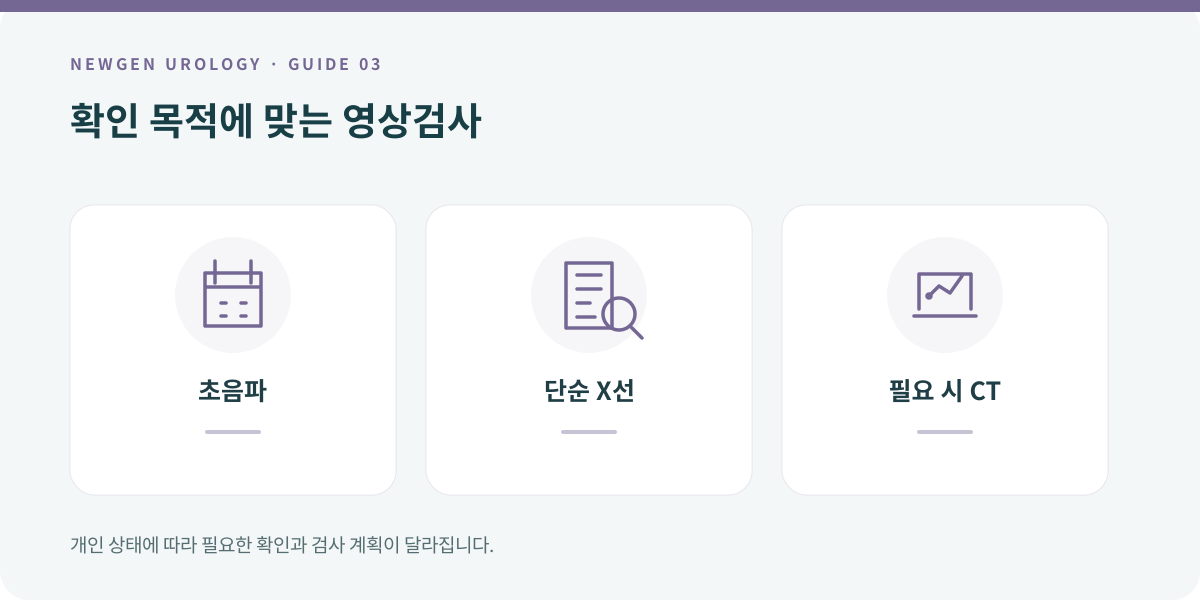
Depending on the stone’s characteristics, follow-up may use ultrasound or plain X-rays. CT may be considered when symptoms or plans for another procedure require more detail. The purpose of testing and radiation exposure both influence the choice.
Ask: “Will this test check residual stones, and will it also assess problems with urine flow?” If previous imaging was performed elsewhere, bring the report and images to help comparison. Follow-up does not always require the same type of scan.
Keep Track of Stent Dates and Stone Analysis Results
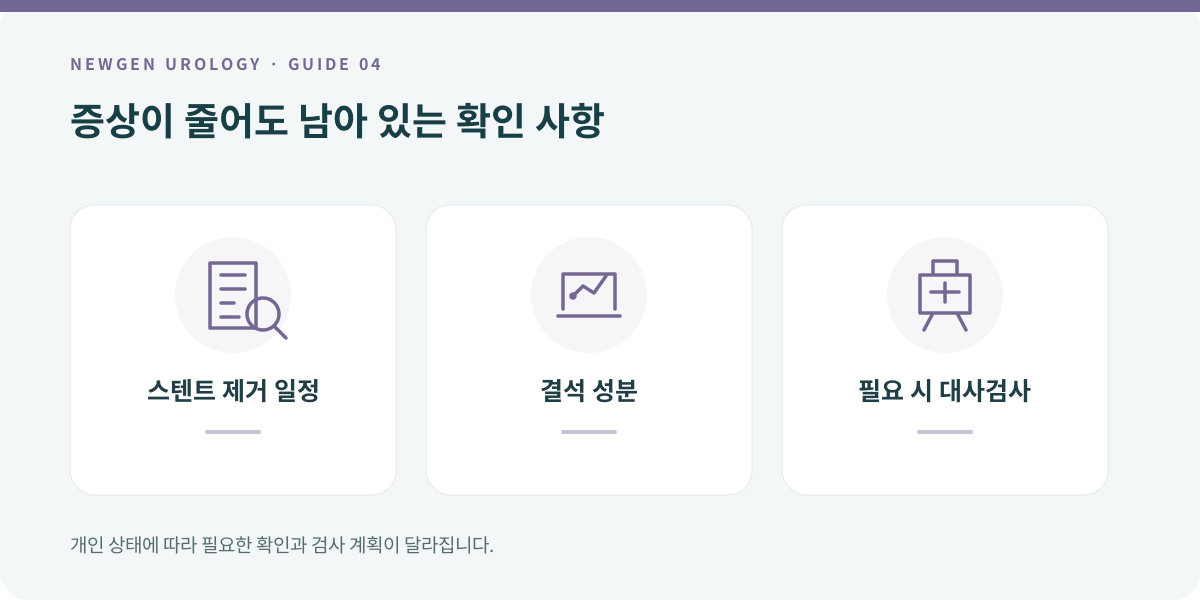
If a ureteral stent was inserted after endoscopic treatment, confirm its removal or replacement plan. Record the date so it is not forgotten when discomfort improves. If you are unsure whether a stent was inserted, check the discharge information or contact the treating facility.
Collected stones or fragments obtained during treatment may help with stone analysis. Depending on recurrence risk and other factors, a 24-hour urine collection and metabolic assessment may be considered. These results help develop an individual prevention plan rather than just a list of forbidden foods.
Do Not Wait for the Appointment if New Pain or Fever Appears
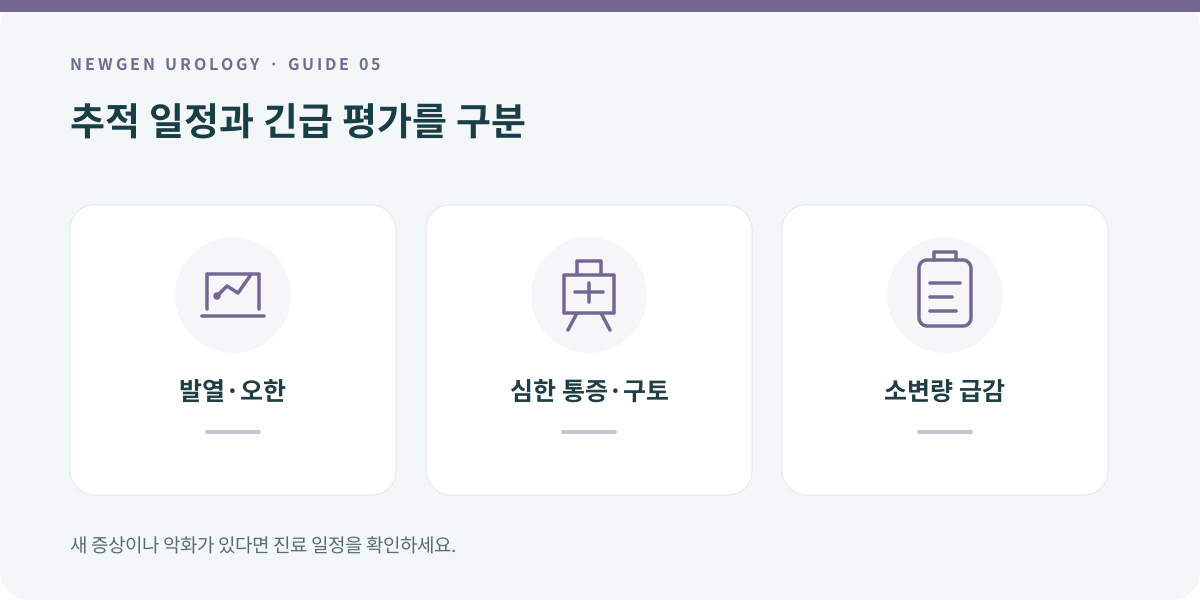
Seek immediate care for renewed severe flank pain after treatment, fever or chills, persistent vomiting, or an inability to pass urine. People with a single kidney should be especially prompt in reporting new symptoms. Drinking large amounts of water and trying to endure the symptoms does not replace assessment.
For your next visit, prepare the treatment date and method, whether a stent is present, previous imaging, and stone analysis results. Three questions can clarify the plan: Are any stones left? When is the next test and what will it check? Are tests for recurrence prevention needed?
For related information, see our guide to fluids and diet for preventing stone recurrence.


