A men’s health checkup before marriage, so-called a wedding checkup, is not a package that performs the same tests for everyone all at once. It is closer to a health examination where necessary items are selected based on current symptoms, medical history, sexual life, and pregnancy plans.
The examination results do not immediately determine whether pregnancy is possible. A semen test shows the condition at the time of collection, and tests for sexually transmitted infections can be interpreted differently depending on the time of infection and the testing method. Therefore, rather than rushing close to the wedding date, it is better to check the results and consult in advance, allowing time for any necessary retesting or treatment.
Things to check first

In the clinic, current symptoms and risk factors are checked before any tests. It is checked whether there is painful urination, urethral discharge, testicular pain or lumps, or changes in erection or ejaculation, and the history of testicular surgery, varicocele, undescended testicles, chemotherapy, diseases accompanied by high fever, as well as medications and supplements being taken, are also reviewed.
If you are planning a pregnancy, the period during which you have tried to conceive without contraception, as well as your partner’s age and health status, are also important information. Sexually transmitted infection tests may be necessary even without symptoms, but not all items apply to every man. Honestly informing your healthcare provider about your personal risks and the timing of possible tests, such as a new partner, past infections, or unprotected sexual contact, helps in selecting the appropriate tests.
What can we find out from each test?
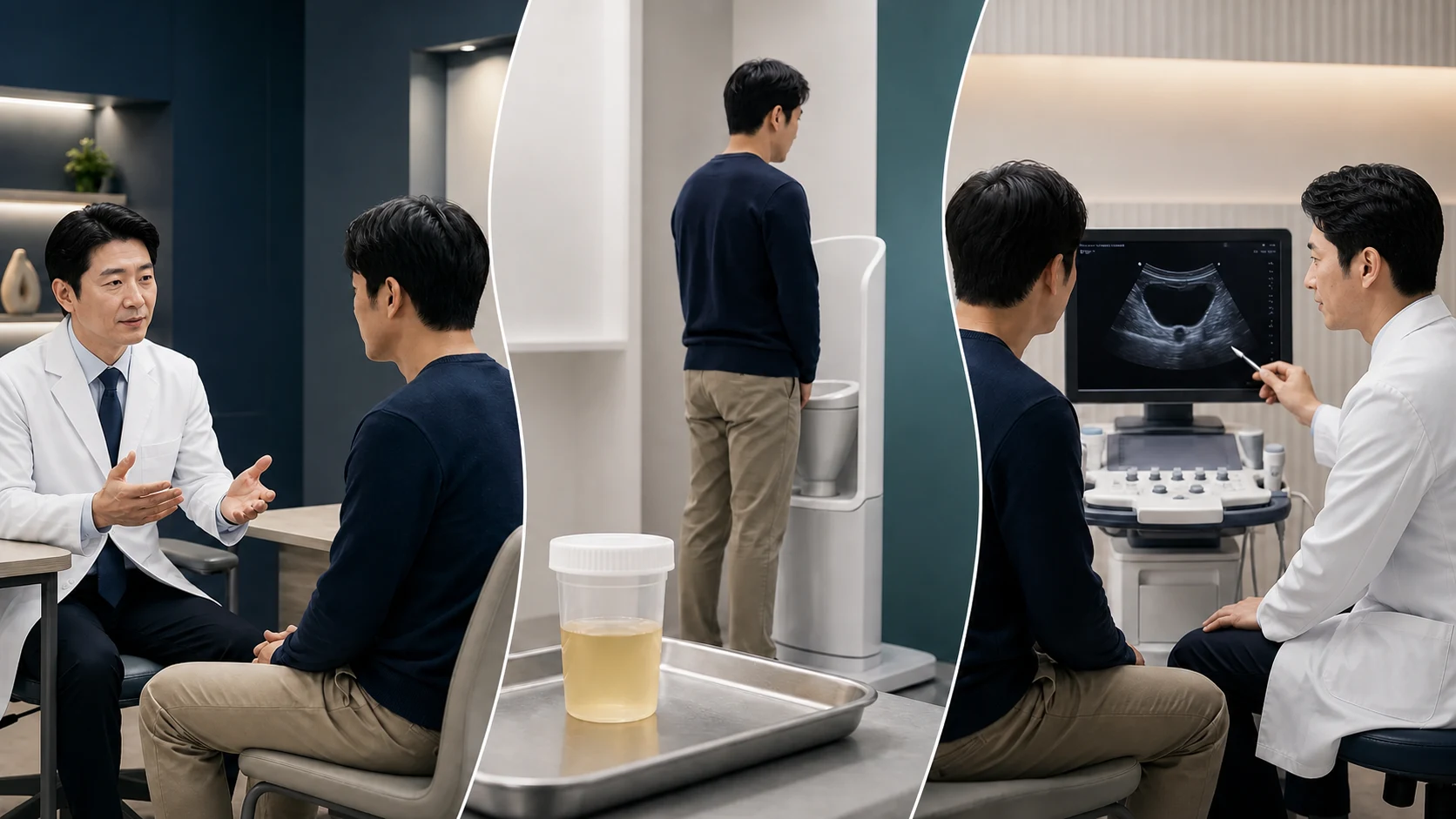
Semen Analysis
Semen analysis is a basic test that evaluates semen volume, sperm concentration, motility, morphology, and other factors. A single abnormal result does not necessarily indicate infertility, and a normal result does not guarantee natural conception. The quality of semen can vary depending on factors such as fever, sleep, stress, abstinence period, and collection conditions, so if there is an abnormality in the first test, a retest after a certain period may be recommended.
Sexually Transmitted Infection Test
Depending on the need, urine, blood, or swab samples are used. The type of test required depends on symptoms, the form of sexual contact, the time of the last exposure, and past infection history. There may be a ‘window period’ immediately after infection during which the test cannot detect it, so it is important to inform the date if there has been recent exposure.
If the test result is positive, treatment and partner testing and treatment, as well as caution with sexual contact before the completion of treatment, may be necessary depending on the type of infection. Conversely, a single negative result does not prevent the possibility of future infections, so you can also receive counseling on vaccination and safe sexual practices.
Hormone and Blood Tests
Testosterone tests are not a mandatory part of every wedding checkup. In medically necessary situations such as decreased libido, changes in erections, changes in testicle size, or abnormal semen tests, total testosterone and related hormones can be checked in the morning. Male hormone deficiency should not be diagnosed or replacement therapy started based solely on fatigue.
Examination and Ultrasound
We examine the size and position of the testes, the condition of the epididymis, and the possibility of varicocele, and perform an ultrasound when necessary. Ultrasound is not a uniformly required test for everyone and is selected appropriately when there is pain, palpable abnormalities, or examination findings.
Preparation Before Semen Test

In the World Health Organization (WHO) testing procedure, it is generally recommended to collect samples after an abstinence period of 2 to 7 days. When making an actual appointment, you should follow the guidelines of the testing institution first.
- Record the abstinence period before collection.
- The specimen is collected in the designated container provided, and lubricants or regular condoms are not used arbitrarily as they may affect the test results.
- If any part of the sample is lost, do not hide it and be sure to report it.
- Inform medical staff if you have recently had a high fever or started taking a new medication.
- Whether it can be collected at home depends on storage methods and transportation time, so check with the testing facility first.
Having had alcohol or staying up all night once does not necessarily invalidate the test, but if your condition was significantly different from usual, please let us know so it can be considered when interpreting the results.
Points Easy to Miss When Looking at Results
Semen test values can fluctuate even within a single person. There is no need to determine the possibility of pregnancy based solely on the first result or to worry by comparing numbers with online reference charts. Medical professionals look at various indicators together and consider medical history and examination findings to decide whether retesting or additional tests are necessary.
The same applies to sexually transmitted infection results. It is more important to know which infection was tested, by what method, and when, than a single sentence saying ‘all wedding checkups are normal.’ You should keep the result sheet and, if there are any abnormal findings, also check whether the treatment has been completed.
Lifestyle Check for Preparing for Pregnancy

- Smoking is not good for sperm health and overall reproductive health, so quitting smoking is recommended.
- Avoid excessive drinking and indiscriminate use of muscle enhancers and male hormones. Male hormones administered externally can actually suppress sperm production.
- Reduce lifestyles in which the testicles are exposed to excessive heat for long periods, and maintain sufficient sleep and regular exercise.
- Instead of arbitrarily taking various types of ‘fertility supplements,’ we check the medications and supplements currently being taken during the consultation.
The purpose of a premarital health checkup is not to earn a perfect ‘pass mark.’ It is an opportunity to understand your current health, begin any necessary treatment or preventive care, and make informed plans as a couple regarding pregnancy and sexual health.
This article is intended to provide general health information and does not replace diagnosis or treatment.