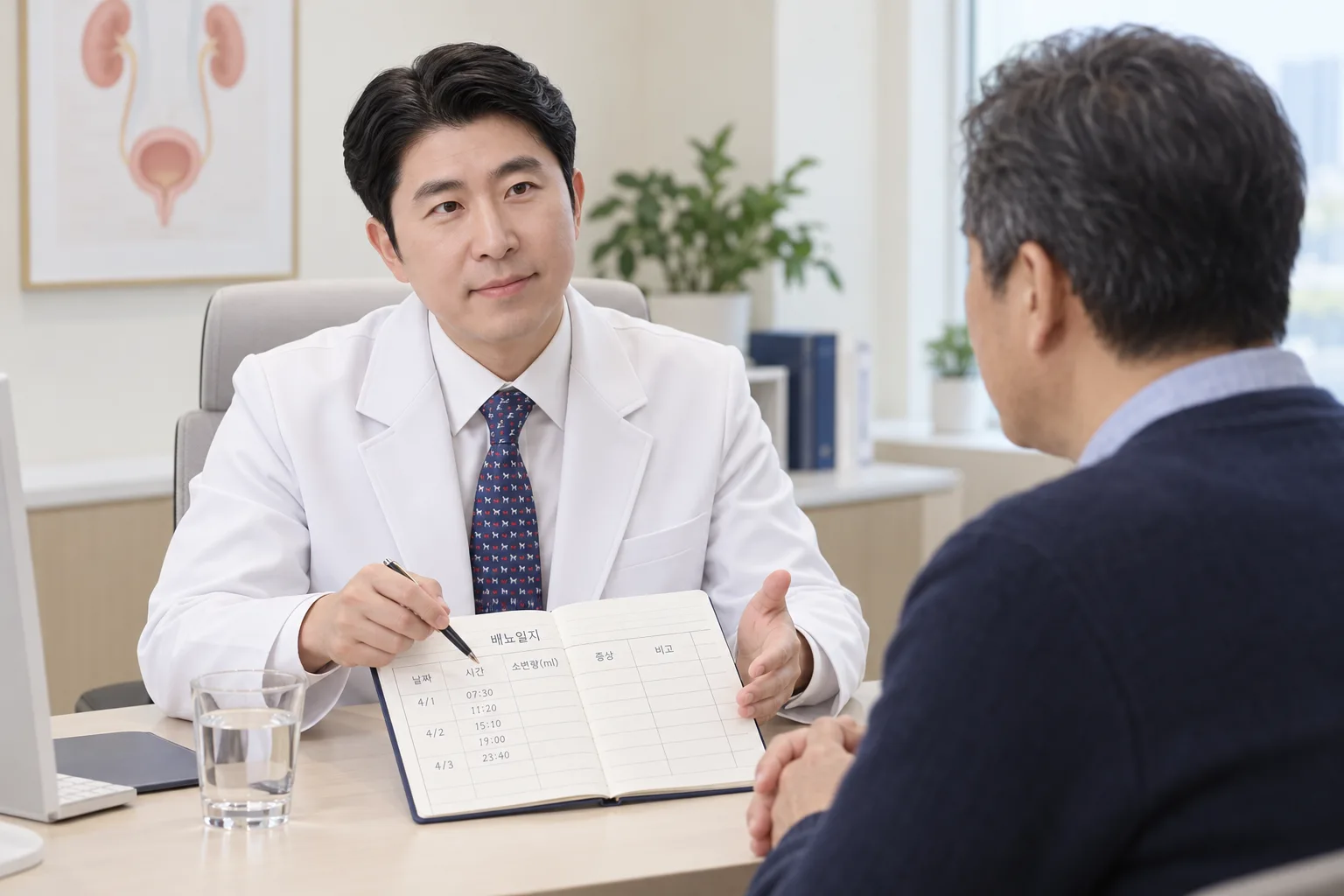
Hello from Seoul Newgen Urology Clinic. Before uroflowmetry, you may wonder how long to hold your urine or how much water to drink. The aim is to assess your usual urination, rather than produce the strongest possible stream. Here is what to expect when preparing for a test near Samseong Station.

The portrait is an actual clinic-owned photograph of Dr. Ji Hyun Park. The cover and section scenes are AI-generated educational images, not actual patients or clinical records. Equipment and props do not represent this clinic’s facilities or specific test results.
Check the instructions instead of drinking a large amount at once
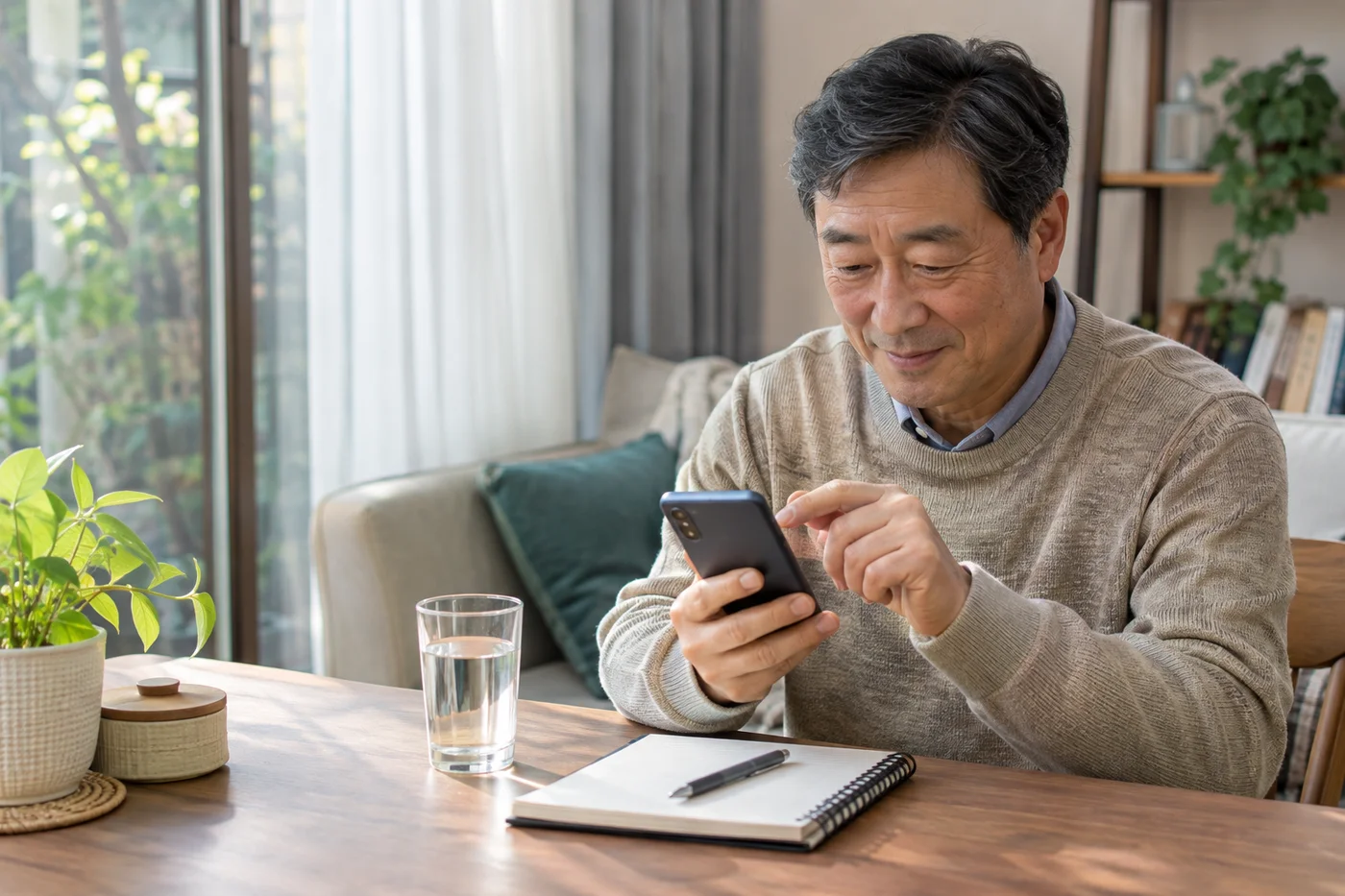
Some urine needs to be in the bladder for the test to represent your usual flow. Ask about drinking and urinating before arrival when you book. Aim to feel comfortably ready to pass urine; this is not a test of enduring painful fullness.
Do not force yourself to drink a large amount quickly or hold urine for hours. Mention any fluid restriction for heart or kidney disease. If you have already urinated or become very uncomfortable before arrival, tell the testing team rather than hiding it.
Pass urine normally without straining
Uroflowmetry records the amount passed, speed, duration and pattern of urine flow as you urinate into a special device. Routine uroflowmetry itself is non-invasive and does not require a tube in the urethra. Ask how it differs from other tests that measure bladder pressure.
Use the instructed position and urinate as you normally would. Do not deliberately push with your abdomen or stop the stream. Tell the team if anxiety prevents you from urinating or some urine misses the device. These circumstances matter when interpreting the result.
A bladder scan may follow immediately afterwards
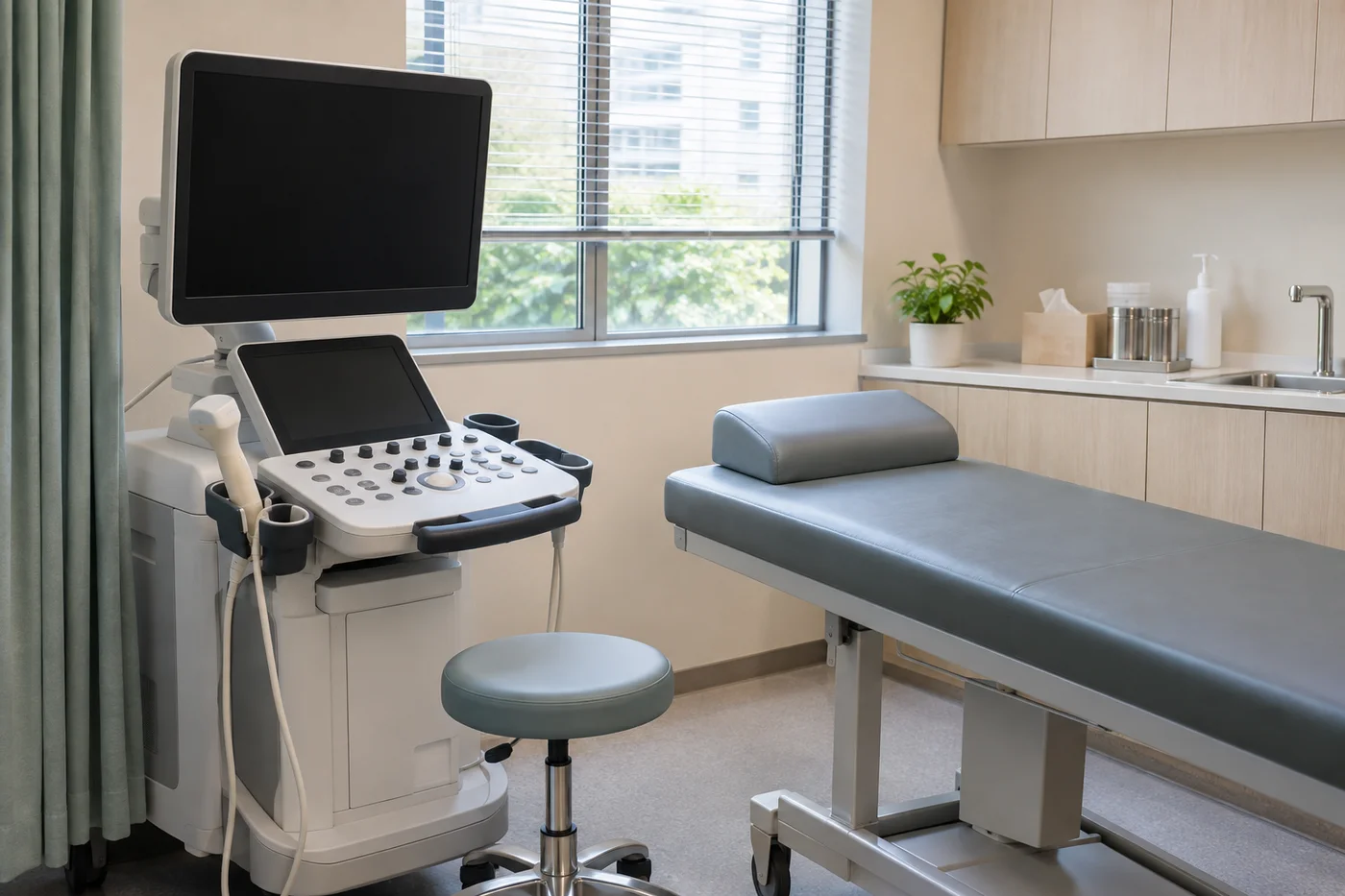
After the flow test, an ultrasound over the lower abdomen may check how much urine remains in the bladder. Ask beforehand where to wait after urinating, as the measurement follows voiding. The feeling of incomplete emptying may differ from the amount actually left behind.
Report any pain or discomfort during the test. Flow and residual volume provide complementary information, but a high or low number alone does not determine treatment. Your usual symptoms, urine testing and other findings also need consideration.
A small or unusual void may need repeating
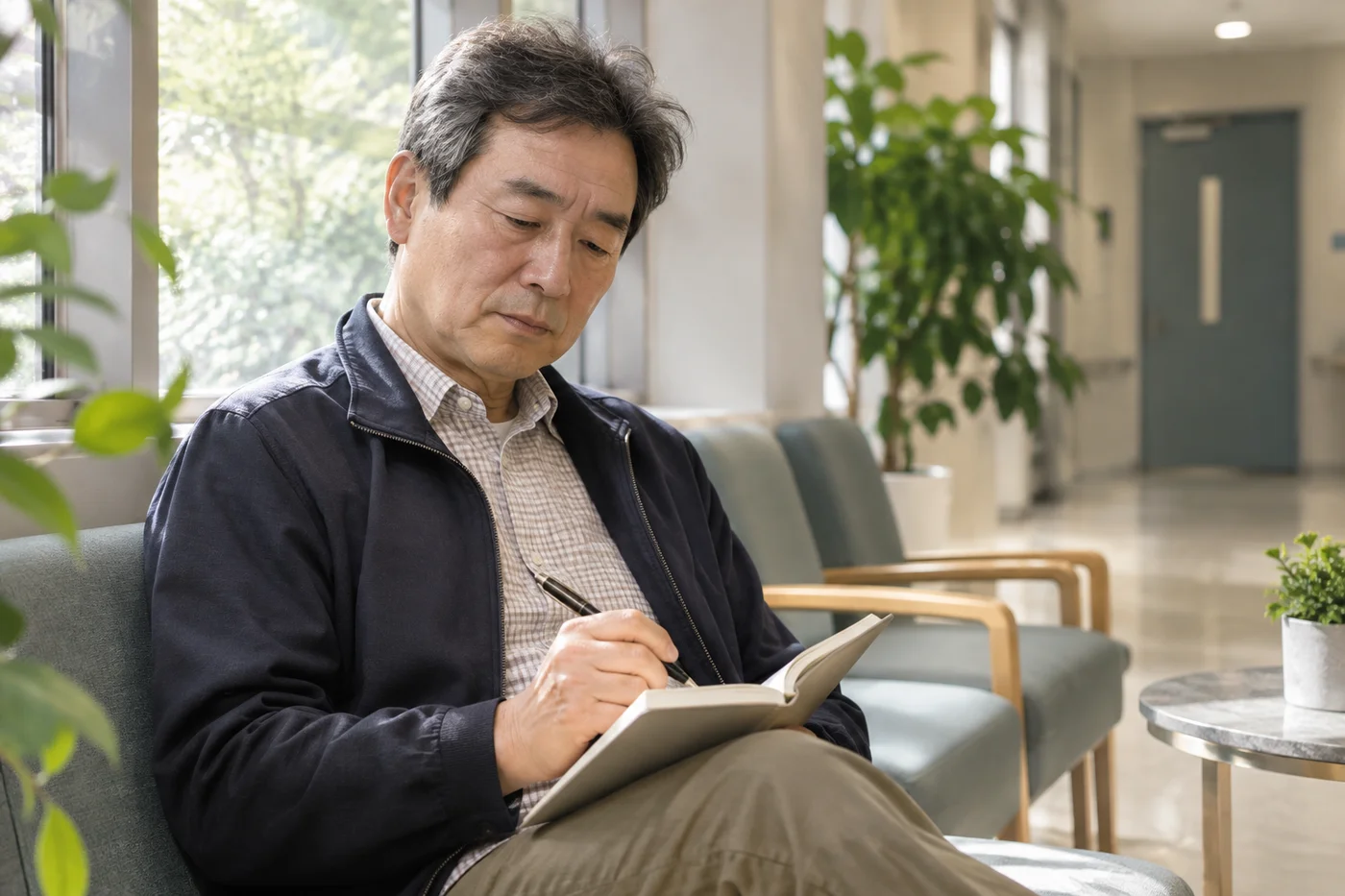
An underfilled bladder or anxiety may produce a stream weaker than usual. Repeat testing can help when the amount passed is small or the result does not match everyday urination. Waiting for the bladder to refill may take time. A repeat test does not by itself mean a condition has worsened.
Low flow can reflect an obstruction, bladder muscle function or other factors. Uroflowmetry alone cannot confirm an enlarged prostate or establish the need for surgery. Describe honestly whether the recorded void felt similar to what happens at home.
Report urgent symptoms before a routine appointment
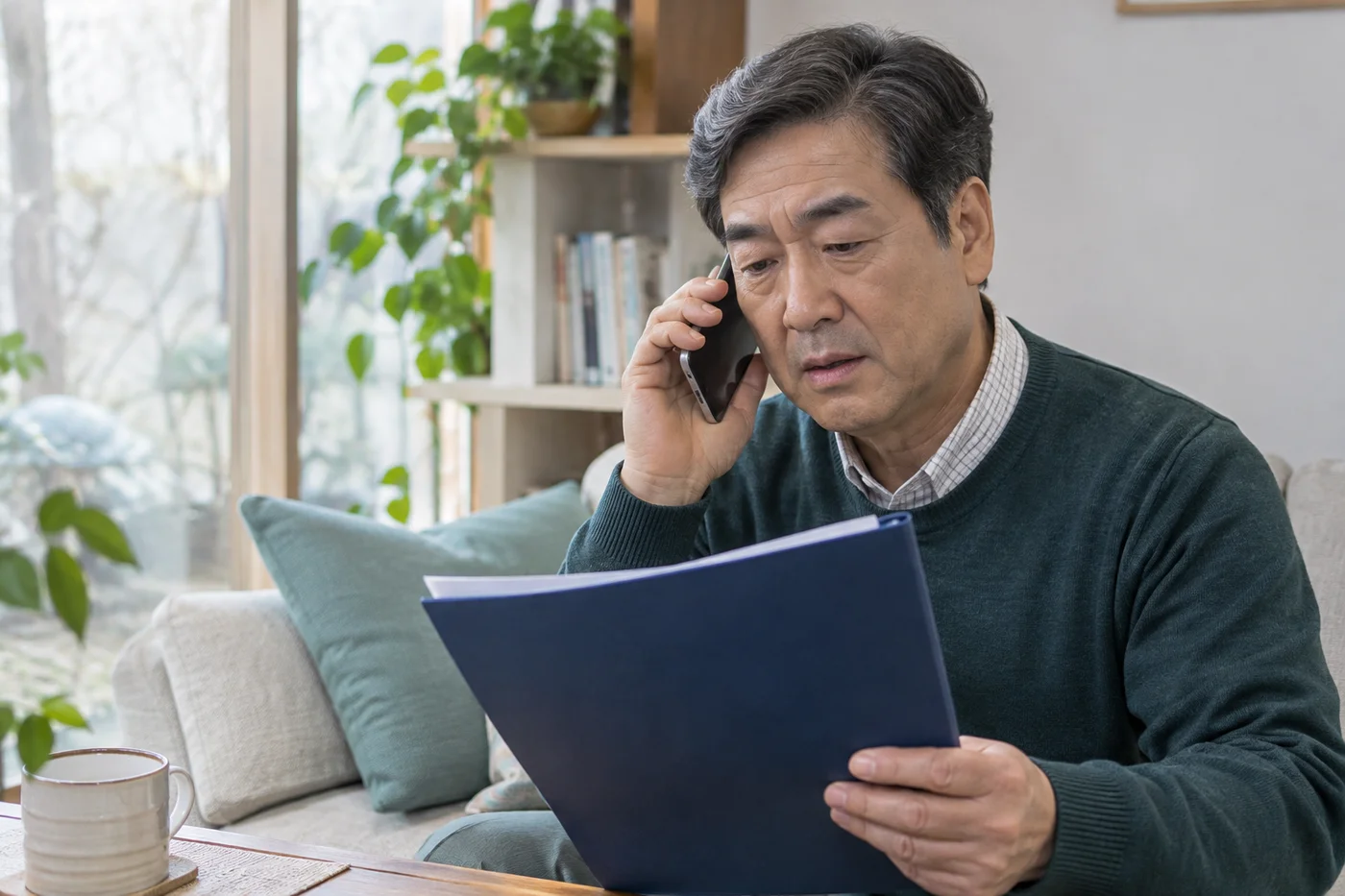
If you cannot pass urine at all and your lower abdomen is painfully full, seek immediate care instead of holding on for the test. New fever, chills, severe pain or visible blood in urine also warrant contacting a medical service rather than waiting for the scheduled test.
Bring a medicine list, symptom notes and previous results. Do not decide on your own to stop medicine before testing. When discussing the result, ask whether it represented your usual void, what it means alongside residual volume and whether any further assessment is needed.
Related reading: Samseong-dong Urology Clinic: Testing for Incomplete Emptying and a Weak Urine Stream