
Hello from Seoul Newgen Urology Clinic. Before a fertility semen test, you may wonder how many days to abstain or what to do if part of the sample is spilled. Collection conditions can influence the measurements. These five points cover preparation through discussion of the result.

The portrait is an actual clinic-owned photograph of Dr. Ji Hyun Park. The cover and section scenes are AI-generated educational images, not actual patients or clinical records. Equipment and props do not represent this clinic’s facilities or specific test results.
Follow the laboratory’s abstinence instructions

For fertility semen analysis, instructions commonly call for two to seven days without ejaculation, but laboratories may recommend a narrower interval. Confirm the exact interval when booking and record the date of the last ejaculation. A longer period is not automatically better.
If you could not follow the interval, ask beforehand rather than changing the date on the form. Similar collection conditions can help compare repeat samples. Testing after vasectomy to confirm that contraception can stop has a different purpose and schedule; do not assume the appointments are interchangeable.
Collect the whole sample in the specified container
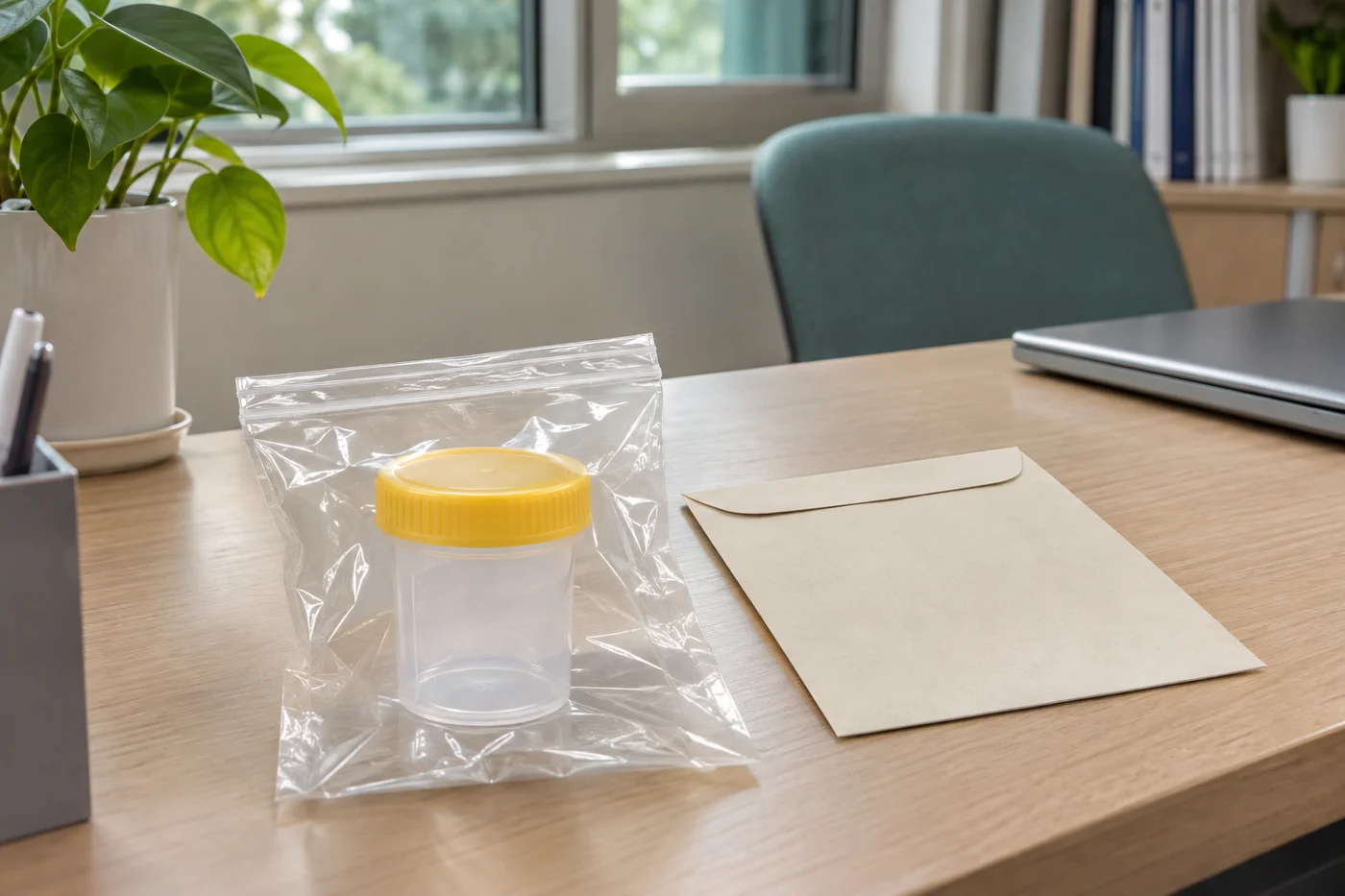
Use the container supplied or approved by the laboratory and follow hygiene instructions, including washing. Ordinary lubricants or condoms can affect the sample, so do not use them independently. If collection is difficult, ask the laboratory beforehand about acceptable alternatives.
Report any portion that was lost, including whether the first part was missed. Do not scrape spilled material from another surface or mix contents from another container to make up the volume. The testing team can advise whether another sample is needed.
Confirm transport arrangements before collecting at home

Check whether home collection is permitted. A laboratory specifies the delivery interval and transport conditions; do not assume you can bring a sample to any nearby clinic at any time. Record the collection time and deliver it to the specified location.
Follow the temperature instructions rather than refrigerating, heating or leaving the sample in direct sunlight. Tell the team if delivery was delayed or collection was difficult. Accurate information is more useful than concealing a departure from the instructions.
A single normal or abnormal label does not decide fertility
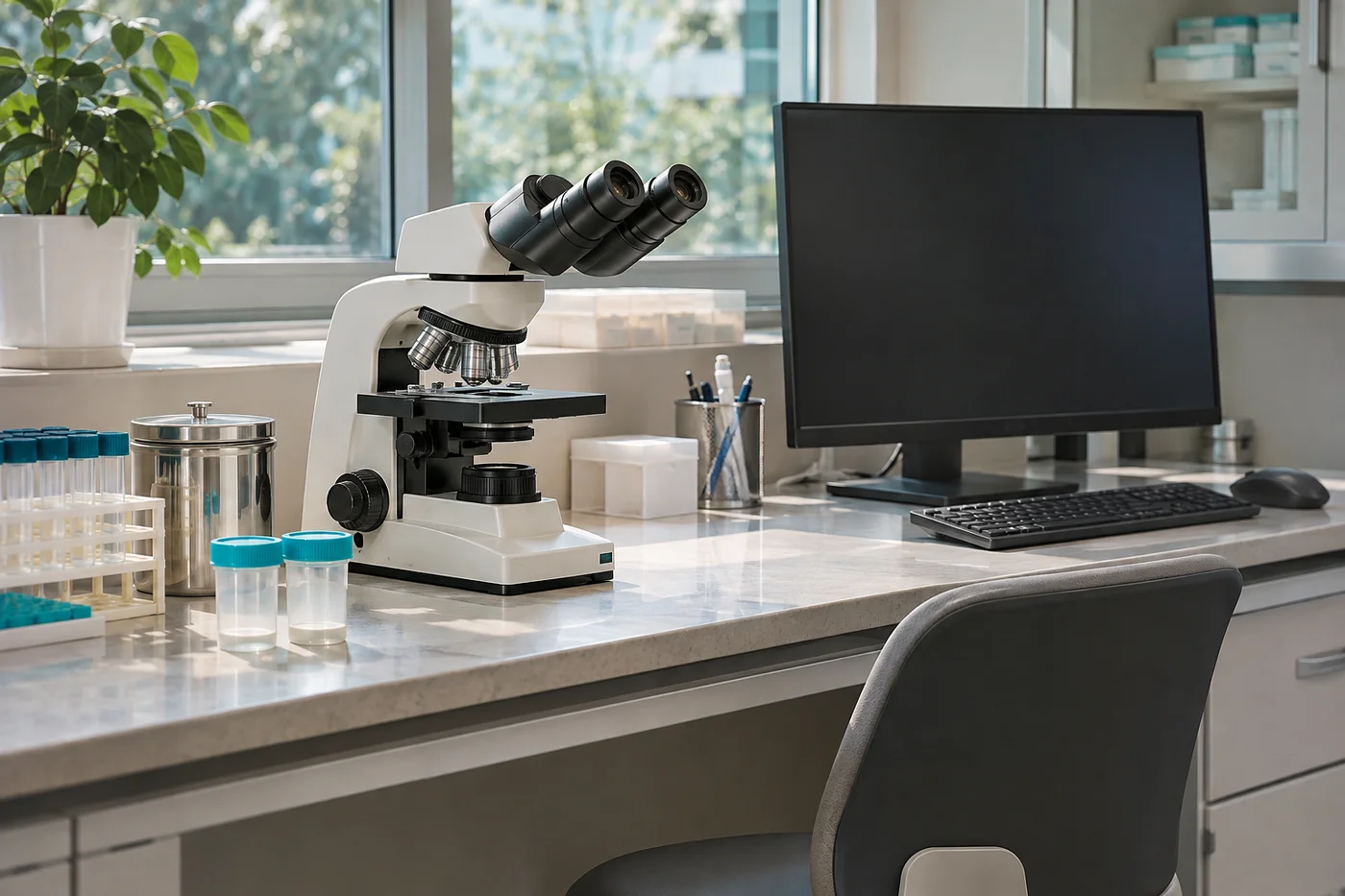
Semen analysis considers volume, sperm concentration and total number, movement and shape together. Reference ranges help interpretation, but no single parameter is a dividing line between being able and unable to conceive naturally. Normal values do not guarantee pregnancy.
Equally, a low first result does not by itself establish permanent infertility. Discuss recent fever or illness, medicines and hormone use, and collection conditions. If no sperm are found or a marked abnormality is reported, obtain an explanation and an assessment plan rather than simply waiting on your own.
Plan repeat testing with comparable conditions

Semen measurements can vary between samples, so an abnormal first analysis may lead to another test. Timing depends on the degree of abnormality, recent illness and the purpose of assessment. Confirm your own plan rather than applying an interval found online.
Bring previous results, abstinence duration, collection time, any lost portion, recent fever and medicine records. Do not independently start testosterone or anabolic steroids, which can affect sperm production. The couple’s time trying to conceive and the partner’s assessment also help determine the next step.
Related reading: Premarital Men”s Health Checkup: What to Consider in Samseong-dong