
After a sexual contact that worries you, a negative test result can make you want to relax. But understanding that result requires first checking which infection was tested for, at which site, and how long after exposure.
If you are looking into STI testing in Yeoksam-dong, check the specimens and repeat-testing plan appropriate to your situation rather than comparing only the largest panels or fastest tests. Sexually transmitted infections can be present without symptoms, and testing too early may miss an infection.
If you are concerned about HIV exposure and fewer than 72 hours have passed, seek an immediate assessment for preventive treatment rather than waiting for the ideal testing time. Time matters, so contact a nearby emergency department or infectious diseases service right away. CDC guide to post-exposure prophylaxis
The images are AI-generated to aid understanding. Scenes featuring a doctor were recreated using a photograph of Medical Director Ji Hyun Park as a reference; they are not photographs of actual patients or clinical encounters.
1. Why the Date of Sexual Contact and the Test Date Must Be Considered Together

The time between infection and when a test can detect it is commonly called the window period. This varies with the infection and testing method. There is no single day after sex on which testing can settle every STI question.
Even for HIV, there are differences. The usual detection windows described by the CDC are listed below. These ranges are specific to the different HIV tests and cannot be applied directly to other infections.
| HIV test method | Usual detection window after exposure |
|---|---|
| Laboratory antigen/antibody test using blood from a vein | 18–45 days |
| Rapid antigen/antibody test using finger-stick blood | 18–90 days |
| Antibody test | 23–90 days |
| Nucleic acid test | 10–33 days |
A negative result during the window period may require repeat testing according to the test method. Testing on the earliest possible date does not mean all infections can be ruled out that day. If you have used antiviral preventive medication or had another exposure, tell your healthcare team so that they can provide an individual schedule. CDC guide to HIV testing
For your consultation, note the date of the last contact that concerns you, previous test dates and types, and whether there has been further contact since then. If you only remember “sometime last month,” say that you are unsure. Conveying what you actually know is better than filling in dates by guessing.
Waiting for the right testing time is different from postponing care. If you have symptoms or learn that your partner has an infection, consult first and plan separately for the assessment needed now and repeat testing later.
2. A Urine Test Does Not Check Every Site
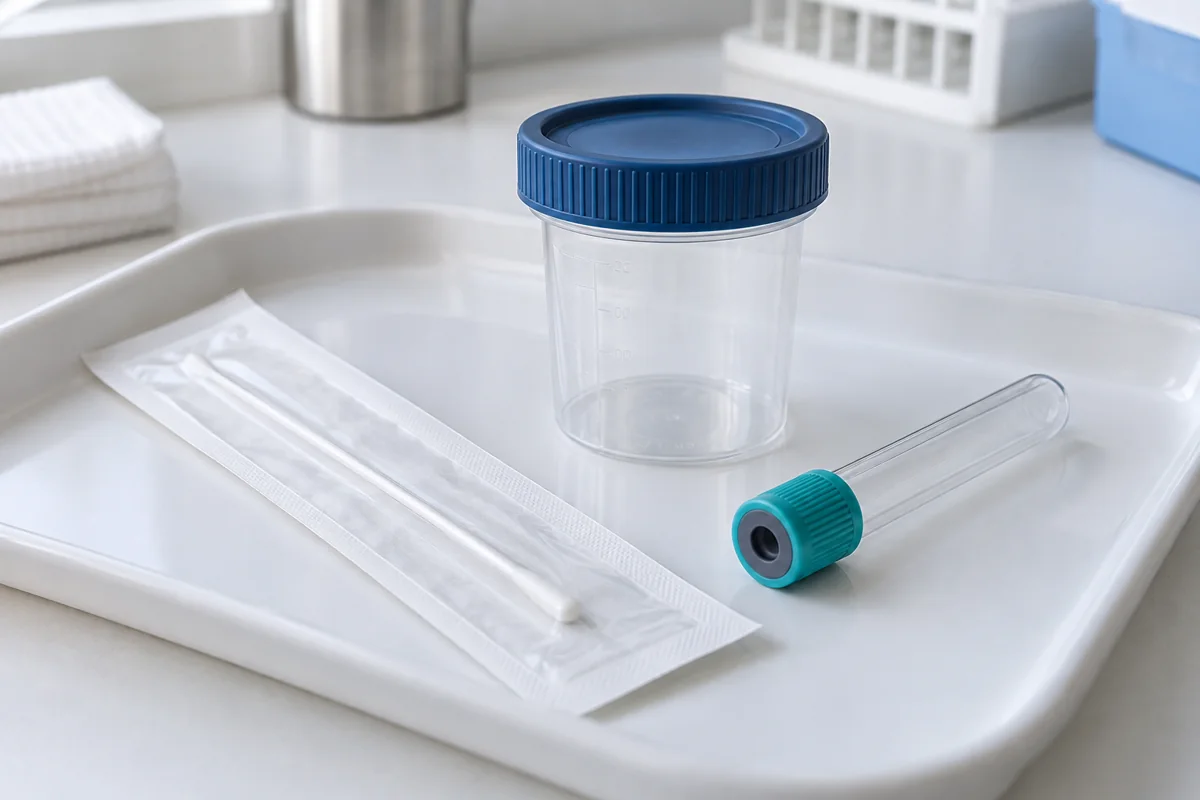
Testing may use urine, blood, or swab samples. The specimen needed depends on the suspected infection and the site of exposure. If there was oral or anal contact, discuss whether throat or rectal testing is needed. Having a urine test does not mean infections at all other sites have also been checked. CDC guide to STI testing
For example, panels with the same number of items may test for different infections or sample different sites. Rather than judging by the name “comprehensive testing,” check the included infections, specimen types, and how results will be explained.
| What to discuss | Why it helps clinical decisions |
|---|---|
| Date and type of contact | Helps determine test timing and sites |
| Condom use and whether it broke | Helps assess the exposure circumstances |
| Changes such as painful urination, discharge, or ulcers | Identifies the need for symptom-based examination and testing |
| Previous results and treatment history | Helps interpret new tests alongside earlier results |
| Recent antibiotics or preventive medication | Informs testing and follow-up plans |
These questions are intended to avoid missing necessary tests, not to judge your private life. If explaining verbally is uncomfortable, you can provide notes or ask to speak privately in the consultation room. When booking, also check how you will receive the results.
Follow the testing facility’s instructions on whether to avoid urinating before collection and whether other preparation is needed. Do not apply preparation instructions for a different test found online, or stop prescribed medicine yourself because you worry it might affect testing.
3. Both Negative and Positive Results Have Next Steps

A negative result means the test performed did not detect an infection. It should not be interpreted more broadly as resolving the window period, untested sites or infections, or new exposures after testing. If uncomfortable symptoms continue, take your negative result for another assessment.
A reactive or positive HIV screening result may require confirmatory testing. Rather than deciding the result yourself or dismissing it after one different rapid test, it is important to complete the recommended follow-up tests. CDC guide to interpreting HIV results
When an infection is confirmed, you will receive guidance on treatment, whether partners need testing or treatment, how long to avoid sexual contact, and when follow-up testing is needed. These criteria differ by infection, so do not decide for yourself that one day of medication is enough or that treatment is finished because symptoms have disappeared. Using leftover antibiotics or someone else’s medicine is also inappropriate. CDC guide to sexually transmitted infections
When your results are explained, it helps to write down each of the following:
- Infections tested for and sites sampled in this round of testing
- What can be determined from the current results
- Reasons and dates for additional or repeat tests
- Medication directions and precautions about sexual contact if treatment is needed
- What information to share with partners and what assessment to recommend
If you were tested because urination stings but infection tests are negative, other causes may need assessment. Refer to Causes of painful urination and the order of testing, and bring both your results and a description of current symptoms to the consultation.
4. Situations That Should Not Wait for a Test Appointment

HIV post-exposure prophylaxis, abbreviated PEP, means using medication to prevent infection after a possible exposure. It must be started within 72 hours of exposure, and sooner is better. This does not mean waiting until the full 72 hours have passed. Clinicians assess eligibility based on the circumstances of contact and other factors. CDC guide to PEP
Assessment for preventive treatment may be needed even when testing cannot yet detect infection. In some situations, starting should not be delayed while awaiting results. It is not automatically prescribed for every contact, but avoid missing the assessment window while calculating the risk yourself. The testing schedule after preventive medication requires separate guidance rather than relying only on a general window-period table. CDC clinical guidance for PEP
Even after 72 hours, consultation is not pointless. Discuss the tests needed now and future prevention plans. If repeated exposure is a concern, future preventive options can also be addressed.
Also, sudden severe testicular pain requires emergency assessment rather than waiting for an STI testing appointment. Causes other than infection may require rapid treatment. NHS guide to testicle pain
Availability of routine outpatient testing and emergency preventive treatment may differ. In a time-sensitive situation, immediately contact a nearby emergency department or infectious diseases service to be directed to an appropriate provider.
5. Frequently Asked Questions Before Testing

Can I have an infection without symptoms?
Yes. Many sexually transmitted infections can be present without symptoms. Looking healthy or feeling no discomfort does not rule out infection. Whether testing is needed depends on exposure circumstances, previous testing, and other factors considered together. CDC guide to sexually transmitted infections
If there was only oral contact, is testing unnecessary?
Some infections can be transmitted through oral contact. Risks differ by infection, so describe the contact and symptoms and discuss which sites to test. Oral contact alone does not mean that all infection risks are equal or that all risks are absent. CDC guide to oral contact and infection risk
Does a larger testing panel mean more reassurance?
The number of items alone does not determine whether testing is appropriate. What matters is checking the relevant infections at the right time using samples from the appropriate sites. Plan both how to receive results and how to have them explained.
Do I need to visit with my partner?
You can begin a consultation on your own. If an infection is confirmed, obtain separate guidance on the assessment and treatment your partner needs. If you are considering a premarital checkup, Items to review in a men’s health checkup may help, but a general checkup and infection assessment after a specific exposure have different purposes.
The key points to note before booking are the contact date, sites of contact, current symptoms, and previous tests and medications. Using these four points to distinguish tests needed now from those needed later lets you make a plan suited to your situation instead of interpreting a negative result vaguely.