
When your nose is runny and blocked, you may reach for a familiar combination cold medicine. But if you usually have a weak urinary stream or receive treatment for an enlarged prostate, tell the clinician or pharmacist about your urinary condition before choosing a product.
This does not mean avoiding all cold medicines. It means asking which ingredients are included and what needs checking for your health. Bringing the medicine box and your current medication list makes the discussion more specific.
The cover and inline images are AI-generated to aid understanding. Consultation scenes do not show actual patients or real clinical records. Props and educational models are illustrative and do not represent a specific device or test result.
Check the Ingredients Rather Than Only the Product Name
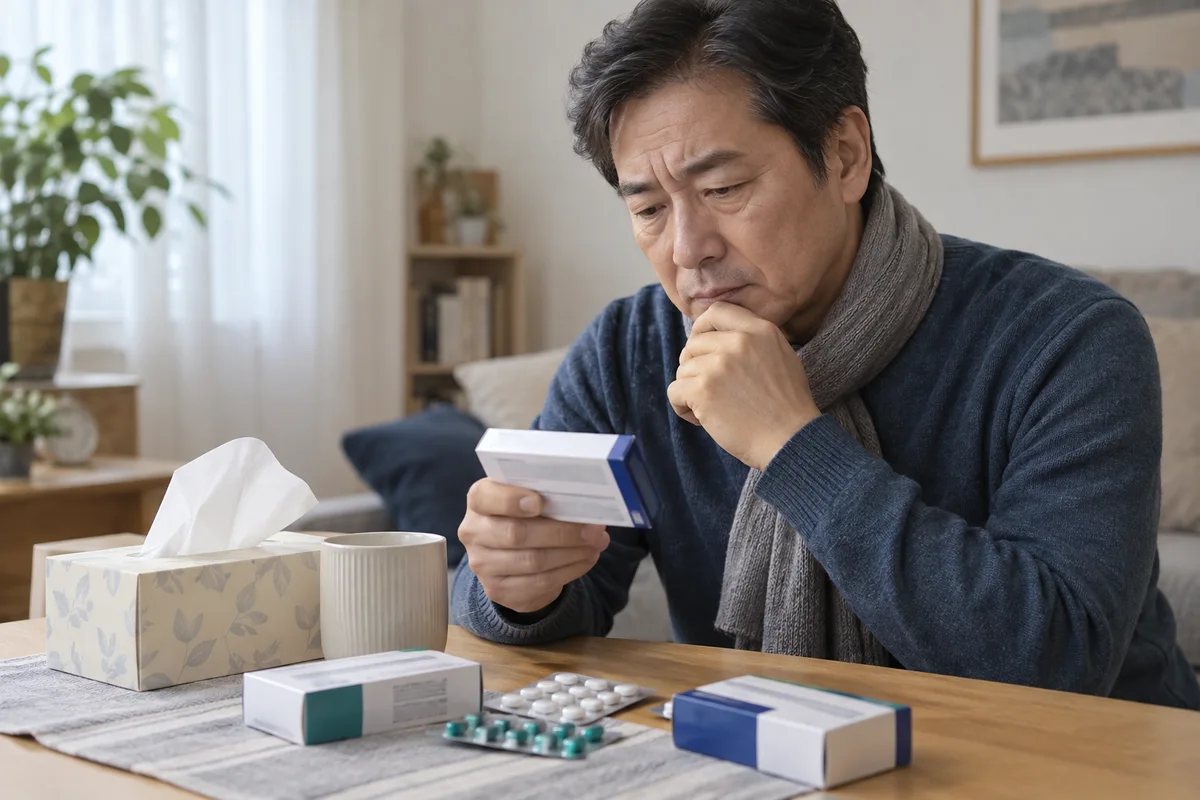
Combination cold remedies may include several ingredients to address different symptoms. Formulations can differ even within the same product range, so a familiar name alone is not enough to judge suitability. Show the packaging or leaflet and ask whether it can be used with your current urinary symptoms.
Some decongestants and antihistamines can worsen urinary difficulties in people with an enlarged prostate. Decongestants reduce nasal blockage, while antihistamines are used for symptoms such as allergies. Not every ingredient has the same effects or risks. NIDDK guide to benign prostatic hyperplasia
Ask, “I take prostate medication; is this cold remedy suitable too?”, and show the carton and prescription list. If product names are difficult to remember, you can bring photographs. When using two cold medicines together, also check for overlapping ingredients.
Medication Can Add to Problems in an Already Narrowed Urinary Passage
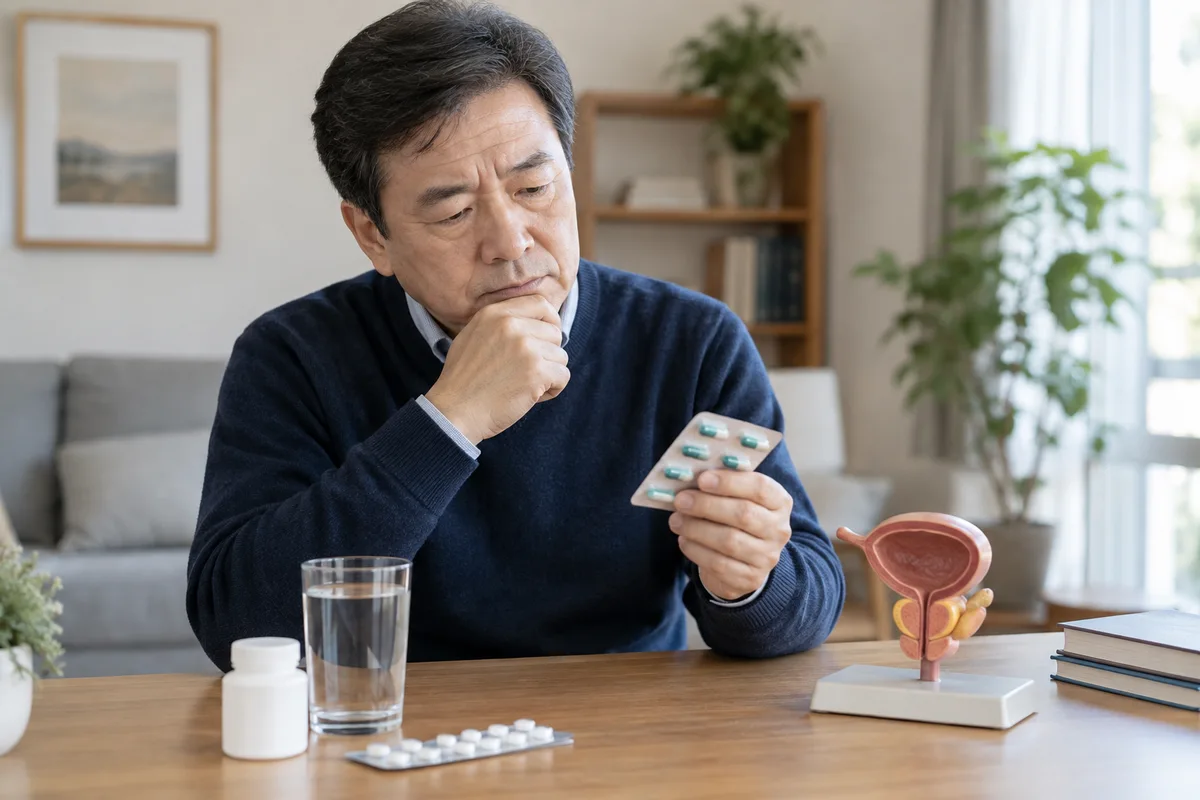
Benign prostatic hyperplasia is enlargement of the prostate that can affect urination. A weak stream, difficulty starting, or a feeling of incomplete emptying may occur. Some medicines affect the bladder and urinary passage and can contribute to urinary retention. NIDDK guide to causes of urinary retention
This does not mean everyone who takes cold medicine will be unable to urinate. Existing symptom severity, previous retention, medication type, and other individual factors matter. Prostate size alone also does not determine whether a particular medicine can be used.
If you usually have a weak stream or incomplete-emptying sensation, mention it during a cold consultation too. Knowing that you receive urology care helps other clinicians and pharmacists choose medications. If a new urinary change develops, do not dismiss it as age; explain new medicines and when you started them.
Share These Four Pieces of Information During the Consultation

Tell your clinician or pharmacist about current medications, usual urinary symptoms, when you started the cold medicine, and any previous urinary retention. Include over-the-counter medicines and supplements as well as prescriptions. If you do not know the ingredients, bring the packaging.
Even if your current prostate medicine is working well, a new cold medicine still needs a suitability check. Conversely, do not stop your existing prescription because you fear urinary problems. Discuss medication changes with your treating clinician. NIDDK guidance on preventing urinary retention
A short note is enough. Examples include “It usually takes time to start urinating,” “I began a new cold medicine yesterday,” and “The stream is weaker today.” Describing urinary changes as well as cold symptoms makes it easier to discuss medicine selection and further assessment.
Record Medication Timing When New Urinary Changes Appear
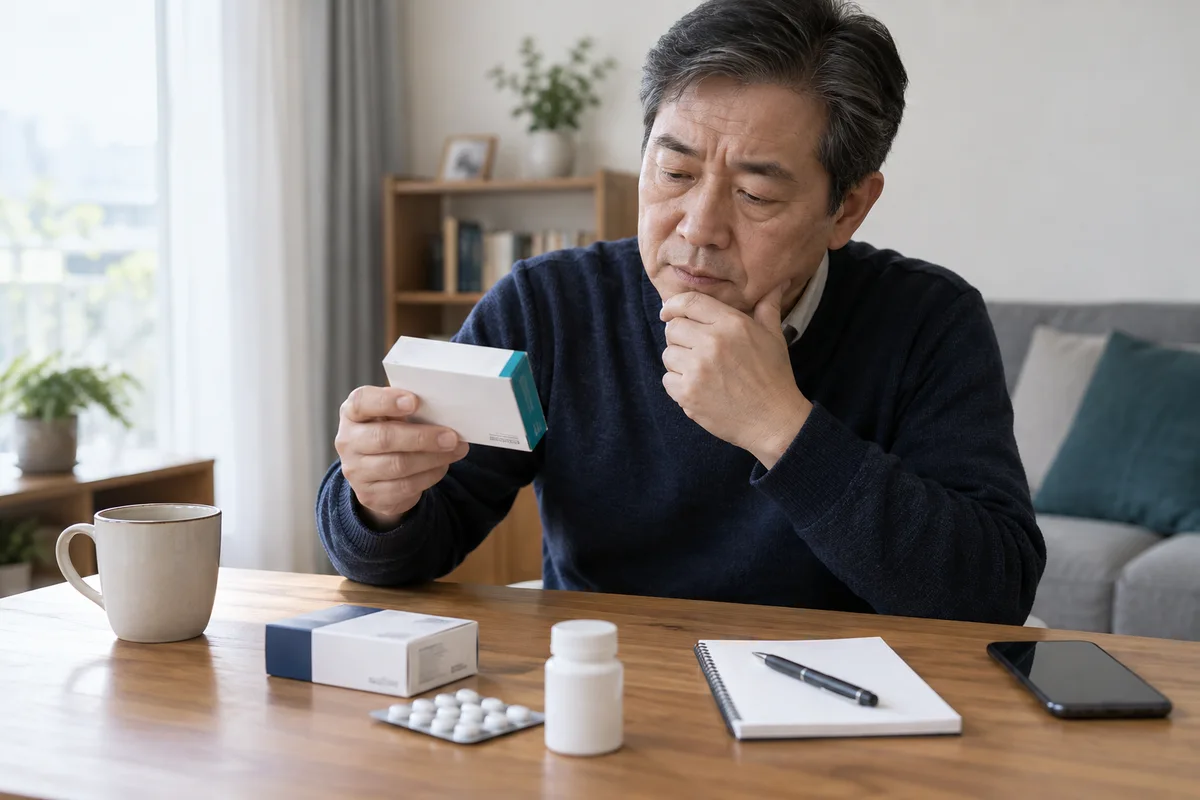
If urination changes after taking a medicine, record what you took, when you took it, and when the difficulty began. This helps your clinician assess a possible connection. A sequence in time does not establish that the medicine is the only cause.
Also report painful urination, fever, blood in the urine, or other symptoms. Infection or an existing urinary problem may coexist, so changing medication alone may not explain everything. Whether tests are needed is determined through your history and examination.
Do not assume everything is fine because some urine is coming out. Contact your clinician if marked incomplete-emptying discomfort or lower abdominal symptoms are worsening, to discuss how urgent assessment is. Do not add unprescribed prostate medication or borrow someone else’s medicine to try to solve the problem.
Seek Immediate Care if You Cannot Urinate

If you suddenly cannot urinate and your lower abdomen is very uncomfortable or feels tight, you need assessment for acute urinary retention. Prompt medical treatment may be required. Do not wait at home for the medicine to wear off or try to solve it by drinking a large amount of water. NIDDK guide to acute urinary retention
A medical team may drain urine and investigate the cause, depending on your condition. After urination becomes possible again, review future medication and prostate care rather than treating the episode as finished. Not all retention has the same cause or management.
If readily available, bring medication packaging or photographs to urgent care, but do not delay treatment while searching for them. Report when symptoms started and when you last urinated as accurately as you can. Mention fever, chills, or other general symptoms too.
Keep a Note of the Advice for the Next Cold
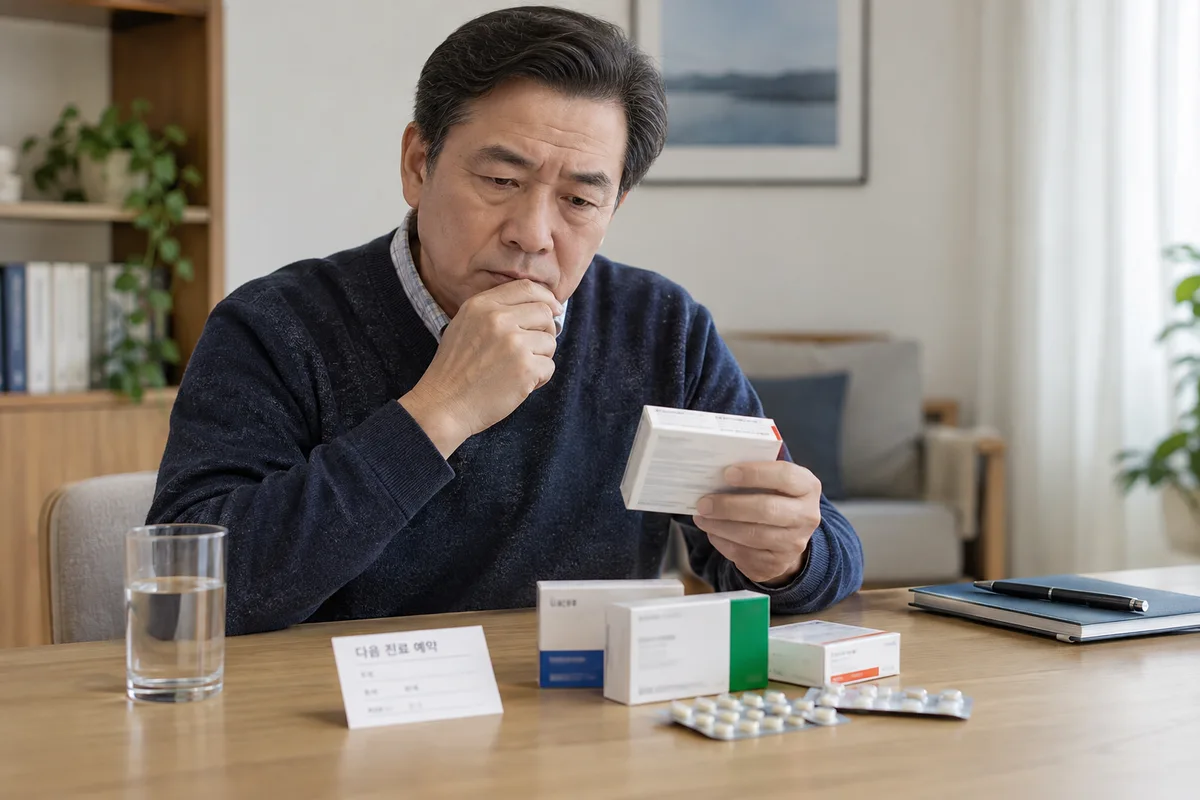
Having no problem this time does not mean every future cold medicine will suit you. Note the product, ingredients, and instructions discussed, and show them when choosing another medicine. If your health or prescriptions have changed, do not rely on the old note alone.
At your next appointment, discuss whether your usual enlarged-prostate symptoms are adequately controlled. Urinary difficulty noticed while taking a cold remedy may be an opportunity to review existing care. Our guide to assessment before choosing treatment for an enlarged prostate provides related information.
The aim is not to endure a cold untreated or stop every medicine. It is to communicate your urinary condition, check the ingredients you need, and obtain prompt assessment if urgent changes occur. Make reviewing prescription and over-the-counter medicines together part of your preparation.
