
Rezūm for BPH: Why Symptoms and Test Results Are Considered Together

If you are considering Rezūm for benign prostatic hyperplasia, first check how your current difficulties relate to your test results. Symptoms such as a weak stream or frequent urges alone do not determine the treatment. How much daily life is affected, your response to medication, and the condition of the urinary passage and bladder should all be reviewed together.
Rezūm delivers heat energy from water vapor to prostate tissue. The treated tissue is absorbed over time, and improvement in urination can be expected as the volume of tissue around the urethra decreases. This is the mechanism described in the manufacturer’s instructions for use. It does not make all the tissue disappear at once immediately after the procedure. This distinction also relates to treatment goals. Discuss which symptom is currently hardest to manage and how much improvement you hope for with your care team. It is also helpful to have the necessary tests explained in relation to that decision. This does not mean everyone needs all the same tests at once.
Size and the Median Lobe Are Parts of the Treatment Plan
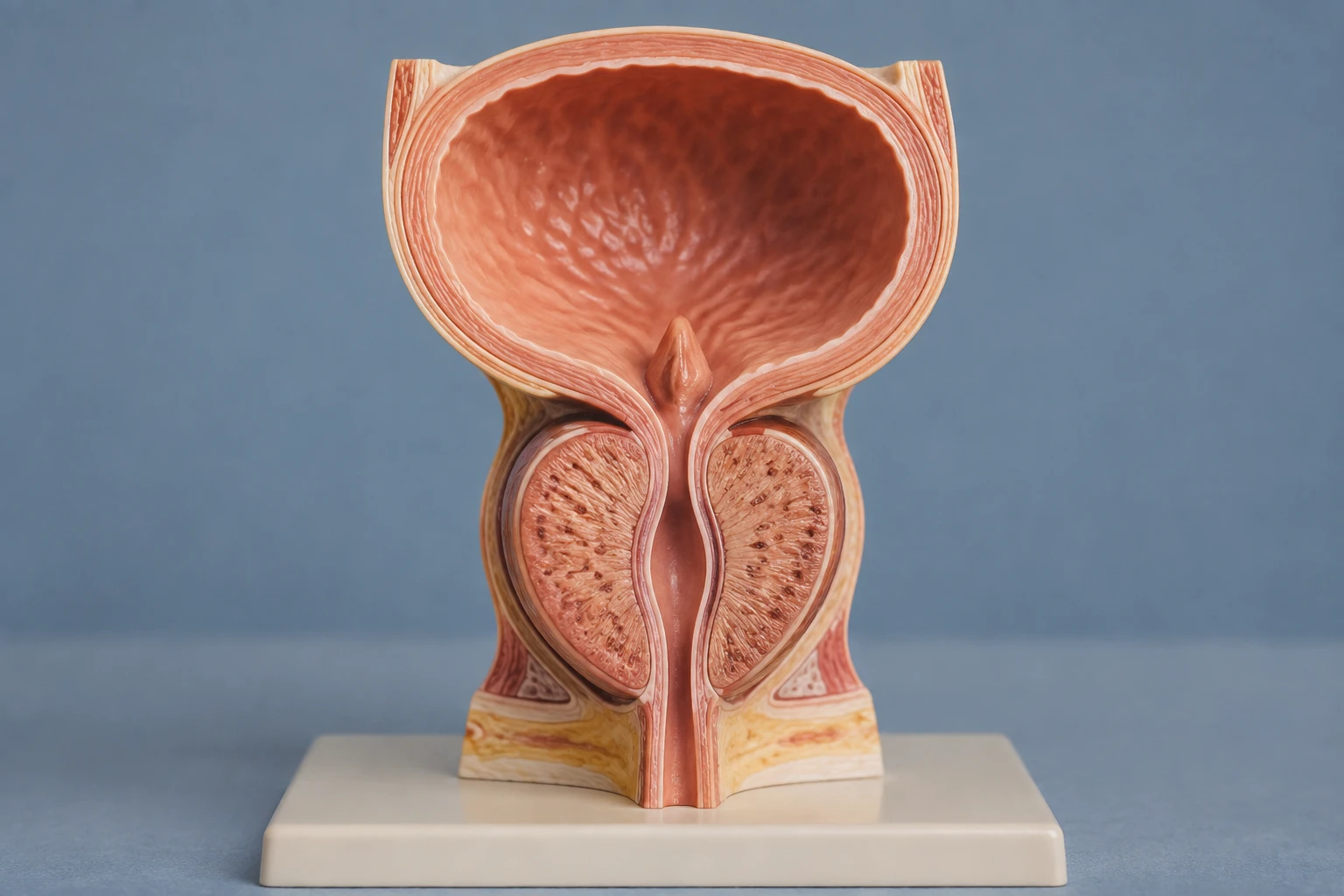
Prostate size is important information. However, size alone does not establish suitability for the procedure. Even at the same volume, shape, protrusion, and urinary function need to be considered together. Simply hearing that you have a median lobe is no reason to conclude that you cannot receive Rezūm. The median lobe refers to the central part of the prostate, and the treatment plan needs to be reviewed according to its shape.
Current US manufacturer safety information includes treatment of median lobe enlargement. However, product approvals in each country must be distinguished from the research scope of earlier guidelines. Expanded US indications cannot simply be transferred to the conditions for use in Korea.
If you have seen different volume ranges online, check which country and year the information refers to. Your care team should explain whether your findings match the conditions for using the device in Korea. You should receive a full explanation not only of size measurements but also of the area to be treated and why.
Residual Urine and Retention Also Require Assessment of the Bladder

Residual urine is urine left in the bladder after urination. A large amount remaining does not by itself establish the cause. The outlet may be blocked, the bladder may have less strength to push urine out, or both may be involved. The European Association of Urology diagnostic guidelines also explain that a criterion for deciding treatment based on residual urine volume alone has not yet been established.
A high residual volume therefore does not automatically make Rezūm suitable. Ask your care team whether further checks are needed after considering other information together, including flow rate, symptoms, and medical history. If you already use a catheter because you cannot urinate, that condition must also be reflected in the plan. Recurrent or unresolved retention can be a reason for surgical assessment, but it does not automatically determine a particular procedure. The likelihood of urinating independently after catheter removal and plans for additional care should also be checked. Do not assume that a general recovery timeline is your own catheter-removal date.
Questions When Comparing Medication and Other Surgery

Treatments are compared according to your own condition and goals. Whether to continue medication or consider another procedure or surgery is judged from your current difficulties and findings. Alternatives that can be compared include TURP, transurethral resection of the prostate, and HoLEP, which removes prostate tissue using a holmium laser. No single method can be the best choice for every patient.
The European Association of Urology treatment guidelines identify speed of effect, durability, adverse effects, and patient preferences among factors in choosing treatment. Ask your care team why a change to the current treatment is being considered, whether medication will continue, the type of anesthesia, catheter use, and time needed for recovery.
If sexual function is important to you, communicate that goal clearly as well. Studies assessing preservation of function with Rezūm do not guarantee that everyone will experience no change. Discuss possible reductions in ejaculate volume and changes to ejaculation and erectile function thoroughly. Questions to ask when comparing costs are covered in the separate guide to checking a Rezūm quote.
Plan Catheter Removal and Return to Daily Life Separately

The day the procedure ends, the day the catheter is removed, and the day you return to work may differ. A temporary catheter may be needed during recovery; its removal and assessment of urination are planned for your individual condition. Do not assume the subsequent recovery schedule will also be short simply because the procedure is described as brief.
The British Association of Urological Surgeons patient leaflet explains catheter use and recovery. The number of days in that resource is a reference, not your confirmed removal date. Especially if you used a catheter before the procedure, check separately whether the same schedule applies.
Before discharge or going home, ask in advance about catheter care, the visit for removal, and whom to contact if a problem arises.
Advice on returning to work and exercise considers work demands, your condition, and the effects of anesthesia together. Check your individual instructions for driving, resuming sexual activity, managing medication, and fluid intake as well. Do not remove your catheter on your own or stop medication without your care team’s instructions.
Improvement in Urination Is Assessed Over Time

Resuming everyday activities does not necessarily mean urinary symptoms have improved sufficiently. Changes after Rezūm are assessed over weeks to months. Initially, painful urination, frequency, urgency, or blood in the urine may occur, and existing discomfort may temporarily worsen. It is therefore difficult to judge the final result from how you feel the day after the procedure alone.
That does not mean every discomfort can be dismissed as normal recovery. Watch carefully for changes in symptoms and tell your care team at scheduled follow-up visits. When needed, changes are assessed along with flow rate and residual urine. Follow your care team’s actual instructions on the specific timing and methods of testing.
If improvement is insufficient or symptoms become troublesome again over time, medication or additional treatment may be discussed. Retreatment rates in research mean different things depending on whether they include only surgery or also restarting medication. It is therefore best not to interpret a particular number directly as your personal chance of success. Check in advance what will be assessed at the next visit and which changes should prompt contact beforehand.
Changes That Require Contact Without Waiting

Seek urgent medical help if you cannot pass any urine, have heavy bleeding and large clots, or have severe pain that does not settle. Fever or worsening urinary discomfort also calls for prompt contact with your care team and assessment. The Dorset public hospital recovery advice also distinguishes and explains these changes.
Being told that effects may take weeks does not mean waiting with emergency symptoms. Some situations require immediate assessment even before your appointment date. If you cannot reach the hospital or symptoms are urgent, use an emergency department or another place offering immediate care. Before treatment, have your findings and expected course explained fully, and before going home, be sure to confirm contact arrangements and follow-up plans. Writing down any questions that remain unanswered during consultation is also helpful.