If you search for Gangnam prostate procedures, you’ll find various treatments with different names like Rezūm, Urolift, and iTind all at once. Among them, Rezūm is worth looking into first because it reduces enlarged tissue itself using steam heat without leaving a permanent implant in the body, and you can expect to preserve ejaculatory function more than with surgical resection.
It can be performed under local anesthesia, and in most cases, same-day discharge can be planned, which is advantageous for those who want to reduce the burden of general anesthesia or hospitalization. However, it is not applicable to all cases of prostate enlargement, so it is first necessary to check whether the cause of urinary discomfort is actually prostate obstruction and what the size and shape of the prostate are.
Frequent urination and weak urine flow are not always caused by the prostate
If you have benign prostatic hyperplasia, your urine stream may become weak, the start of urination may be delayed, and you may feel a sense of residual urine. However, frequent urination and nighttime urination can also occur due to other causes such as overactive bladder, sleep disturbances, excessive fluid intake, diabetes, and medications. If the contraction strength of the bladder muscle is weakened, even widening the prostatic passage may not improve the urine flow as much as expected.
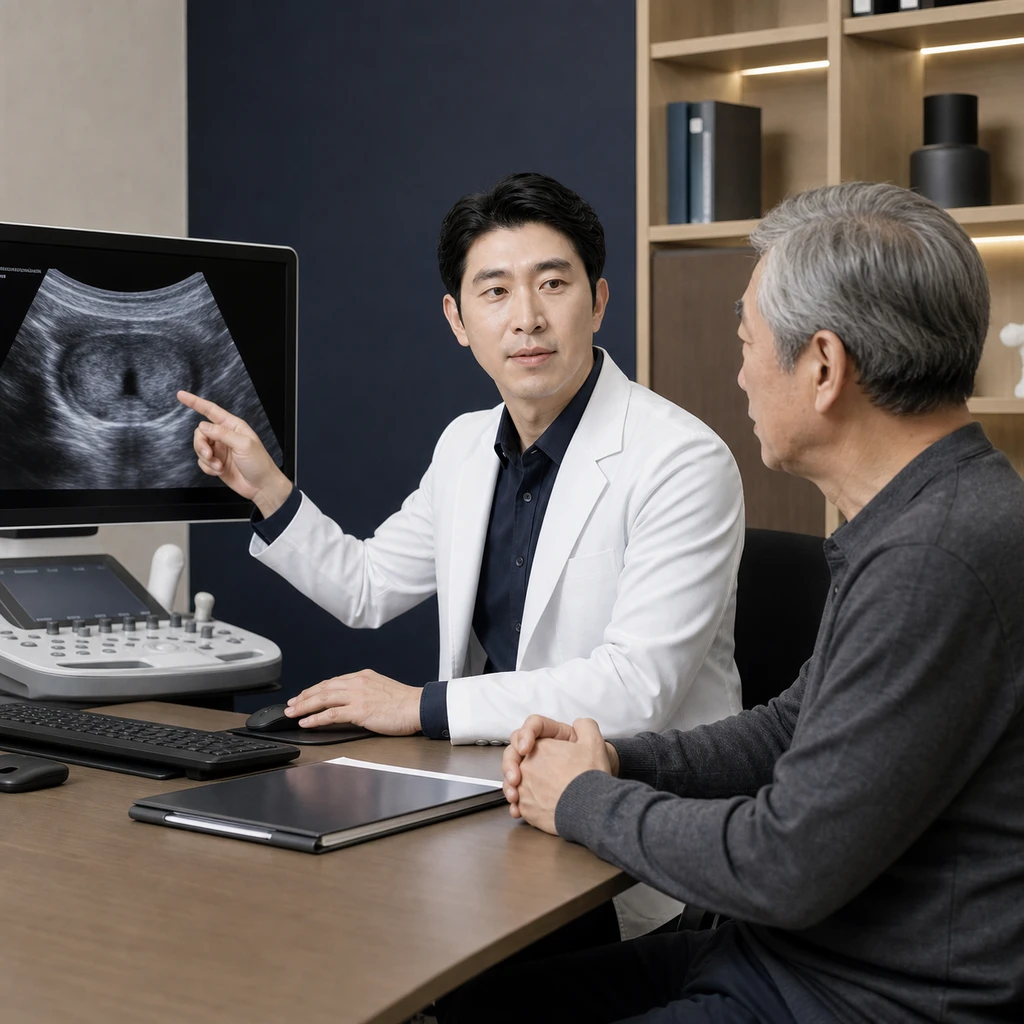
Before the procedure, basic evaluations include the International Prostate Symptom Score (IPSS), urine tests, uroflowmetry, post-void residual urine, and prostate ultrasound. PSA is checked according to age and risk level, and cystoscopy or urodynamic studies are selectively considered if hematuria, recurrent infections, urethral stricture are suspected, or if the diagnosis is unclear. Not all patients undergo the same tests uniformly.
Rezūm gradually reduces tissue with steam heat
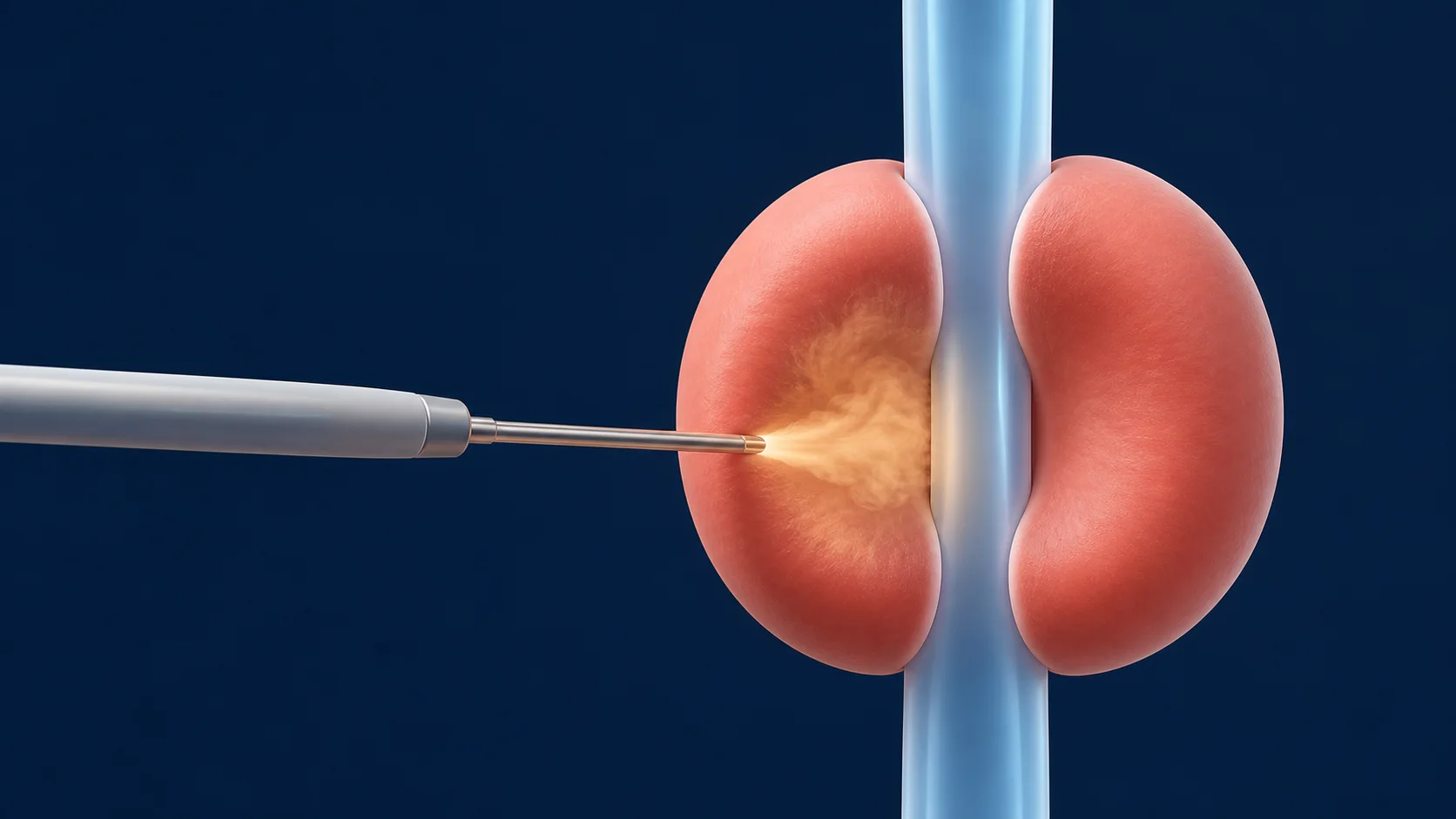
Rezūm is a treatment in which a thin specialized instrument is inserted through the urethra to inject steam into enlarged tissue. There is no skin incision, and the tissue is not mechanically cut and removed. The heat delivered when the steam condenses into water within the tissue treats the cells, and afterwards, as the body gradually absorbs the tissue, the pressure on the urethra is reduced.
The advantage of Rezūm is not simply that the procedure time is short. There are no permanent implants left that bind the tissue, and even if the middle lobe of the prostate is protruding, treatment can be considered depending on the anatomical condition. For patients who have difficulty continuing oral medication but still find tissue removal surgeries like TURP or HoLEP burdensome, it can be a realistic option between the two treatment stages.
Since the tissue is not removed on the same day, it may take several weeks to several months for the effects to become sufficient. Initially, due to tissue swelling, symptoms such as frequent urination, urgency, painful urination, and hematuria may occur, or urination may be temporarily more obstructed, so a catheter may be maintained for a certain period. The possibility of same-day discharge and immediate symptom improvement do not mean the same thing.
Rezūm is considered an option that is more likely to preserve ejaculatory function compared to resective surgery. This is particularly a significant advantage in consultations for those who have future pregnancy plans or consider ejaculatory function important in their sexual life. However, it cannot be concluded that there is no impact on sexual function at all, and the prostate volume range supported by research, as well as active infections and urethral conditions, should also be considered.
Compared to UroLift, no device remains inside the body
UroLift is a method that pulls and fixes enlarged prostate tissue laterally using small implants. Its effects can be felt relatively quickly, and it is a treatment considered when preserving ejaculation function is important. On the other hand, Rezūm differs in that it treats the enlarged tissue so that its volume gradually decreases without leaving any separate fixation device.
However, if the prostate is very large or has certain stromal structures, suitability may vary, and it should be discussed that the likelihood of retreatment is higher in the long term compared to resection surgeries such as TURP. It is also necessary to understand the characteristic that an implant remains inside the body.
iTind is a method in which a device is placed in the prostatic urethra for a certain period to change the shape of the passage and then removed. Its introduction domestically, the possibility of implementation by different institutions, and accumulated long-term evidence vary, so it should not be chosen simply because it is a ‘latest procedure’.
Procedures and surgeries are not simply a sequence of major and minor treatments

Minimally invasive procedures like Rezūm have the advantage of reducing the burden of anesthesia and recovery, and prioritizing the preservation of ejaculatory function. Although the effect of medication is limited, if there are no clear surgical indications such as recurrent urinary retention or stones, and if the size and structure of the prostate are suitable, it can be considered before moving on to tissue-removing surgery. On the other hand, TURP or HoLEP directly excise or remove obstructing tissue, so they can be chosen when the main priority is the degree and durability of urinary improvement.
For urinary retention due to repeated blockage, recurrent urinary tract infections, bladder stones, untreated prostate bleeding, or if there is upper urinary tract dilation or kidney function problems, surgery to remove sufficient tissue may be more appropriate. If the prostate is large and the obstruction is severe, starting with small procedures repeatedly is not necessarily a safe or efficient approach.
In the end, the criteria for selection are as follows.
- The shape including the prostate volume and the median lobe
- Urinary urgency and residual urine, bladder contraction function
- Presence of complications such as urinary retention, infection, stones, or hematuria
- Anesthesia and risk of bleeding, taking anticoagulants
- Importance of preserving sexual function
- The expected extent of improvement and the degree of acceptance of the possibility of retreatment
Check the recovery schedule and emergency signals in advance
After the procedure, you may experience painful urination, frequent urination, urgency, light hematuria, and perineal discomfort. Whether a catheter is used and for how long, as well as when you can resume driving, exercise, and sexual activity, depends on the method and your preoperative urinary condition. Before making an appointment, don’t just check if it is a ‘same-day procedure’; it is also good to ask about the possibility of living with a catheter and your plan for returning to work.
If no urine comes out at all, or if large blood clots and heavy bleeding are seen, and there is high fever, chills, or worsening pain, you should not wait and contact the facility where the procedure was performed. The criteria for choosing a medical system also include being able to contact them not only when symptoms improve after the procedure but also when problems occur.
In a consultation for prostate treatment in Gangnam, go a step further from asking ‘Can I receive Rezūm?’ to asking ‘Given the extent of my obstruction and the shape of my prostate, can I expect the benefits of Rezūm?’ If you want a more proactive improvement than medication while reducing the burden of permanent implants and major surgery, Rezūm is a treatment worth considering and comparing as a priority after examination.
Referenced Medical Information
- European Association of Urology (EAU) 2026 Male Lower Urinary Tract Symptoms Treatment Guidelines
- American Urological Association (AUA) Guideline on Surgical Treatment for Benign Prostatic Hyperplasia
This article provides general health information about procedures for benign prostatic hyperplasia and does not replace individual diagnosis or treatment. Appropriate treatment should be determined with a urology specialist based on test results and health condition.