
It is easy to be alarmed if urine appears pink or red. If there is no pain and the next urine is clear again, people may dismiss it thinking, ‘It must be because I’m tired.’ However, visible blood in the urine should be investigated even if it happens only once. When occult blood is found during a health check-up, it is necessary to verify whether red blood cells are actually present and then proceed with an appropriate evaluation.
What people searching for ‘Gangnam Urology Clinic’ are most curious about is ‘What disease is it?’ However, the first step in medical consultation is not to hastily determine a single disease name. It involves sequentially narrowing down whether hematuria actually exists, which part of the urinary tract it is likely to occur in, whether there are issues that require immediate treatment such as infection or stones, and whether there are risk factors that require detailed examination.
The cause of hematuria cannot be determined by color alone
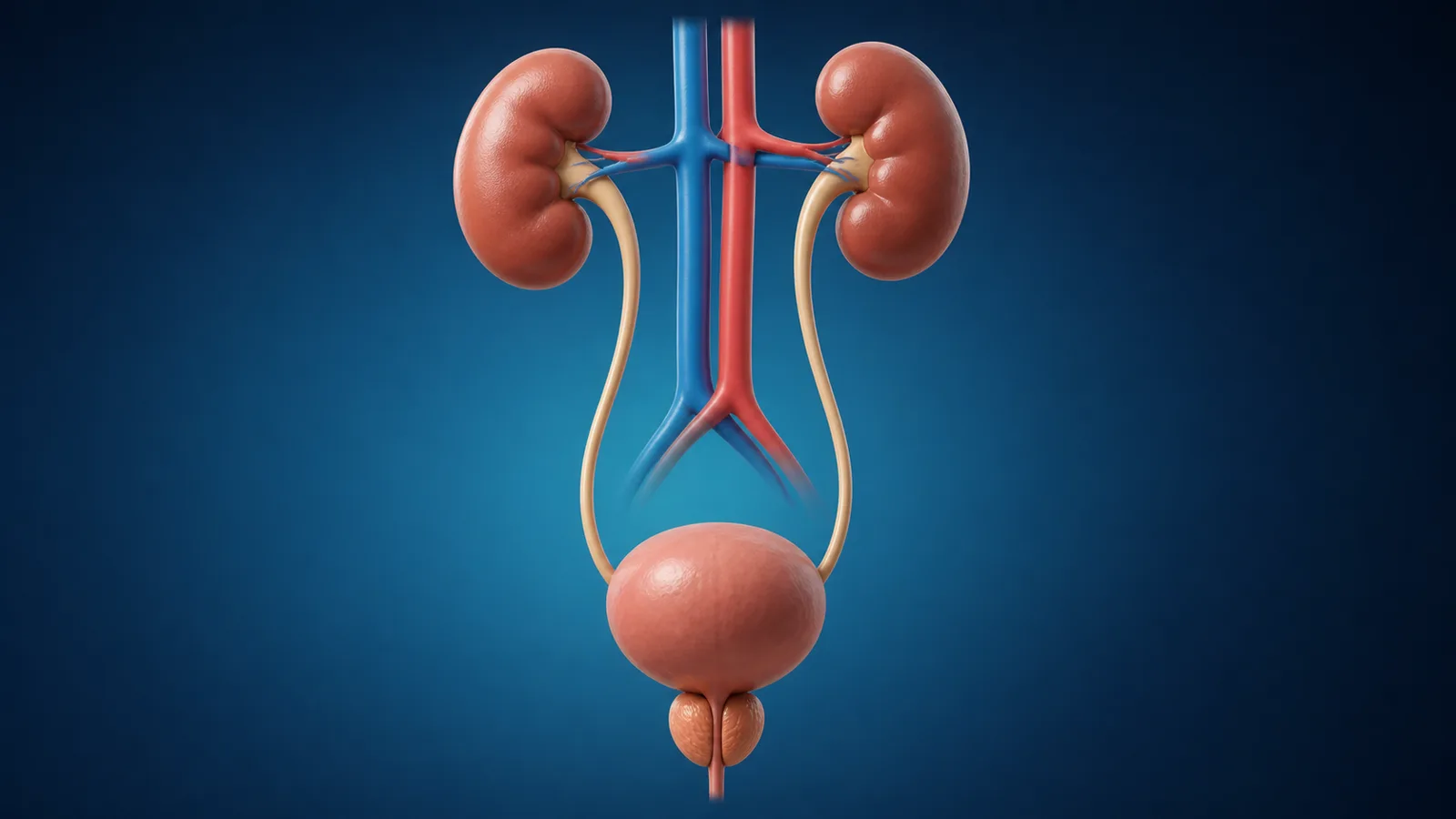
Hematuria is divided into gross hematuria, which can be seen with the naked eye, and microscopic hematuria, which is detected only through urinalysis. Red-colored urine is not always blood. Foods like beets, certain medications, and concentrated urine due to dehydration can cause color changes. Conversely, red blood cells can be found in microscopic examination even if the urine color appears normal.
There are various possible causes. These include infections such as cystitis or prostatitis, stones in the kidney or ureter, benign prostatic hyperplasia, intense exercise, trauma, and diseases of the kidney itself. Although rare, tumors of the bladder, kidney, or ureter must also be ruled out. The absence of pain does not mean that there is no serious cause, and one should not simply attribute it to medication just because they are taking anticoagulants or aspirin.
Women need to determine whether menstrual or vaginal bleeding was mixed with the urine, and both men and women should report any recent urinary procedures or intense exercise. It is also a clue for diagnosis whether the red color was mixed throughout the urine, appeared only at the beginning or end, or if there were blood clots.
The first step is a medical interview and urine test

During the consultation, we ask when the hematuria started, how many times it has occurred, and whether it was accompanied by pain during urination, frequent urination, fever, or flank pain. We also check smoking history, occupational exposure to chemicals, past radiation therapy or chemotherapy, history of stones, infections, or urinary tract diseases, family history, and medications taken. This information is not asked to scare you but to assess risk in order to determine the intensity of the tests.
Urine test strips quickly check for components that react to blood, but a positive result alone does not confirm microscopic hematuria. Red blood cells are confirmed through a microscopic urine examination, along with other findings such as white blood cells, bacteria, and proteinuria. If an infection is suspected, a urine culture may be considered, and a follow-up test may be needed to see if hematuria has disappeared after treatment.
Blood tests to assess kidney function and blood pressure measurements may also be included depending on the situation. If there are findings suggesting a kidney-specific disease, such as proteinuria, abnormal red blood cells, or decreased kidney function, evaluation by a nephrologist may also be necessary, but a urology evaluation for urinary causes may proceed separately.
Ultrasound, CT, and cystoscopy examine different areas

The examination is not performed the same way for everyone. The 2025 revised American Urological Association microscopic hematuria guideline adjusts the intensity of evaluation by classifying patients into low-, intermediate-, and high-risk based on risk factors such as age, smoking history, the degree of red blood cells seen under the microscope, and a history of gross hematuria.
- Kidney and bladder ultrasound is used to examine the structure of the kidneys and bladder, as well as some stones or masses and residual urine, without radiation exposure.
- CT urography can provide a more detailed evaluation of the upper urinary tract, including the kidneys, ureters, and bladder, but consideration must be given to contrast agents and radiation exposure.
- Cystoscopy uses a thin endoscope to directly examine the inside lining of the bladder and urethra. It serves to check for internal bladder lesions that may be missed by imaging tests alone.
Rather than assuming that a more expensive test is more accurate just by its name, you should choose the combination of tests based on your risk factors, kidney function, contrast agent allergies, possibility of pregnancy, and previous test results. During a consultation at Gangnam Urology Clinic, be sure to ask together, ‘Why is this test necessary?’, ‘Which part of the body does it examine?’, and ‘What is the plan if the results are normal?‘
Records before the visit make the test direction clear

Since hematuria may disappear again, note the timing and pattern when it occurs. If possible, taking a photo that shows the color of the urine rather than the entire toilet can be helpful, as long as personal information is not exposed, and show it only to medical staff. Also, record whether there are blood clots, the location of pain, fever and chills, and changes in urination frequency.
Bring a list of prescription drugs, over-the-counter drugs, and health supplements, and especially make sure to provide the exact names and doses of anticoagulants and antiplatelet agents. However, do not change your medication on your own just because you notice blood in your urine, as stopping them arbitrarily can increase the risk of blood clots, and you should consult the prescribing medical professional before making any changes.
If you have recent health checkup results such as a urine test, kidney function test, or ultrasound or CT results, please prepare them together. Since there is a possibility of a urine test, it may be helpful not to empty your bladder completely right before your visit, but the preparation may vary depending on the test you have scheduled, so you should follow the hospital’s instructions first.
If accompanied by blood clots, urinary retention, or fever, do not wait

Even if blood is seen in the urine, if the condition is stable, tests can be conducted sequentially in an outpatient setting. However, the following situations may require same-day consultation or urgent evaluation.
- Large blood clots recur and urine does not come out well
- The lower abdomen feels tight and painful while no urine comes out at all
- High fever and chills accompanied by pain on one side of the flank and vomiting
- There is heavy bleeding and dizziness, or cold sweat and severe weakness occur
- Hematuria appears after trauma such as a fall or a traffic accident
At this time, it is more important to go to a medical facility that can provide emergency care rather than wasting time comparing available appointment times at nearby Gangnam urology clinics. In particular, if a stone is blocking the urinary tract and an infection occurs at the same time, or if a blood clot is blocking the bladder outlet, prompt treatment may be necessary.
The purpose of a hematuria test is not to immediately diagnose the most serious disease, but to identify common causes and those that must not be missed in a reasonable order. If you are considering visiting a urology clinic in Gangnam, do not erase the records just because your urine has become clear again; based on the circumstances and risk factors at the time of occurrence, receive the necessary evaluations.
Referenced Medical Information
- American Urological Association (AUA/SUFU) Microscopic Hematuria Guidelines, 2025 Revision
- Urology Care Foundation Hematuria Patient Guide
- European Association of Urology (EAU) Male Lower Urinary Tract Symptoms Diagnostic Evaluation
This article is intended to provide general health information and does not replace diagnosis or treatment. The scope of examination and treatment for hematuria is individually determined by medical professionals based on symptoms, risk factors, and test results.