Hello from Seoul Newgen Urology Clinic. When planning inflatable penile implant surgery, returning to work, driving, and exercise can matter as much as learning to use the device. Returning to daily life does not mean restarting every activity on one date. Here are the checks to discuss for different activities and stages of wound healing.

The photograph of Dr. Ji Hyun Park is an actual photograph owned by the clinic. The cover is AI-generated, and the inline diagrams are explanatory illustrations. They do not depict actual patients, test results, or recovery progress.
Get Your Personal Recovery Plan Before Discharge
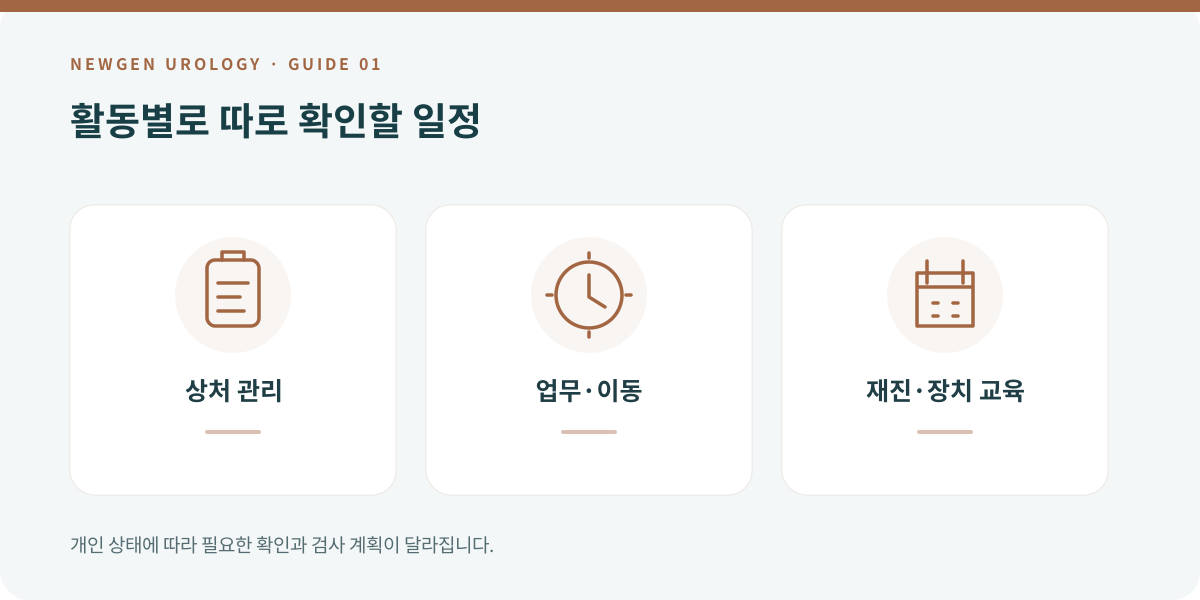
Recovery varies with the operation, wound location, existing conditions, and how physically demanding your work is. Being discharged does not automatically mean you can drive or start heavy exercise. Confirm wound care, prescribed medicines, showering instructions, and activity restrictions.
Planning your commute and leave before surgery can help. Desk work, lifting heavy objects, and prolonged sitting each raise different questions. Write down your follow-up date and whom to contact if a problem occurs at night.
Driving Requires Safe Vehicle Control as Well as Appropriate Timing
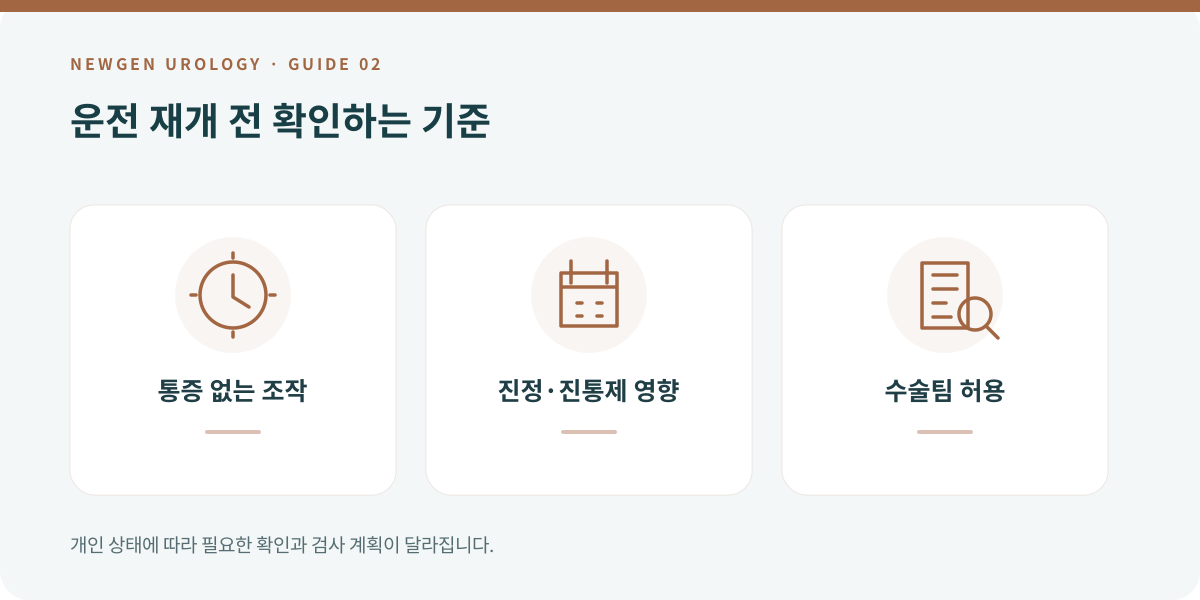
Feeling comfortable while sitting is different from being able to make an emergency stop safely. You need to consider whether you can operate the steering wheel and pedals without pain, and whether painkillers or other medicines still make you drowsy.
UK hospital guidance discusses both timing and the ability to make an emergency stop. Do not assume that reaching a particular postoperative week automatically makes driving appropriate; check with your treating team. Arrange transport for the first follow-up that does not require you to drive yourself.
Distinguish Gentle Movement From Heavy Exercise
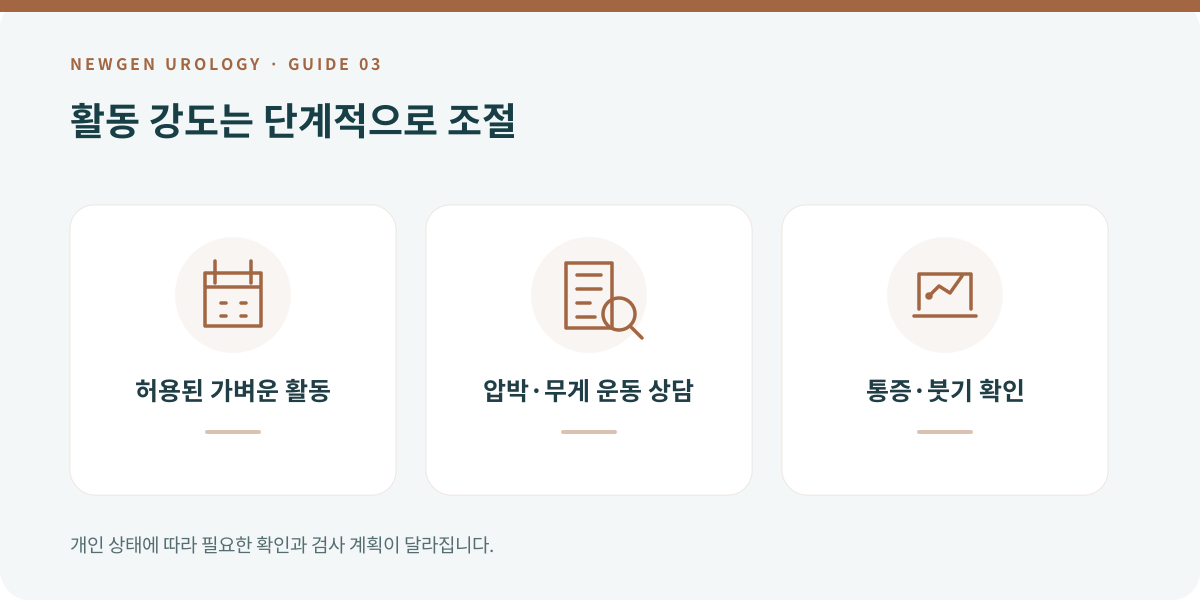
Discuss when to begin gentle daily movement separately from when to resume heavy lifting or strenuous exercise. UCLH guidance restricts heavy lifting for several weeks and explains that advice may vary with individual circumstances, including wound location.
Ask in advance about activities such as cycling that put pressure on the operated area. If increasing your walking makes pain or swelling worse, reduce activity and contact the surgical team. Do not force yourself to exercise harder through pain in an attempt to recover faster.
Resume Sex and Device Use According to Clinical Review and Training
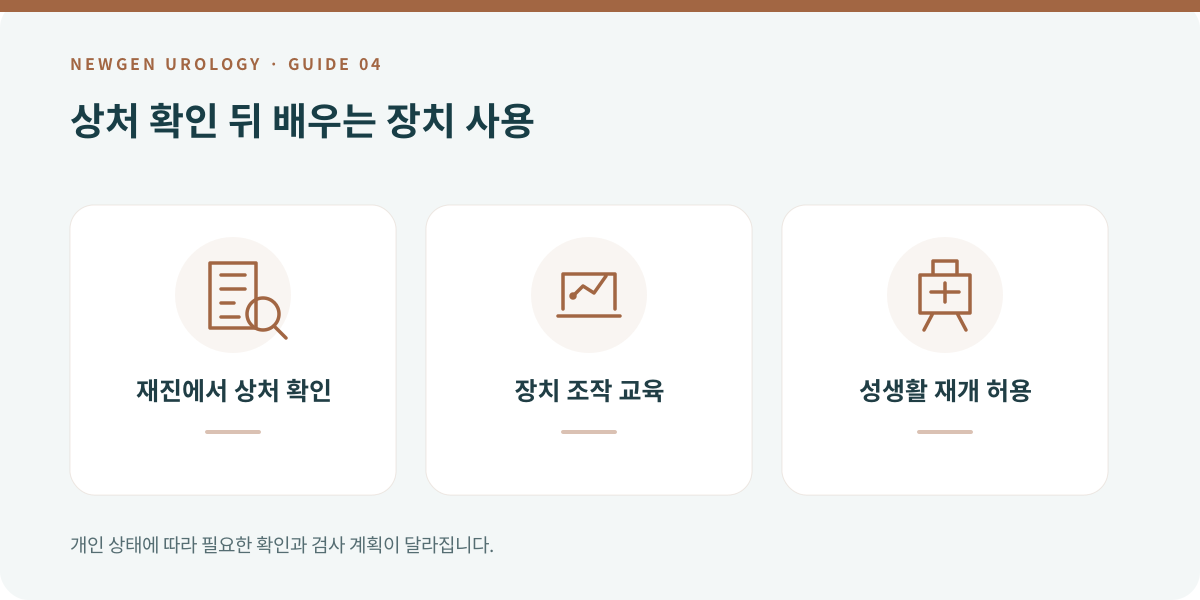
Resume sexual activity after the wound has healed and your clinician has given permission. UCLH advises avoiding intercourse for six weeks after surgery, but schedules may differ between institutions and procedures. Do not use that number as a substitute for reviewing your own condition.
Follow the surgical team’s instructions on when to start practicing inflation and deflation and how often to do it. Training schedules differ, so do not start early after watching an online video. If you have pain or difficulty operating the device, request further teaching rather than trying to overcome it by force on your own.
Report Fever and Wound Changes Promptly
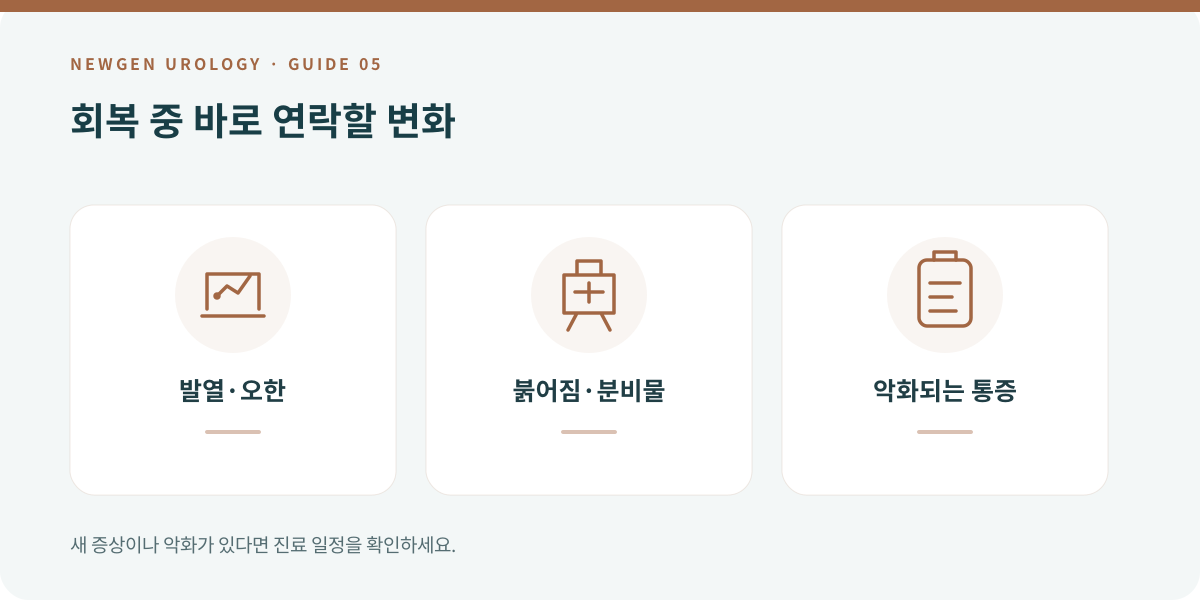
If swelling or discomfort is present, monitor how it changes over time. Contact the surgical team immediately for new fever, increasing wound redness or discharge, pain not controlled by prescribed medication, or persistent bleeding. An inability to urinate also needs immediate assessment.
At your next consultation, describe which activities are most uncomfortable, changes in pain, and your medicines. Confirm separate plans for returning to work, driving, exercise, and sex, as well as device practice. This makes a general recovery estimate more useful for your own daily schedule.
For related information, see our guide to questions about rigidity, sensation, and size before implant surgery.