
Rezūm surgery. Those who type these four characters into the search bar already know about half of the answer. Although the name does not include the word ‘surgery’ anywhere, the fact that people specifically add ‘surgery’ when searching means that they have not yet clarified whether there will be incisions, how far anesthesia is administered, and how many days they need to stay in the hospital. This is also the first question we receive in the consultation room. So, let’s look at the three criteria that define this boundary first.

You can divide it into these three: incision, anesthesia, and hospitalization
First, there is a point that needs to be acknowledged. Surgically invasive procedures and interventions are not terms that are strictly distinguished academically. It is closer to reality to rank them relatively based on the level of invasiveness, anesthesia, and recovery pathway. The American Urological Association guidelines categorize Rezūm, UroLift, and iTind under MIST, meaning minimally invasive surgical treatments. Although the word ‘surgery’ appears in their names, they are treated as a separate subgroup from resection surgeries like TURP or HoLEP.
Let’s start with the incision. Rezūm does not cut the skin. However, since TURP and HoLEP also use the natural urethral passage to insert instruments, which is called a transurethral approach, it’s difficult to distinguish among the three just by the term ‘no incision.’ On the other hand, anesthesia is clearly different. Rezūm is designed to be performed under local anesthesia only for appropriately selected patients, even on an outpatient basis, with intravenous sedation added only if there are concerns about pain. In contrast, TURP and HoLEP are usually performed under spinal or general anesthesia in an operating room. The hospitalization aspect is the same. Rezūm usually aims for same-day discharge, whereas TURP and HoLEP typically require a 1–3 day hospital stay.
If we compare all three criteria, Rezūm is closer to a procedure than to a restrictive surgery. However, it is clearly different from taking medication in that a cystoscope is inserted and the tissue is directly intervened. It is not a dichotomous answer but a point on the spectrum, and that is exactly where Rezūm is positioned.
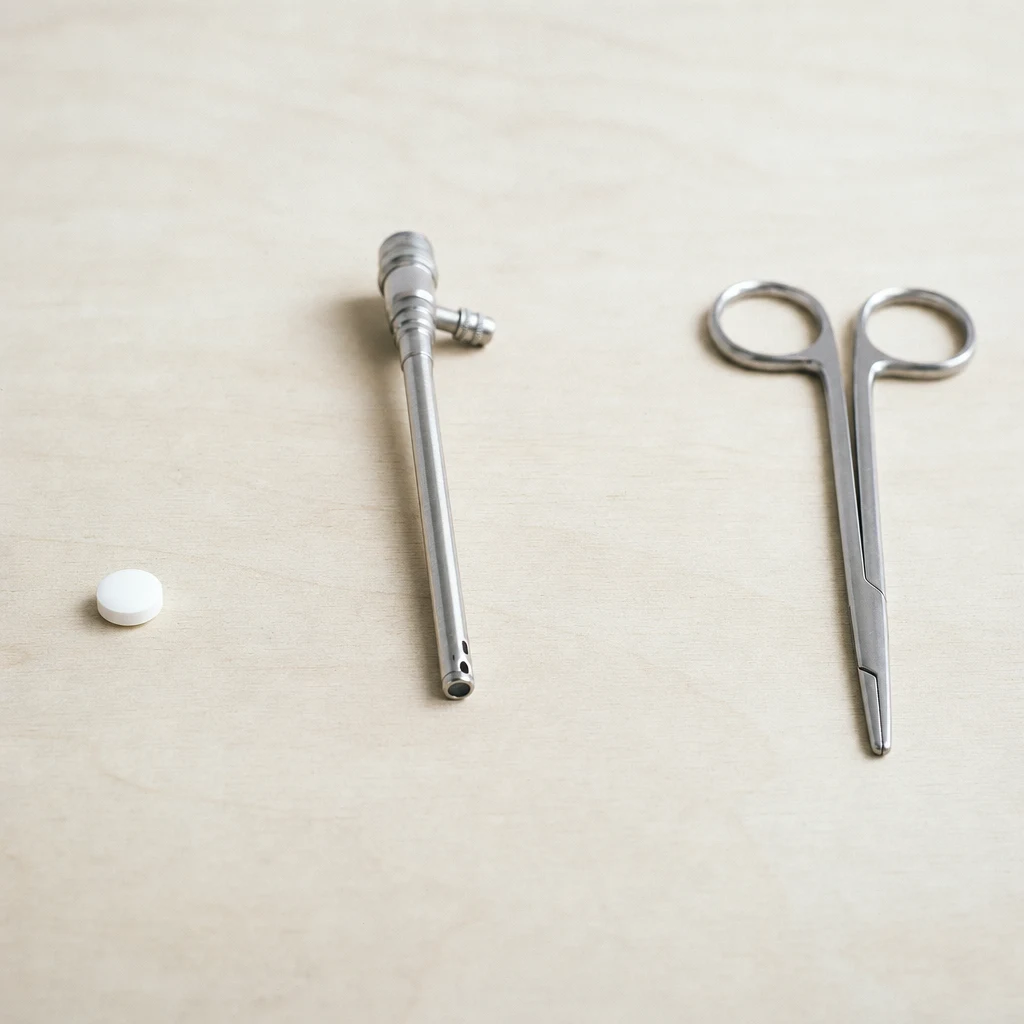
Resum reduces it to heat without taking out the tissue
Rezūm is a device-based therapy classified as thermal therapy using water vapor. Under cystoscopic guidance, special needles are inserted through the urethra directly into the enlarged prostate tissue, and these needles deliver high-temperature steam of about 103 degrees for a few seconds into the tissue. As the steam spreads through the spaces between cells, it transfers thermal energy, causing the targeted tissue to undergo coagulative necrosis.
This is not the end. The necrotic tissue remains in place and is absorbed by the body over several weeks to months, approximately 1 to 3 months, gradually reducing the volume of the prostate. The principle of this device is designed so that the heat is localized only at the point where it is applied, relatively preserving the urethral mucosa and surrounding normal tissue.
Rezūm neither cuts out nor mechanically removes the tissue. Instead, the treated tissue gradually shrinks and is reabsorbed by the body. This mechanism distinguishes it from the two surgical approaches discussed next.
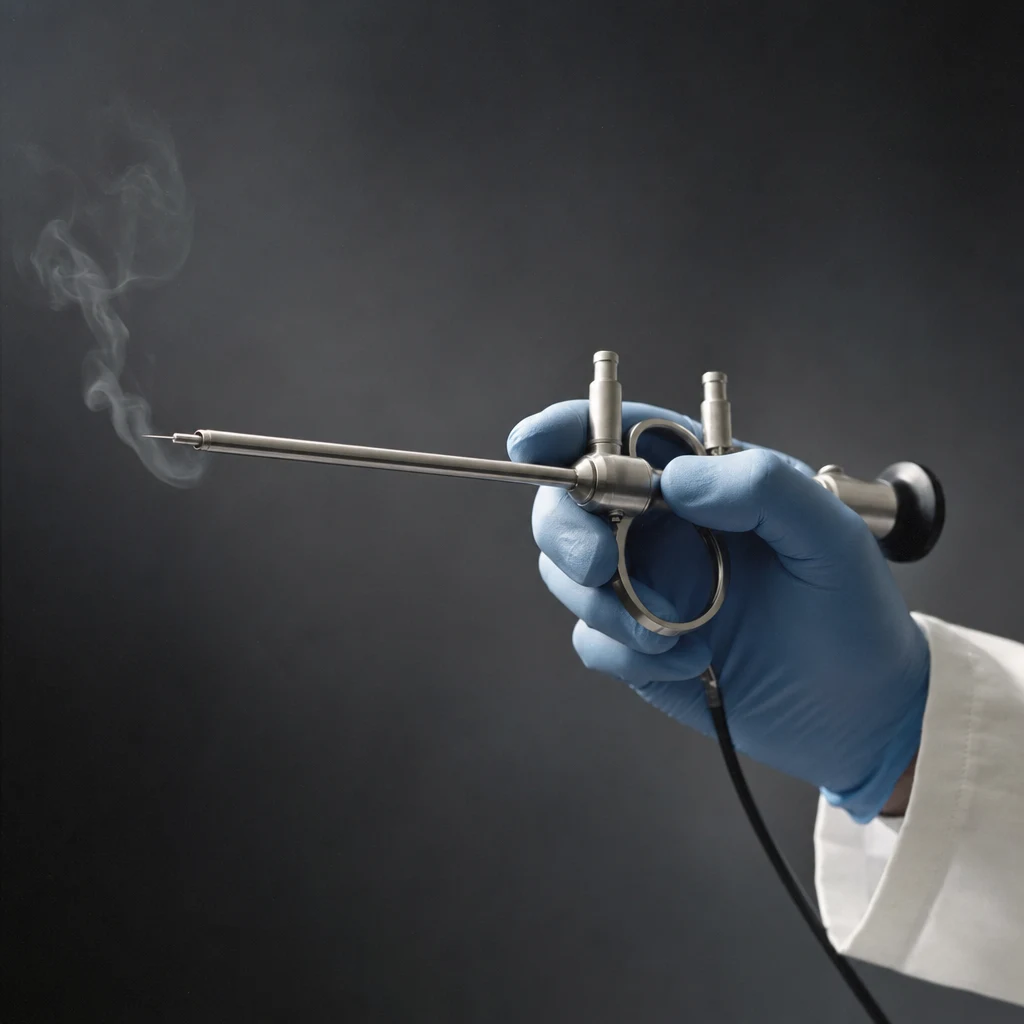
TURP·HoLEP is a surgery that removes tissue from the body
Transurethral resection of the prostate (TURP) is a method where a wire loop on a resectoscope inserted through the urethra is energized to shave off the enlarged tissue thinly. The shaved pieces are washed out or suctioned out of the body. It is a representative resection surgery that has been used as the standard for decades.
Holmium laser enucleation of the prostate, or HoLEP, is a bit different. Using a laser, the enlarged tissue is completely dissected from the prostate capsule and removed, then pushed into the bladder and crushed with a device called a morcellator for external removal. It is not shaved off but removed whole.
The common point of the two methods is clear: they physically remove the tissue from the body. This is in a completely different category from Rezūm, which waits for the tissue to necrotize and be absorbed. There are also studies directly comparing the two surgeries. According to research and meta-analyses published in international journals comparing HoLEP and TURP, HoLEP was reported to have shorter catheterization and hospitalization periods and less blood loss, while the operating time was longer. However, these results are from specific study populations and do not directly apply to individual patients.
Sexual function issues also depend on this. Retrograde ejaculation is a side effect reported in surgeries involving tissue resection or removal, associated with damage to the bladder neck and peri-prostatic tissue. Rezūm, thanks to its tissue-preserving design, has been reported in studies to have a relatively low incidence of side effects, but the strength of this evidence still does not match the long-term data accumulated over decades of resection surgery. The fact that it has been reported as low does not mean it is perfectly guaranteed for every individual.

Prostate size and anesthesia burden determine the choice
It is not a matter of always choosing the better option. It is a matter of selecting the method that fits my conditions from options with different underlying stages and ranges of applicability.
Let’s start with the level of evidence. TURP and HoLEP have decades of randomized controlled trials and cohort studies accumulated, and are used as standard comparators in guidelines. In contrast, Rezūm is still in the data accumulation stage, with 5-year follow-up sham-controlled randomized trial results published in journals. Evidence comparing long-term data over more than 10 years and reoperation rates is still limited.
The indications are divided as follows. Rezūm is mainly mentioned for men over 50 years old with a prostate volume of approximately 30–80 cm³, for those who prioritize preservation of ejaculation and erectile function, and for those who wish to avoid the burden of general or spinal anesthesia due to taking anticoagulants. Conversely, cases with urethral sphincter implants or penile prostheses, active urinary tract infections, or a volume significantly exceeding 80 cm³ are either contraindications or require caution. On the other hand, HoLEP is described in guidelines as having virtually no volume limitation and is widely applicable even to large prostates.
The factors that patients consider are generally predetermined. How much of the anesthesia burden can they tolerate, how many days until they need to return to daily life, is preserving sexual function more important than improving symptoms, can they endure the process of gradual effect, how many days can they manage with a catheter. Since each person’s answers to these five questions are different, the conclusions can also inevitably vary.

The cost should be considered not only for the procedure but also for hospitalization and recovery.
Costs are divided into insured and non-insured categories. TURP and HoLEP are covered procedures, so the patient’s share of hospitalization costs is fixed, but the actual amount to be paid depends on the length of stay and the medical facility. In contrast, Rezūm is a non-insured item. For non-insured services, each medical facility sets and notifies its own fees, so there is a large variation between hospitals, and accepting amounts found online as the market average may actually cause confusion. The most accurate way to check the actual cost is to refer to the fee notified by the medical facility you will be consulting.
Therefore, the frame that insured procedures are cheap and uninsured procedures are expensive is only half true. Hospitalization and anesthesia fees are included in insured surgeries, while for Rezūm procedures, there are operational differences such as a short procedure time of 10–20 minutes and returning home the same day. However, Rezūm also often requires maintaining a catheter for a certain period after the procedure to prepare for difficulty urinating due to swelling. Domestic clinic guidelines generally mention about 3–7 days, and in cases of a large prostate, a longer period has been reported, but since these figures are not confirmed by official academic statistics, they should be understood with the premise that there are individual differences.
Saying that recovery is fast does not mean there is no discomfort at all. If you compare only the cost, a clear answer does not emerge. Only by weighing anesthesia, hospitalization, catheter maintenance period, and the speed of returning to daily life together can a proper comparison be made.

Three Expectations That Often Clash in Counseling
The expectation that ‘because it is minimally invasive, there is no risk or recurrence’ is the most common. However, having less invasiveness does not mean there is no risk at all. Depending on the size of the tissue and the degree of symptoms, it may not be suitable, and there is also a possibility of recurrence in the long term.
It is common to have the expectation that ‘the procedure is over immediately without anesthesia.’ However, in reality, there is an anesthesia process, either local anesthesia or sedation. The misunderstanding arises from the explanation that general anesthesia is not needed being misinterpreted as not using any anesthesia at all.
The expectation that ‘it must feel better immediately, or it’s a failure’ is what makes patients’ minds most difficult. The basic mechanism of this treatment takes weeks to months for tissue necrosis to be absorbed. Rather, in the early stages, urination may become more uncomfortable due to swelling and irritation. Delayed effects, anesthesia method, catheter retention period—if you check these three things in advance during consultation, the anxiety felt during the recovery period will definitely decrease.

In the counseling room, you can check my number instead of my name
So what you need to ask in the clinic may not be whether it’s surgery or a procedure. You should check whether the volume of your prostate falls within Rezūm’s indication range of 30–80 cm³, whether there are factors that increase anesthesia risk, such as taking anticoagulants, when you can expect to feel the effects, and how many days you will need to keep a catheter. Since supplemental insurance depends on individual enrollment conditions, you need to check separately with the insurance company.
No matter what the name is, the decision is ultimately made based on the numbers of my body.