
Do you still feel that your bladder has not emptied completely after urinating, or find yourself returning to the bathroom soon afterward? If your urine stream has become weaker, stops midway, or takes time to start, it is best not to attribute these changes solely to aging. A combination of factors may be involved, including the prostate, bladder contractility, narrowing of the urethra, and medications.
When looking for a urology clinic in Samseong-dong, the important thing is not to immediately decide on a specific procedure. First, it is necessary to check in order whether the symptoms are actually connected to changes in urinary function, how much urine remains, and whether there is any infection or blood in the urine.
The sensation of residual urine is a feeling, and the amount of residual urine is a measurable value.
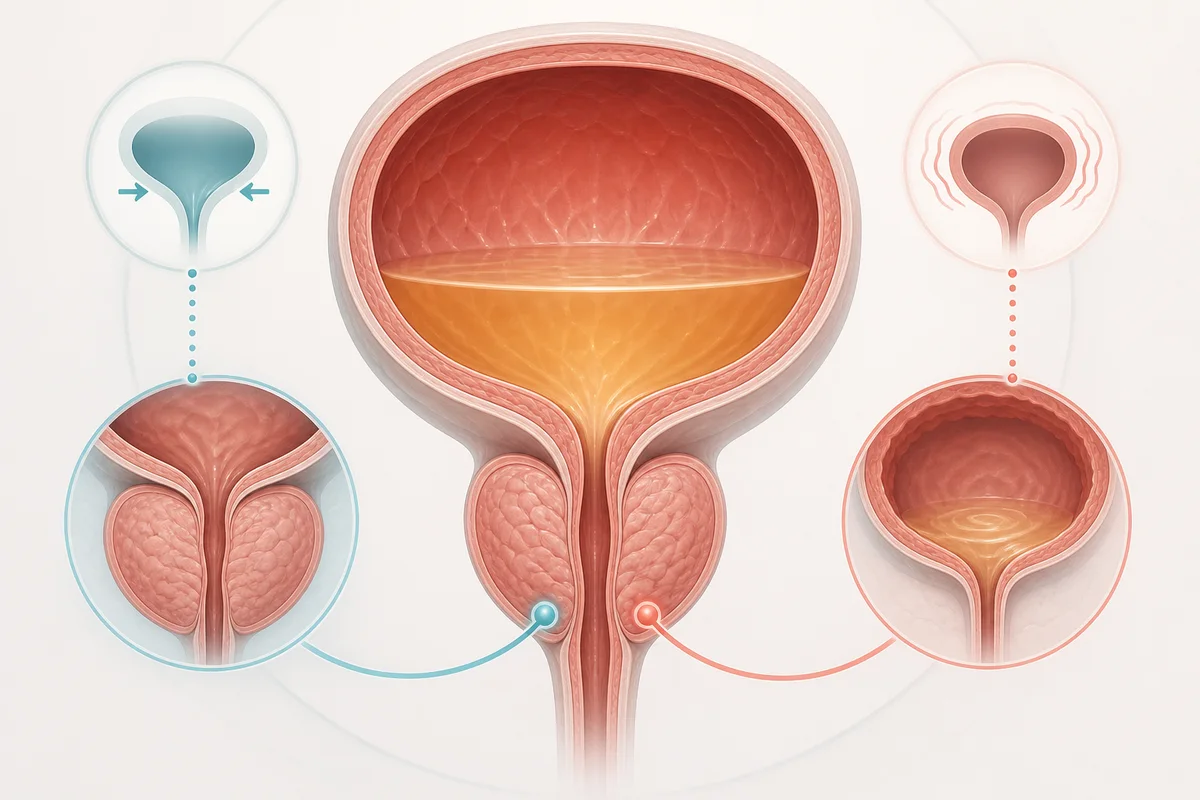
The sensation of incomplete emptying is a subjective feeling that the bladder is not fully emptied even after urination. In contrast, the post-void residual volume is a measured value determined by checking the urine remaining in the bladder immediately after urination using ultrasound or a bladder scan. The sensation of incomplete emptying can be strong even when very little urine actually remains, and there can also be cases where the residual volume is large but causes little discomfort.
In men, an enlarged prostate can press against the urethra, increasing resistance in the urinary tract. However, the severity of symptoms is not determined solely by prostate size. If the bladder muscles are weakened or the urethra is narrowed, or due to the effects of diabetes or neurological disorders, past pelvic surgery, or certain cold medicines, antihistamines, and anticholinergic drugs, urination can also become difficult.
Therefore, rather than starting medication based solely on the assumption that ‘the prostate is enlarged,’ it is necessary to distinguish between storage symptoms (frequent urination, urgency, nocturia), voiding symptoms (weak stream, intermittent flow, straining), and post-voiding symptoms (feeling of incomplete emptying, dribbling after urination).
The first consultation begins with recording symptoms and a urine test

Please try to note the number of times you urinate, the number of times you wake up at night, whether you have sudden urgency, whether it takes time to start urinating, and whether the stream is interrupted for about three days before your consultation. If possible, also record the time and amount of fluid intake and the volume of urine each time. How much the symptoms interfere with daily life is also an important criterion for determining the need for treatment.
Prepare a list of prescription medications, over-the-counter drugs, and health supplements you are taking. In particular, if your symptoms worsened after treating a cold or allergies, you should inform the start time. It is also advisable not to omit past urinary tract infections, kidney stones, urethral procedures, pelvic surgeries, diabetes, or neurological disorders.
A routine urinalysis checks for signs such as the possibility of infection, blood in the urine, sugar, or protein. Depending on the situation, discussions may include kidney function blood tests, prostate exams, and PSA tests, but not everyone needs the same tests. Decisions should be made after explaining the purpose of the tests, along with age, family history, and accompanying symptoms.
The urine flow test looks at the speed and shape of urine.

A uroflowmetry test is a test in which you urinate into specialized equipment that records maximum flow rate, average flow rate, voided volume, and the shape of the flow curve. Although it is a non-invasive test that does not involve inserting a catheter, the results alone cannot confirm prostate obstruction. This is because the flow rate can be low when the bladder is not very full, when you are tense, or when bladder contraction is weak.
The European Association of Urology guidelines suggest using uroflowmetry to assess lower urinary tract symptoms in men and recommend performing it before treatment. It is important to be in a usual urge-to-void state during the test. The guidelines explain that if the urine volume is less than 150 mL or the results differ from usual, repeated measurements can be helpful.
It may be more comfortable not to completely empty your bladder right before your visit, but there is no need to intentionally drink excessive amounts of water in a short period. Please also inform the medical staff whether the flow recorded in the lab was similar to your usual urination at home.
Post-void residual ultrasound is checked immediately after urination
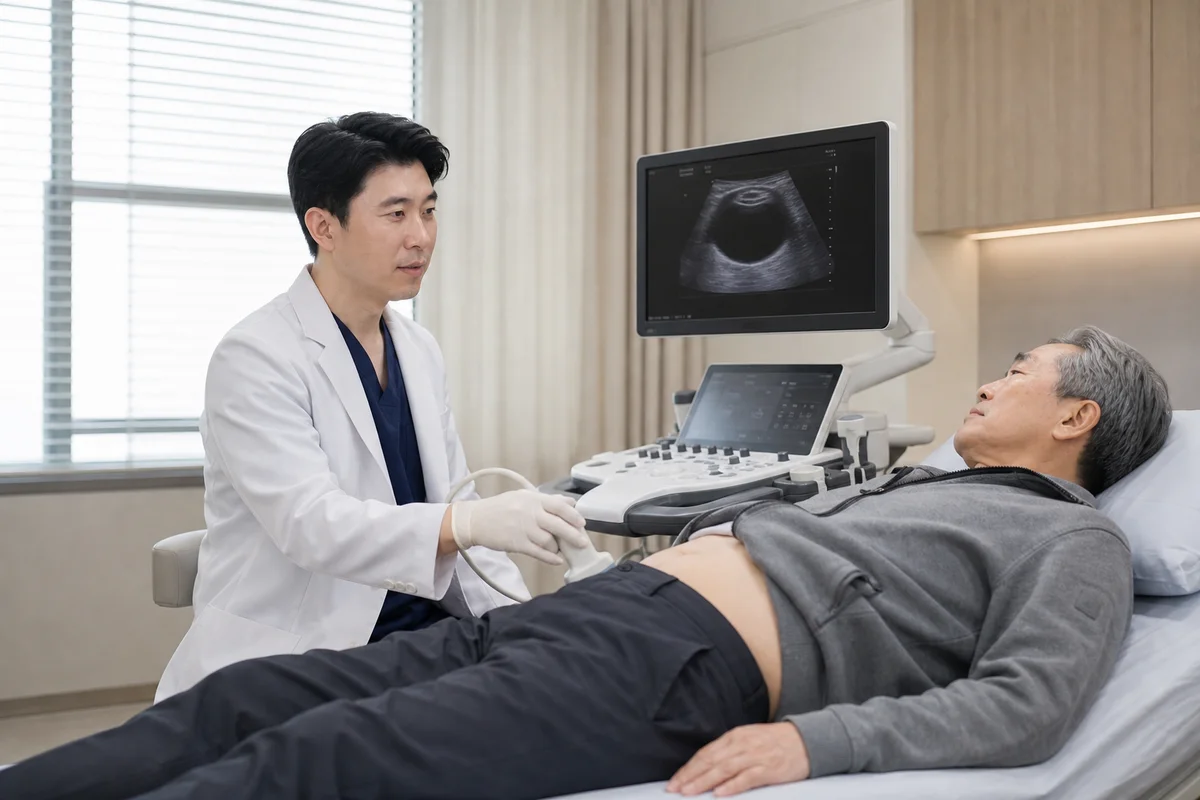
The amount of residual urine is usually measured with a lower abdominal ultrasound or a portable bladder scan immediately after urination. It can be checked without pain or radiation exposure, and if performed following a uroflowmetry test, you can see both the force of urination and the remaining amount of urine.
However, a single number is not immediately interpreted as a criterion for treatment. The European Association of Urology explains that residual urine volume can increase not only due to bladder outlet obstruction but also due to decreased bladder contractility, and that there may be variations between measurements. In other words, the equation ‘there is residual urine = prostate surgery is necessary’ does not hold true.
If the values are higher than expected, we look at usual symptoms, urine volume, kidney function, and the results of repeated measurements together. If repeated infections, bladder stones, or decreased kidney function are suspected, or if hematuria is present, additional tests such as ultrasound or endoscopy can be selectively considered.
Gather the test results to determine the intensity of treatment
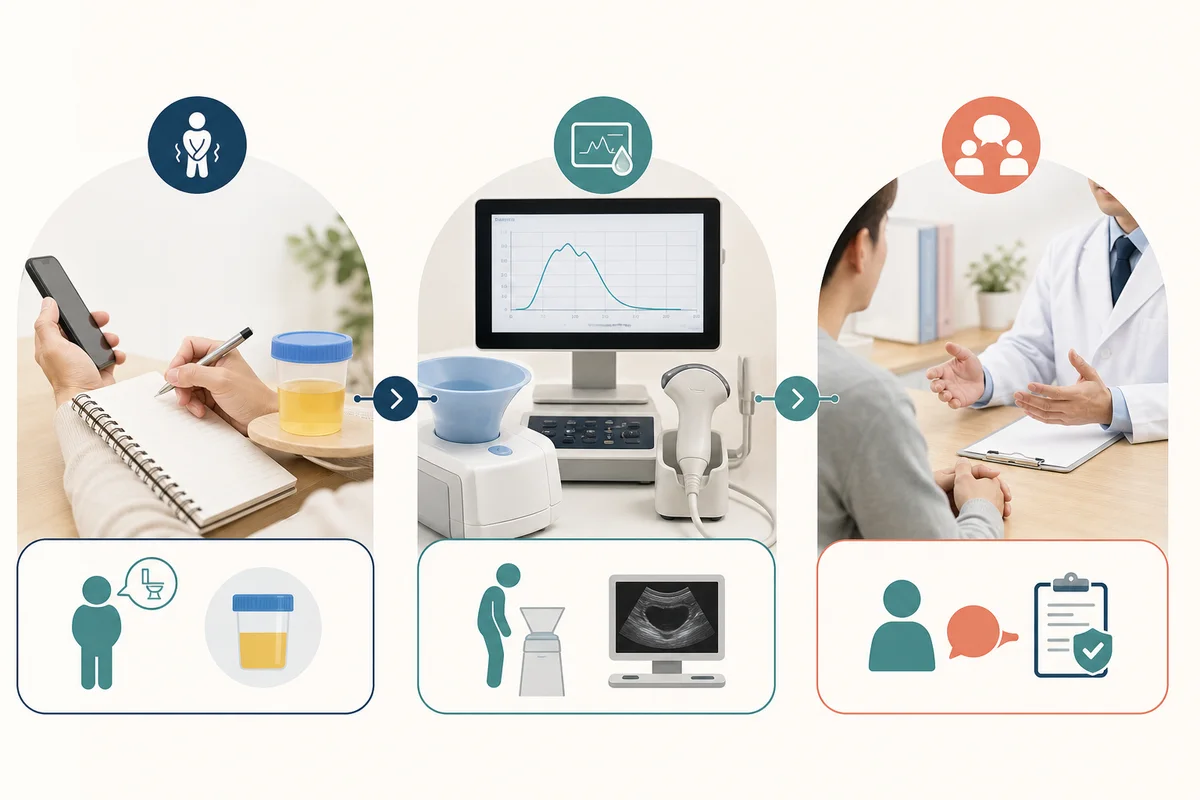
If the symptoms are mild and the risk of complications is low, you can monitor the condition while adjusting fluid intake timing, reducing caffeine and alcohol late in the day, managing constipation, and checking for medications that worsen the symptoms. Lifestyle adjustments do not mean you should always hold your urine or drastically reduce water intake. Dehydration and excessive holding can actually increase discomfort.
If drug treatment is necessary, the type of symptoms, prostate size, blood pressure, concerns related to sexual function, and interactions with other medications are considered. After taking the medication, side effects such as dizziness, changes in blood pressure, dry mouth, constipation, changes in ejaculation, and the degree of symptom improvement should be monitored.
If the condition does not improve sufficiently with medication, or if there are concerns about complications such as recurrent urinary retention, stones, infections, or kidney function problems, procedures or surgery can be discussed. Even in this case, the proper order is to first check the degree of obstruction, prostate structure, bladder function, and recovery priorities, and then decide individually, rather than choosing the method first.
If no urine comes out at all, do not wait

If you suddenly cannot urinate at all and your lower abdomen feels tight and painful, it may be an acute urinary retention. Do not wait until your scheduled outpatient appointment; you should be evaluated at a medical facility immediately. Emergency measures to empty the bladder may be needed, along with an assessment to determine the cause.
If fever and chills, flank pain, vomiting, visible hematuria, or severe weakness and changes in consciousness occur, prompt medical attention is necessary. Conversely, even if symptoms progress gradually, if there are recurrent infections, kidney disease, neurological disorders, or if the feeling of incomplete bladder emptying disrupts daily life and sleep, do not delay and seek evaluation.
When consulting a urologist in Samseong-dong about residual urine sensation and weak urine stream, it is better to check not only ‘Is the prostate enlarged?’ but also ‘How much residual urine is actually present, whether the urine flow results are similar to usual, and what other causes might exist.’ Having an accurate starting point helps reduce unnecessary treatments and ensures that you do not miss the appropriate timing for necessary treatment.
Referenced Medical Information
- European Association of Urology (EAU) 2026 Male Lower Urinary Tract Symptoms Diagnostic Evaluation
- U.S. National Institute of Diabetes and Digestive and Kidney Diseases (NIDDK) Guide to Benign Prostatic Hyperplasia
- NHS Wales Acute & Chronic Urinary Retention Guide
This article is intended to provide general health information and does not replace diagnosis or treatment. Tests and treatments are determined individually by medical professionals based on symptoms, health status, and test results.