Before you consider a three-piece implant

The people and consultation scene are AI-generated for illustration.
A three-piece implant contains two cylinders. “Three-piece” refers to three component groups: a pair of cylinders, a pump, and a fluid reservoir. Thinking it refers to the number of cylinders can be confusing. Before surgery, you need to understand where these components are placed in the body and how you operate them by hand.
A penile implant is a surgical option that helps provide erectile firmness for people with erectile dysfunction. Surgery may be considered after assessing circumstances such as an inadequate response to other treatments or situations in which medication is unsuitable. That does not mean everyone must follow the same sequence of treatments. The discussion should include how previous treatments were used, the response, and the changes the patient wants. European Association of Urology treatment guidelines
What the cylinders, pump, and reservoir do
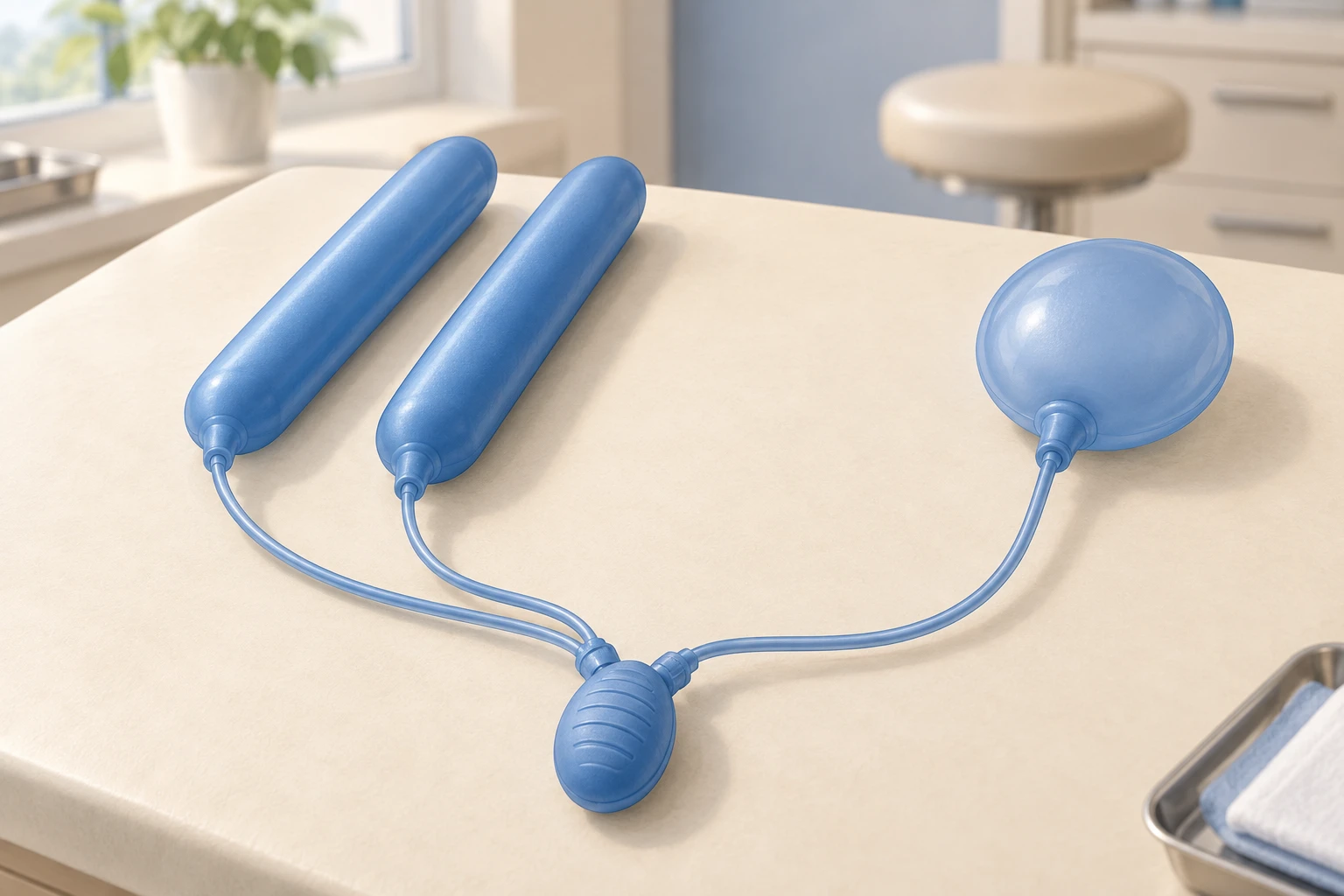
This diagram illustrates the components. Actual product appearance and surgical placement may differ.
The cylinders become firm when they fill with fluid. One is inserted into each of the two corpora cavernosa, the erectile tissue in the penis. A hand-operated pump sits in the scrotum. The reservoir, which stores fluid when the device is not inflated, is placed in the abdominal or pelvic area. Tubing connects the components.
During inflation, fluid moves from the reservoir into the cylinders. Pressing the pump sends fluid into the cylinders, making the penile shaft firm. Deflation sends that fluid back to the reservoir. Following the fluid’s path on a model helps distinguish each component’s role: storing fluid, moving it, and creating firmness. European Association of Urology guide to implant structure
This mechanism should not be confused with restoring blood vessels or nerves to their original function. The implant provides mechanical support for firmness. That is distinctly different from improving the body’s own natural erectile function compared with before surgery.
The placement shown in an explanatory drawing is conceptual. The actual reservoir position is determined by the patient’s surgical history and anatomy. Even with the same three-piece design, the surgical plan will not always match the position in the illustration.
How it differs from two-piece and malleable implants
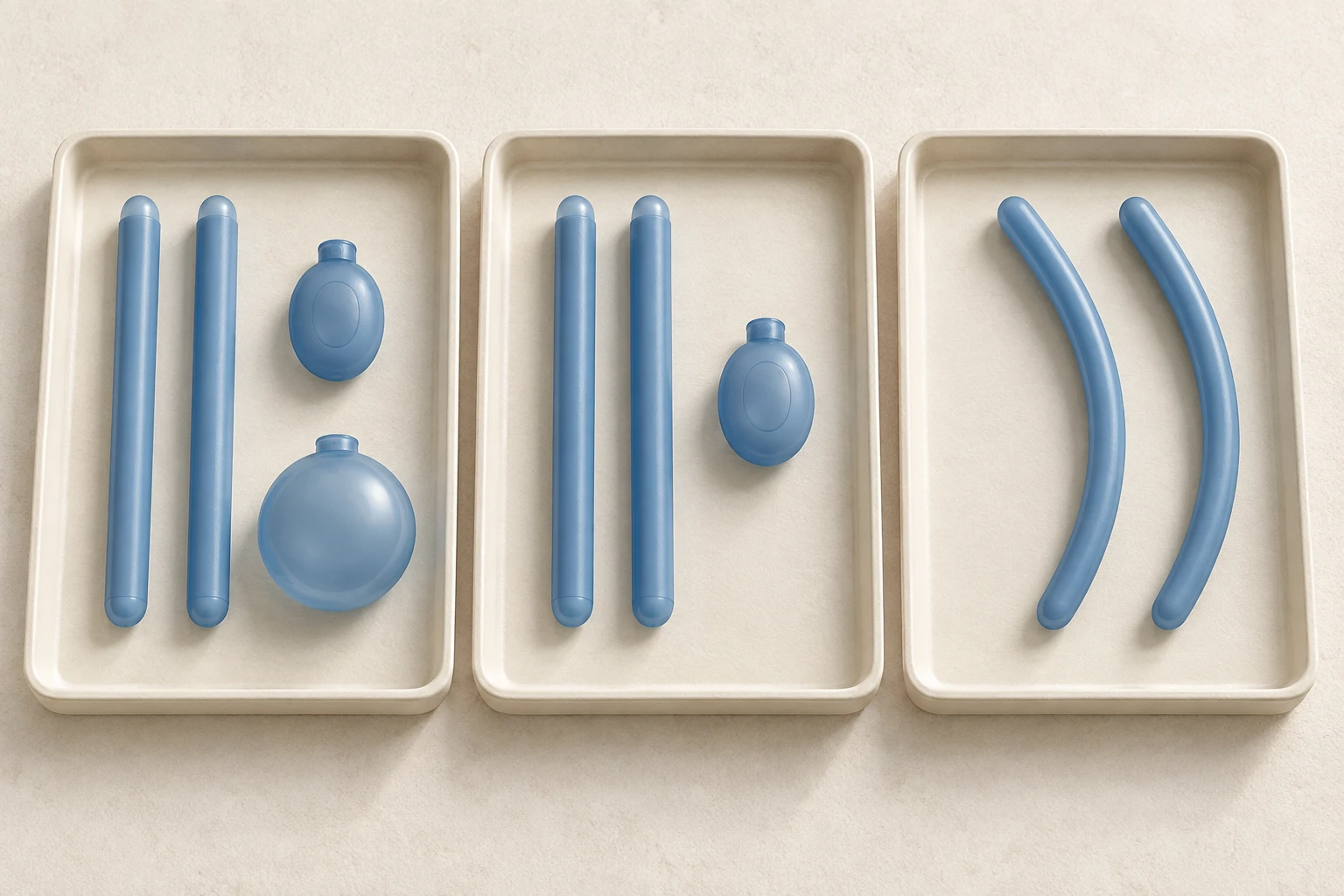
This diagram illustrates the components. Actual product appearance and surgical placement may differ.
The first difference to check is whether there is a separate reservoir. A three-piece implant has a reservoir placed separately in the abdominal or pelvic area, while a two-piece inflatable implant has no separate abdominal reservoir. Previous abdominal or pelvic surgery may affect reservoir placement. Your surgical history therefore needs to be reviewed when choosing a device design.
The next difference is how firmness and position are adjusted. Inflatable devices regulate firmness by moving fluid. Malleable devices use rods with a constant degree of firmness that are bent into the desired position. Learning to inflate and deflate a three-piece implant involves entirely different movements from positioning a malleable implant. These differences can help you explain your preferred way of using a device to your clinician.
Having more components does not establish that an implant is right for you. Your ability to operate it by hand and your physical circumstances also matter. The European Association of Urology guidelines state that direct comparative evidence is insufficient to establish the superiority of a particular manufacturer or implant type. A three-piece implant therefore cannot be considered the better choice for everyone. European Association of Urology explanation of implant types
Can you operate it with your own hands?
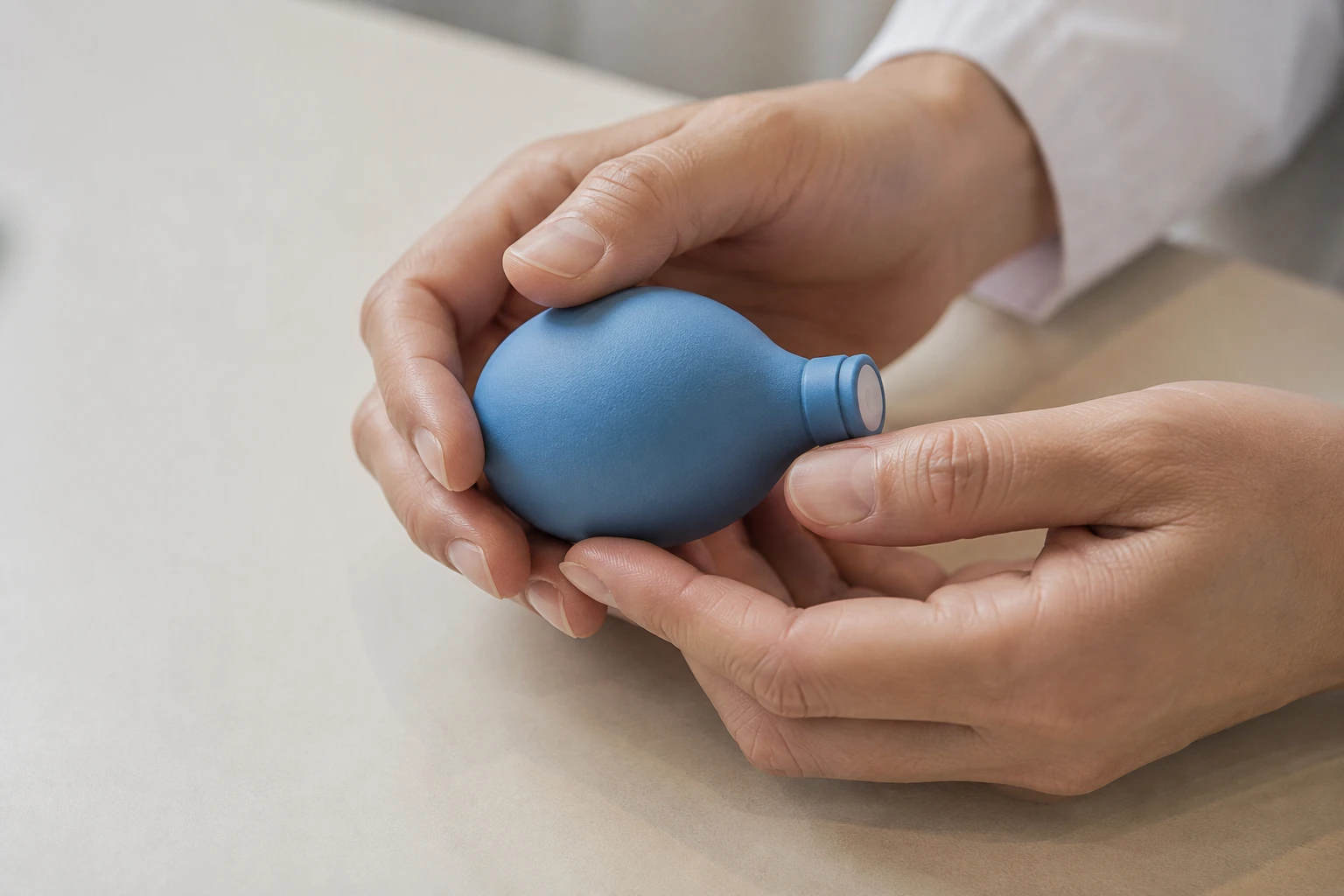
Using the pump requires hand strength and dexterity. You also need to be able to learn the operating sequence. Beyond understanding an explanation, it is important to find the relevant parts yourself and see how to press them. The need to consider hand function when selecting an implant is also addressed in the British Association of Urological Surgeons patient leaflet.
During your consultation, ask whether you can try both inflation and deflation on a model. If one movement is easy but the other is difficult, tell your clinician exactly what is difficult. Explain whether you lack the strength to press or have trouble finding the part you need to operate. Also check the postoperative training schedule and how to ask follow-up questions. Even if you have learned the controls on a model, your clinical team will decide when you can practice with the implanted device after assessing healing at the surgical site.
Setting expectations for length and sexual function

Sexual function includes several distinct elements. Sexual desire, firmness of the shaft and glans, orgasm, and ejaculation are different concepts. An implant primarily supports shaft firmness. It should therefore not be viewed as a device that directly increases desire or improves orgasm and ejaculation. It also cannot guarantee that glans firmness and sensation will remain as the patient wishes. American Urological Association counseling guidelines
Penile length deserves a separate discussion. Viewing implant placement as enlargement surgery or expecting a return to an earlier size may not align with the purpose of the operation. Some people feel their penis is shorter after surgery, so discuss your current condition and anticipated changes beforehand. Explain clearly whether your main concern is firmness, size, or another aspect of sexual function. The effects of existing conditions and previous surgery will also be assessed.
The statement that the device can be removed later also needs careful interpretation. Removing it does not restore the natural erections you had before surgery. Implant placement is an irreversible choice and may affect future treatment options. Do not decide on surgery on the assumption that you can easily return to your preoperative condition at any time. Article explaining the irreversible nature of penile implant surgery
Preoperative assessment and discussion of risks

Give your clinical team a detailed account of your treatment so far. Explain which medications you used, how you used them, and how you responded, as well as your current medications and previous operations. Before surgery, your overall health and any infection are assessed. Recommendations advise against implant surgery in the presence of a systemic, skin, or urinary tract infection. American Urological Association recommendations on infection
Risks include infection and mechanical failure. Infection may require additional treatment, including device removal; mechanical failure may lead to consideration of replacement or further surgery. You should also understand possible complications such as erosion, in which the device damages surrounding tissue, problems with component position, and pain. No one can promise that a device will work without failure for life or that an individual patient will be able to use it for a particular number of years. European Association of Urology discussion of risks
Ask your clinician which risks deserve the most attention given your current health. It is also useful to hear in advance what tests and additional treatment might be needed if a problem develops. A single factor, such as age or a diabetes-related test result, cannot readily serve as the same surgical criterion for everyone. The decision incorporates the examination and a range of health information.
What to check in your recovery plan and quote

After surgery, follow-up visits assess wound healing and provide device training. Professional society patient guides give varying starting points for training. Follow the instructions of the team that has assessed your own recovery when beginning device practice and resuming sexual activity. Do not start using the device on your own simply because a certain number of days has passed. Sexual Medicine Society of North America recovery guide
When you receive a quote, check whether it includes the device, surgery, anesthesia, tests, hospital stay, medication, follow-up visits, and training. This does not mean these items are necessarily billed separately. You should also ask about the cost of care if a postoperative problem occurs, device replacement costs, and warranty coverage.
Do not assume that a “materials warranty” means any future revision surgery will also be entirely free. Ask specifically what the warranty covers and which items you would need to pay for again. It is also useful to note your postoperative appointments and whom to contact if a problem occurs.
At the end of the consultation, ask again if you still have trouble identifying a component on the model or performing a movement yourself. Understanding the implant means more than memorizing component names: it means knowing exactly what you will need to do with your hands. After a thorough explanation of the expected benefits and potential risks, make the decision carefully in light of your individual health.
References: EAU erectile dysfunction guidelines · BAUS patient information on penile implants