
If you think first about the nearest toilet when a meeting begins, or sudden urges interrupt travel plans, it is difficult to dismiss the problem as a habit. This sudden, hard-to-defer need to urinate is called urinary urgency. It matters whether the feeling recurs and whether other symptoms accompany it.
If you are seeking an overactive bladder consultation in Yeoksam-dong, start with “What is causing this?” rather than only “Should I drink less water?” In men, bladder symptoms and prostate-related urinary problems can occur together.
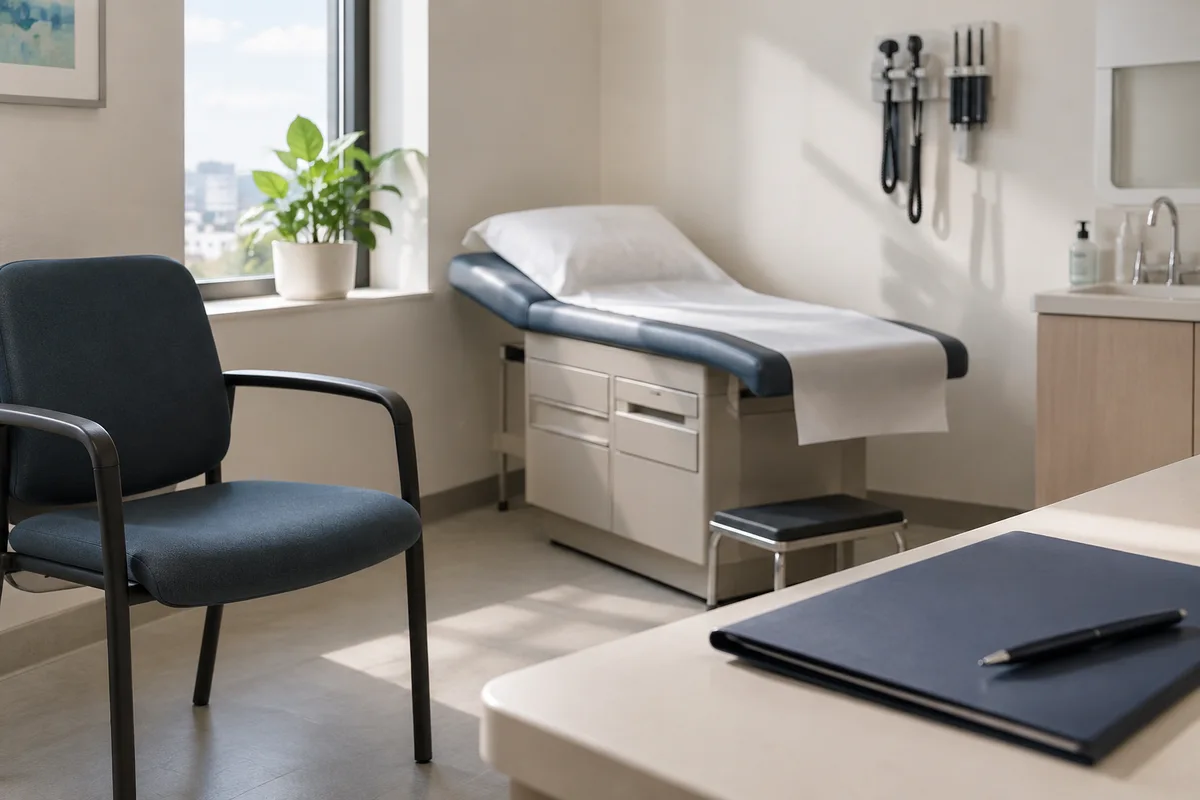
The cover and inline images are AI-generated to aid understanding. Consultation scenes do not show actual patients or real clinical records. Props and educational models are illustrative and do not represent a specific device or test result.
Going Often and Suddenly Needing to Go Are Different

Frequency means passing urine often; urgency means a sudden need that is difficult to defer. They can occur together, but frequent visits alone do not diagnose overactive bladder. Urine volume, drinks, and the circumstances in which symptoms began also need review. Mayo Clinic guide to overactive bladder
Describe leakage separately. Urgency can disrupt life even without leaking. Instead of saying only “I go to the toilet a lot,” give practical examples such as “I have to interrupt meetings because the urge is sudden” or “I leak before I reach the toilet.”
Before the consultation, note about three situations that trouble you most. Specific settings such as commuting, meetings, or sleep help explain the burden on daily life. Alongside the number of episodes, discuss the difficulty you most want to change.
First Consider Infection, Increased Urine Production, and Other Causes

A sudden need to urinate can have several causes. Your history and appropriate tests help assess infection, increased urine production, medications, and prostate-related urinary problems. It is important not to choose the label “overactive bladder” first and fit every symptom into it. Mayo Clinic guide to causes
Report painful urination, fever, visible blood, a weak stream, marked thirst, or other changes in general health. Mention medicines or drinking habits that changed around the time symptoms began. Even if you have earlier test results, new symptoms still need discussion.
Urinalysis helps assess issues such as infection and blood in urine; residual-urine measurement and other tests may be selected when needed. Not everyone needs the same tests. Asking “Which possibility does this test check?” helps clarify its purpose. NIDDK guide to diagnosing bladder problems
Men Should Describe Emptying Problems Too
Alongside the urge to urinate, check whether starting is slow, the stream is weak, or you feel incompletely emptied. Describing difficulties during both storage and emptying helps the assessment. Having an enlarged prostate does not mean every episode of urgency can be explained by prostate size alone. European Association of Urology guideline on assessing male urinary symptoms
Some people have both bladder symptoms and emptying problems, so treatment selection considers residual urine and the risk of retention. Tell your clinician if you previously needed treatment because you could not urinate or currently take prostate medication. Choosing a specific drug online without this information is not appropriate.
When hearing results, you can ask “Am I emptying urine adequately?” and “How do my urgency and residual urine relate?” Understanding storage and emptying symptoms separately also makes changes easier to explain at the next visit.
Adjust Daily Patterns Rather Than Cutting Out Water

Severely restricting water to reduce toilet visits is not a suitable solution. Drinking a large amount at once may also need review. Record daily fluids, caffeine, and drinks before bed, then adjust them to your own condition. If heart or kidney disease requires a fluid restriction, tell the team about that guidance. Mayo Clinic guide to overactive bladder treatment
Constipation and work conditions that make toilet access difficult are also worth discussing. Bladder training adjusts the time between voids according to a clinician’s plan; it does not mean always holding urine despite pain or suspected infection. Pelvic floor training also involves learning the correct technique.
Instead of changing many habits at once, track the items agreed during the consultation. You can bring questions such as whether urgency differed on days with less coffee to the next visit. The response to lifestyle changes varies between individuals too.
Discuss Goals, Side Effects, and Residual Urine When Choosing Treatment

Medication and other care may be considered alongside lifestyle changes. Discuss how much you hope to reduce urgency and leakage, existing conditions and medications, and expected side effects. Depending on the medicine, issues to monitor may include dry mouth, constipation, or difficulty urinating. Mayo Clinic guidance on treatment options
If the response is insufficient, first review how long treatment has been used, how it was taken, and the actual symptom changes. Do not increase doses yourself or combine separate prescriptions. Additional treatments are discussed with a specialist according to previous response and individual circumstances. Hearing a treatment name does not mean it is automatically your next necessary step.
The aim is not to achieve an identical number of toilet visits every day. Set practical measures such as fewer interruptions from urgent feelings, less leakage, or improved sleep. Bring both the changes you notice and your diary records to discuss the response.
Bring Records, but Recognize Symptoms That Need Earlier Assessment

Recording urination times and volumes, urgency, leakage, and drinks can help the consultation. See our three-day bladder diary guide for instructions. The table need not be perfect; troublesome time periods and changes are enough to start a useful discussion.
If you develop fever, chills, severe flank pain, or cannot urinate at all, do not wait for a routine overactive bladder appointment. Visible blood in urine is also a reason for assessment. Do not group new symptoms under “My bladder has always been sensitive.” NIDDK guide to bladder symptoms
When preparing for a consultation from Yeoksam-dong, bring your current medication list and previous urology results too. Clarifying the cause assessment, lifestyle measures to try, changes to monitor after treatment, and the next appointment can turn vague worries into a practical care plan.