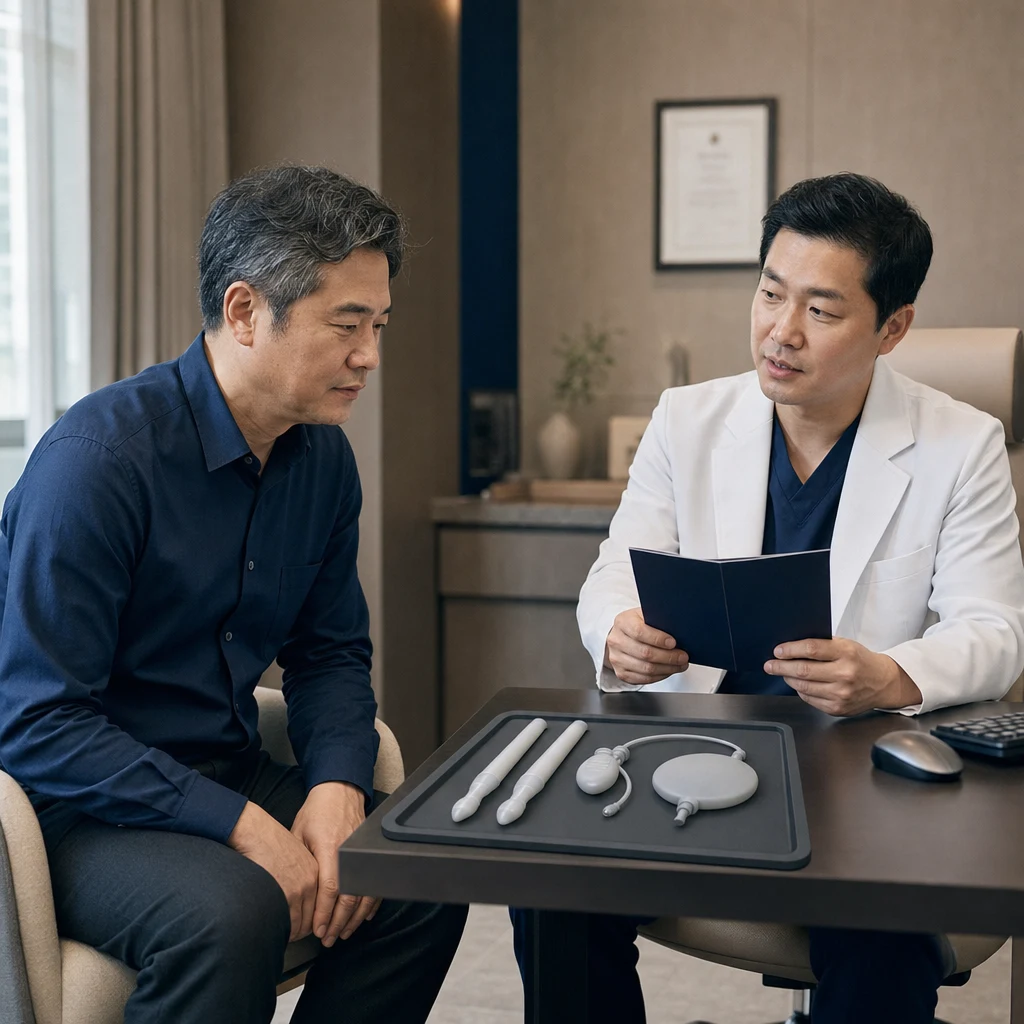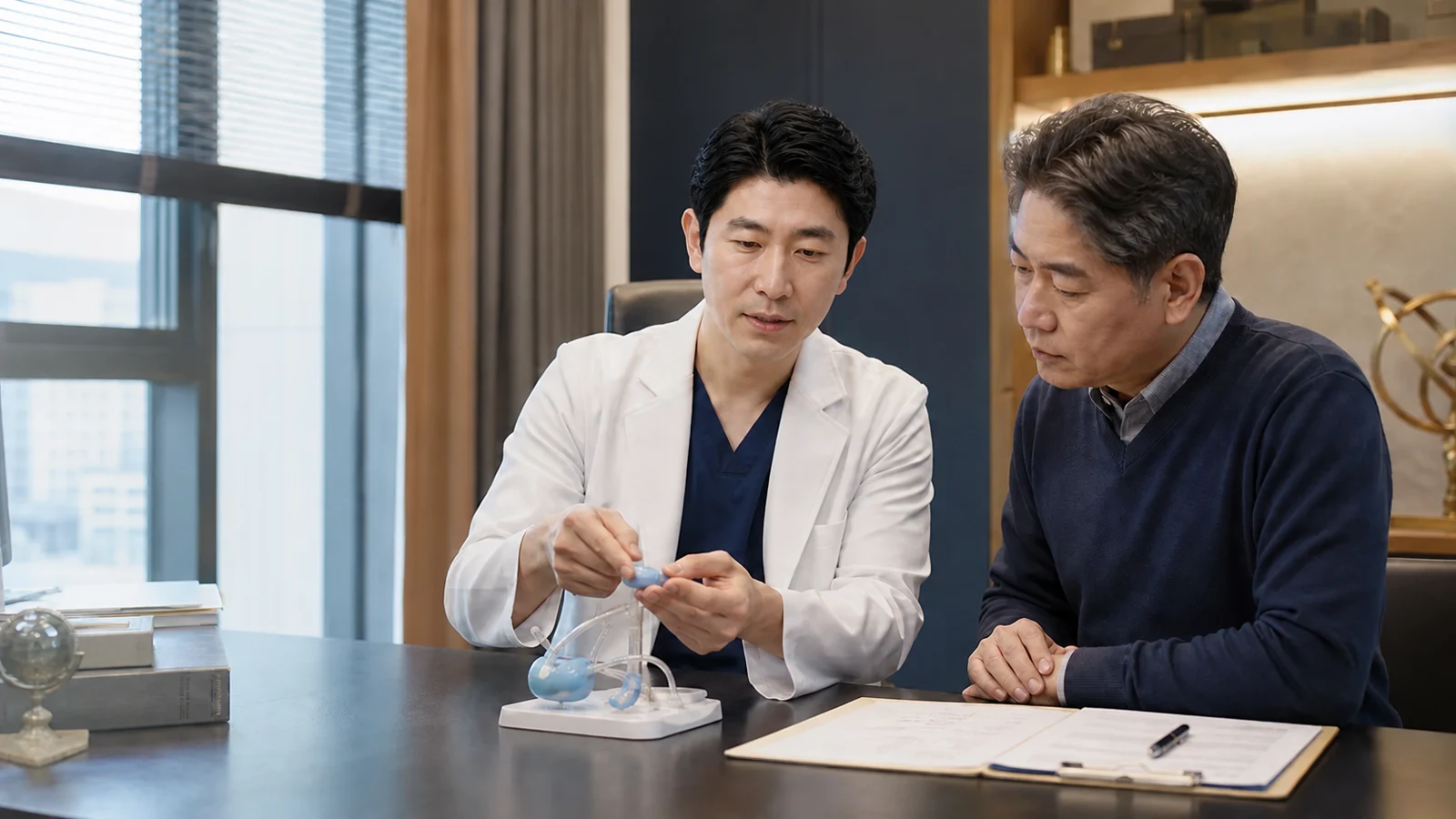
People searching for Gangnam inflatable implants have often already tried treatments such as oral medication, injections, or vacuum erection devices. As important as determining whether someone is a candidate for surgery is preparing the body before surgery and planning a realistic schedule for recovery and device usage training.
A inflatable penile prosthesis is an irreversible surgery in which a mechanical device is implanted inside the body. You must make a decision after fully understanding not only the expected results but also the possibilities of infection, device malfunction, reoperation, changes in appearance and sensation, and the recovery period.
First, understand the three-part device and irreversibility
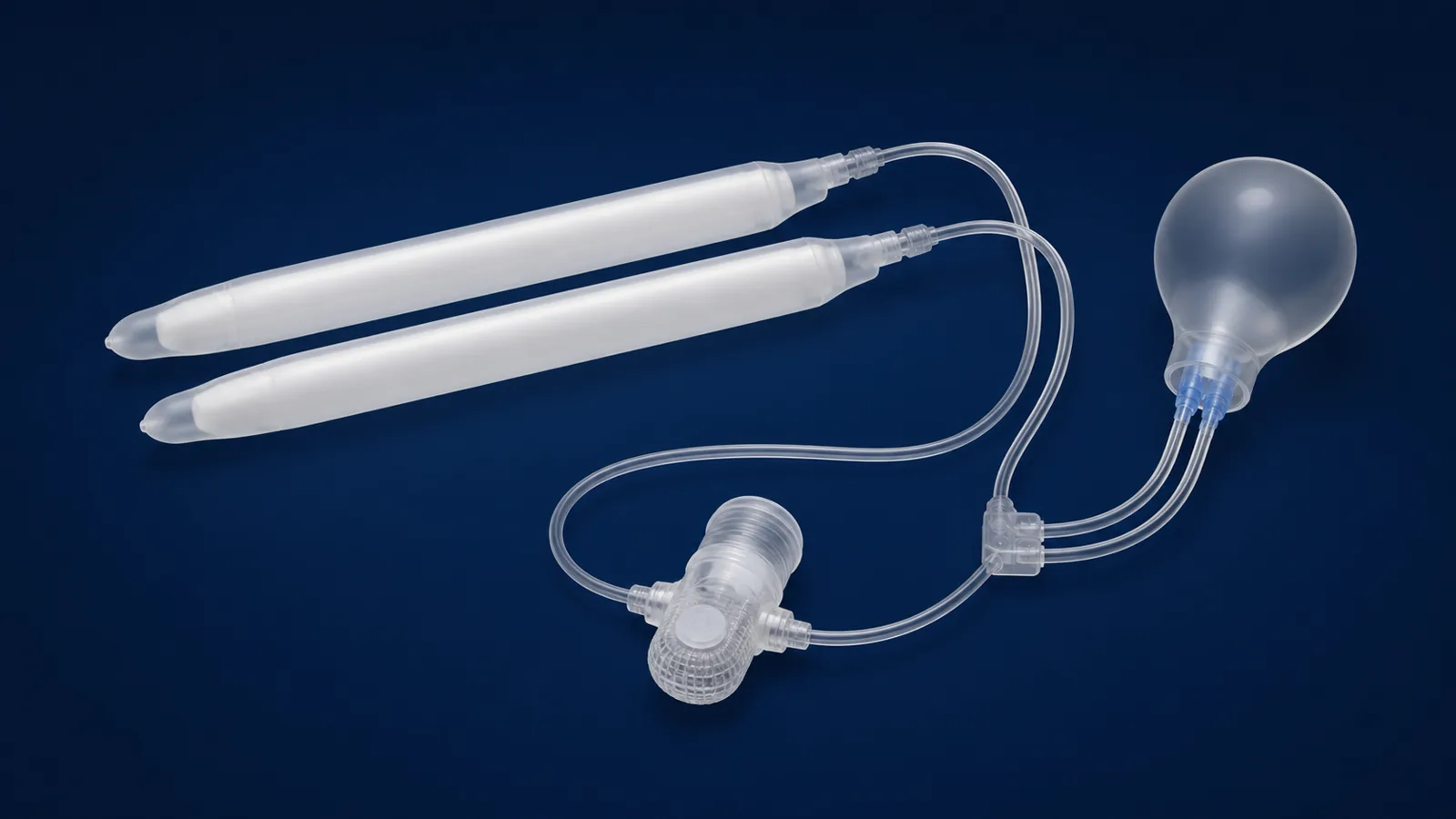
A typical three-piece inflatable device consists of two cylinders inside the corpora cavernosa, a pump operated in the scrotum, and a fluid reservoir in the lower abdomen. When the pump is pressed, fluid moves into the cylinders to create rigidity, and when released, it returns to the reservoir.
During the process of inserting the cylinder, the structure of the corpus cavernosum changes, making it difficult to return to the natural erection state before surgery. Even if there is a situation where the implant needs to be removed, it is difficult to expect the same response with non-surgical treatments. Therefore, in consultations for inflatable implants in Gangnam, it is important to first check whether sufficient prior treatments have been carried out and whether the irreversibility can be accepted, rather than focusing on the type of device.
Before surgery, the risk of infection and overall physical condition are checked

The American Urological Association guidelines recommend not performing implant surgery in the presence of systemic, skin, or urinary tract infections. If an active infection is suspected, it should be treated first, and the timing of the surgery should be reconsidered. If the patient has diabetes, recent blood sugar control and complications should be checked, and smoking and nutritional status should also be factored into the recovery plan.
Anticoagulants and antiplatelet drugs should not be stopped arbitrarily; the prescribing medical staff and the surgical team should together decide on a plan to discontinue or continue them. You should also inform them of cardiovascular disease, sleep apnea, drug allergies, and any history of previous pelvic surgery or radiation therapy.
Prepare in advance for your transportation after discharge, someone to help with initial household chores, and your schedule for returning to work. Pre-surgery hair removal, disinfection, fasting, and medication may vary by hospital, so it is safest to follow individual instructions.
Recovery progresses gradually while monitoring wounds and swelling

After surgery, you may experience pain, bruising, and swelling, and you may need to use a catheter or drainage tube for a certain period of time. Take prescribed medications as directed and care for the wound according to the instructions provided. Lifting heavy objects, cycling, intense exercise, and sexual activity should be postponed until allowed by your healthcare provider.
High fever and chills, increasingly severe pain and swelling, pus or foul odor from the wound, changes in skin color, or a complete lack of urine output are symptoms that should not be waited out, and you should contact a surgical institution immediately. Infections of implants cannot be resolved with antibiotics alone and may require removal or replacement surgery, so early evaluation is important.
Training in use and long-term follow-up are part of the surgery
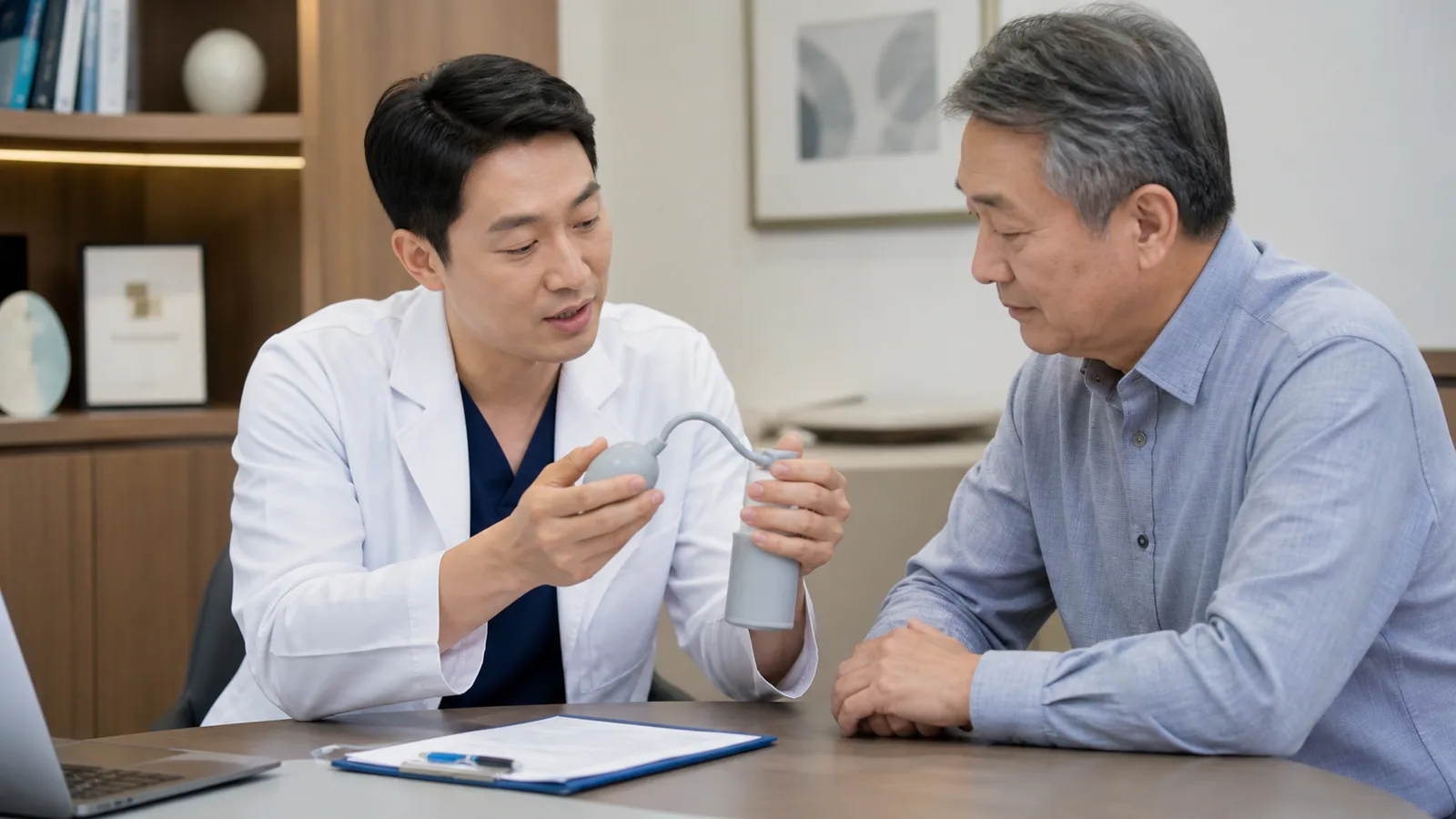
The initial operation time is determined according to the condition of the wound and swelling. Instead of pressing the pump prematurely on your own, you should learn the positioning, how to press, and how to fully release it in front of medical staff. If you have hand strength or joint issues, it is also important to check the usability by directly manipulating a model before surgery.
Mechanical devices can experience wear, leakage, or pump malfunctions over time, and tissue erosion or pain should also be monitored. If it suddenly does not expand or release, changes shape, or feels closer to the skin, do not force repeated operations and seek medical attention.
The completion point of Gangnam expansion-type implant surgery is not the discharge day. Make the decision after confirming a medical system that can continue through recovery checks, usage training, and long-term device status inspections.
Referenced Medical Information
- American Urological Association (AUA) Erectile Dysfunction Guidelines
- European Association of Urology (EAU) Guidelines on the Management of Erectile Dysfunction
This article is intended to provide general health information and does not replace diagnosis or treatment. Surgical suitability, device selection, and recovery schedules should be determined individually with the responsible medical staff.