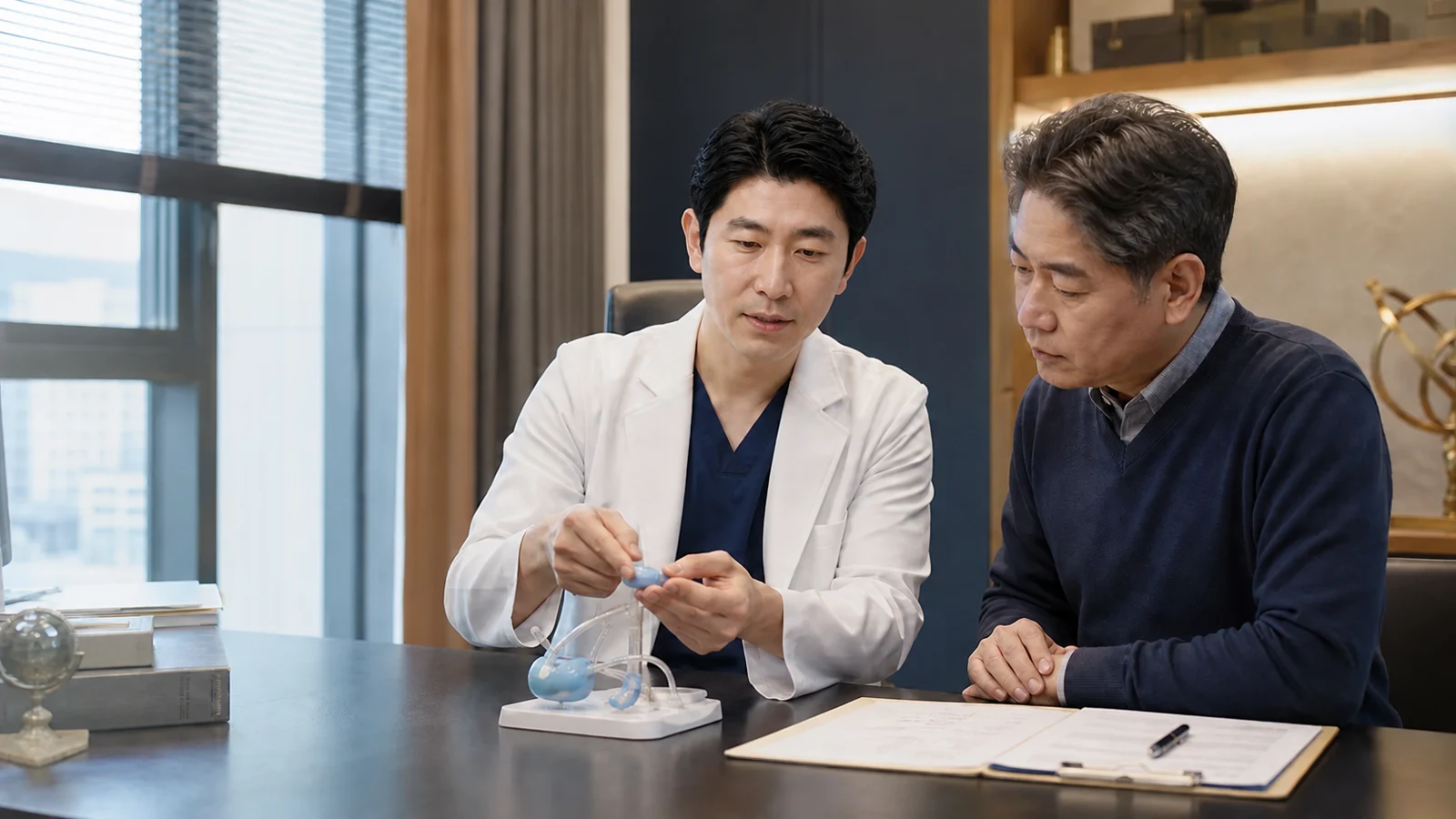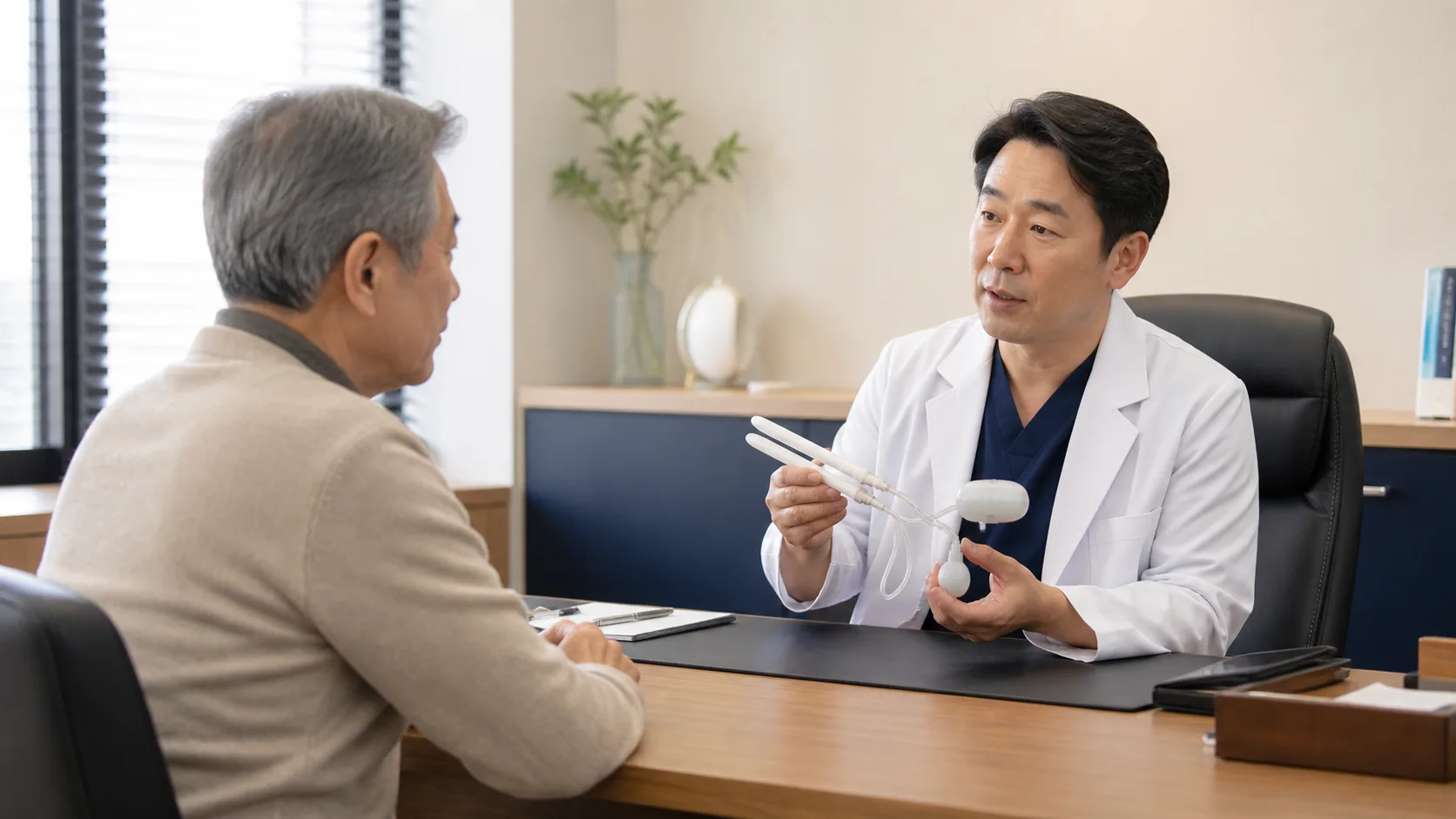
People who are considering male prosthesis surgery often have a long history of erectile dysfunction treatment. Surgery consultation is considered when sufficient rigidity cannot be achieved even with medication, when it is difficult to use cavernous injections or vacuum erection devices, or when natural recovery is unlikely due to diabetes, vascular diseases, or pelvic surgery.
The male implant mentioned here is specifically a penile implant. Among them, the inflatable implant works by manually operating the device implanted in the body to create rigidity when needed, and then returning it to a state close to flaccid after use. However, it is important to first understand that this is not a treatment that restores erectile function to its original state, and it is an irreversible surgery that is difficult to revert to the pre-surgery condition.
The expandable male implant consists of three parts
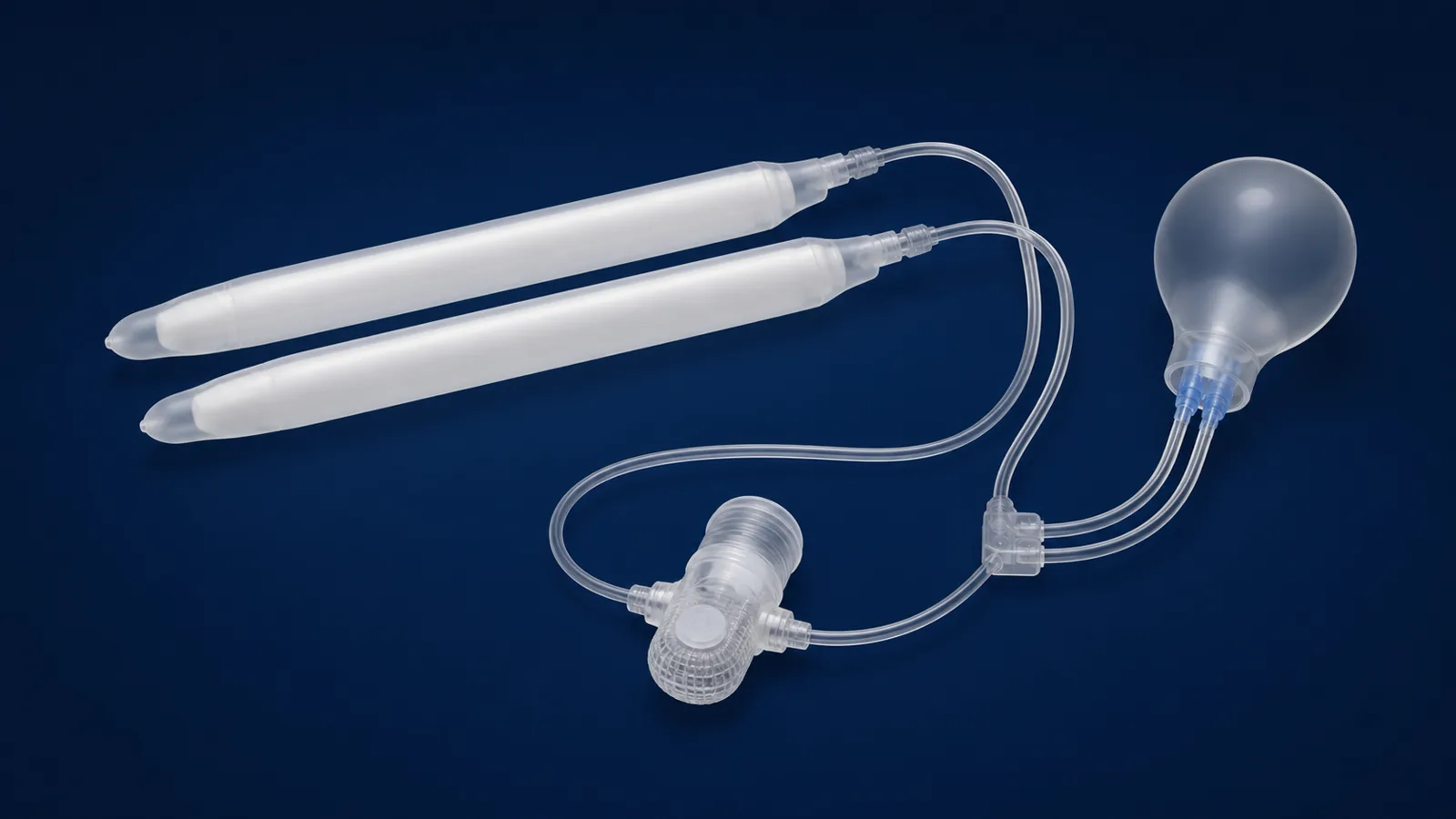
A typical three-piece inflatable implant consists of two cylinders inserted into the left and right corpora cavernosa, a pump operated by hand in the scrotum, and a fluid reservoir located in the lower abdomen. All components are placed inside the body.
When you repeatedly press the pump, the liquid in the reservoir moves to the cylinder, creating rigidity in the penis. After use, pressing the release device returns the liquid to the reservoir, reducing size and rigidity. The characteristic of inflatable devices is that they can maintain a relatively natural relaxed state under normal circumstances.
On the other hand, since it is a mechanical device with parts and connecting tubes, problems such as leaks, pump malfunctions, or cylinder damage can occur over time. If hand strength or joint movement is not good, it is also important to directly operate the pump on a training model before surgery.
Surgery is considered when other treatments are insufficient
Inflatable implant surgery is not a treatment that is performed immediately upon diagnosis of erectile dysfunction. Generally, after checking the cause, cardiovascular risk, diabetes and hormonal status, and medications, less invasive treatments such as oral erectile dysfunction medications, corpus cavernosum injections, and vacuum erection devices are considered first.
If there is insufficient response to such treatments, or if they cannot be used due to side effects and underlying conditions, or if the patient prefers a long-term mechanical solution after receiving sufficient explanation, implant surgery may be an option. Erectile dysfunction after prostate cancer surgery or radiation therapy, difficult-to-control diabetic erectile dysfunction, and severe vascular or nerve damage can also be reasons for consultation.
The important thing is not to rush into surgery simply because ‘the medication didn’t work once.’ You should first check whether the method and dosage of the medication were appropriate, whether other treatments can realistically be tried, and whether the cause of the erectile dysfunction has been sufficiently evaluated.
In the surgery, a cylinder is placed inside the corpus cavernosum
The surgery is performed by making an incision around the penis and scrotum or below the pubic bone after anesthesia. The medical team secures space within the left and right corpora cavernosa and inserts cylinders of a length appropriate for the body structure, then places a pump in the scrotum and a reservoir in the lower abdomen, connecting each component. The location of the reservoir and the surgical plan may vary depending on a history of previous pelvic or abdominal surgery.
Before surgery, it is necessary to check for skin, urinary, or systemic infections, blood sugar control, bleeding risk and medications, and anesthesia suitability. If there is an active infection, it should be treated first before rescheduling the surgery. If you are taking anticoagulants or antiplatelet drugs, do not stop them arbitrarily and follow the instructions of both the prescribing and surgical medical professionals.
This is not a surgery that restores natural erections
Implants are not devices that restore nerves or blood vessels that respond to sexual stimulation. They help mechanically create rigidity when the pump is operated, making insertion possible. Libido, sensation in the penile skin, orgasm, and ejaculation are different functions, so they cannot be recreated by the implant alone.
Conversely, if the function was previously maintained, it does not necessarily disappear just because an implant is being placed. However, due to causes such as prostate surgery, nerve damage, or diabetic complications, there may have been changes in sensation or ejaculation function even before the surgery, and postoperative pain or psychological adaptation can also affect sexual activity. Individual consultation is needed to determine what can be maintained and what may change based on your current function.
Another key point is irreversibility. Since the inside of the corpus cavernosum is expanded to insert the cylinder, it is difficult to return to the original state of the corpus cavernosum even if the implant is removed. If removal becomes necessary due to infection or device malfunction, reoperation to replace it with a new device is often considered.
After recovery, you need to learn how to use the pump

Immediately after surgery, pain, bruising, and swelling may occur, and depending on the condition, a catheter or drainage tube may be used. Until the wound heals, you should avoid lifting heavy objects, riding a bicycle, vigorous exercise, and sexual activity, and follow the prescribed medication and wound care instructions.
The first operation begins after the wound and swelling have stabilized and under the confirmation of medical staff. You need to practice yourself how to locate the pump, how to inflate it sufficiently, and how to fully release it after use. Recovery speed varies depending on the extent of the surgery and your health condition, so the individual instructions from your medical staff take priority over any schedule seen on the internet.
If you have a high fever or chills, pain and swelling that worsen over time, pus or foul odor from a wound, changes in skin color, or inability to urinate, you should contact a surgical institution without waiting. If an infection is confirmed, it is difficult to resolve with antibiotics alone, and removal or replacement of the implant may be necessary.
Before making a decision, check long-term management as well
Male implant surgery is not a treatment that ends with discharge. You need to check the initial wound and get training on how to use it, as well as confirm whether you can receive medical care if the device does not expand or release properly, and whether replacement surgery is possible in case of infection or mechanical problems.
Before the consultation, it is helpful to organize the names and dosages of the medications you have used so far, your experience with injections or vacuum devices, erection response, history of previous surgeries and radiation therapy, diabetes and cardiovascular diseases, and any medications you are currently taking. It is important to fully understand the risks of irreversibility, infection, device failure, and the possibility of reoperation, as well as the benefits of surgery, before deciding whether the treatment is suitable for you.
Referenced Medical Information
- American Urological Association (AUA) Erectile Dysfunction Guidelines
- European Association of Urology (EAU) 2026 Erectile Dysfunction Management Guidelines
This text is intended to provide general health information and does not replace an individual’s diagnosis or treatment. The suitability of an inflatable penile prosthesis, surgical methods, and recovery schedule should be individually consulted with a urology specialist.