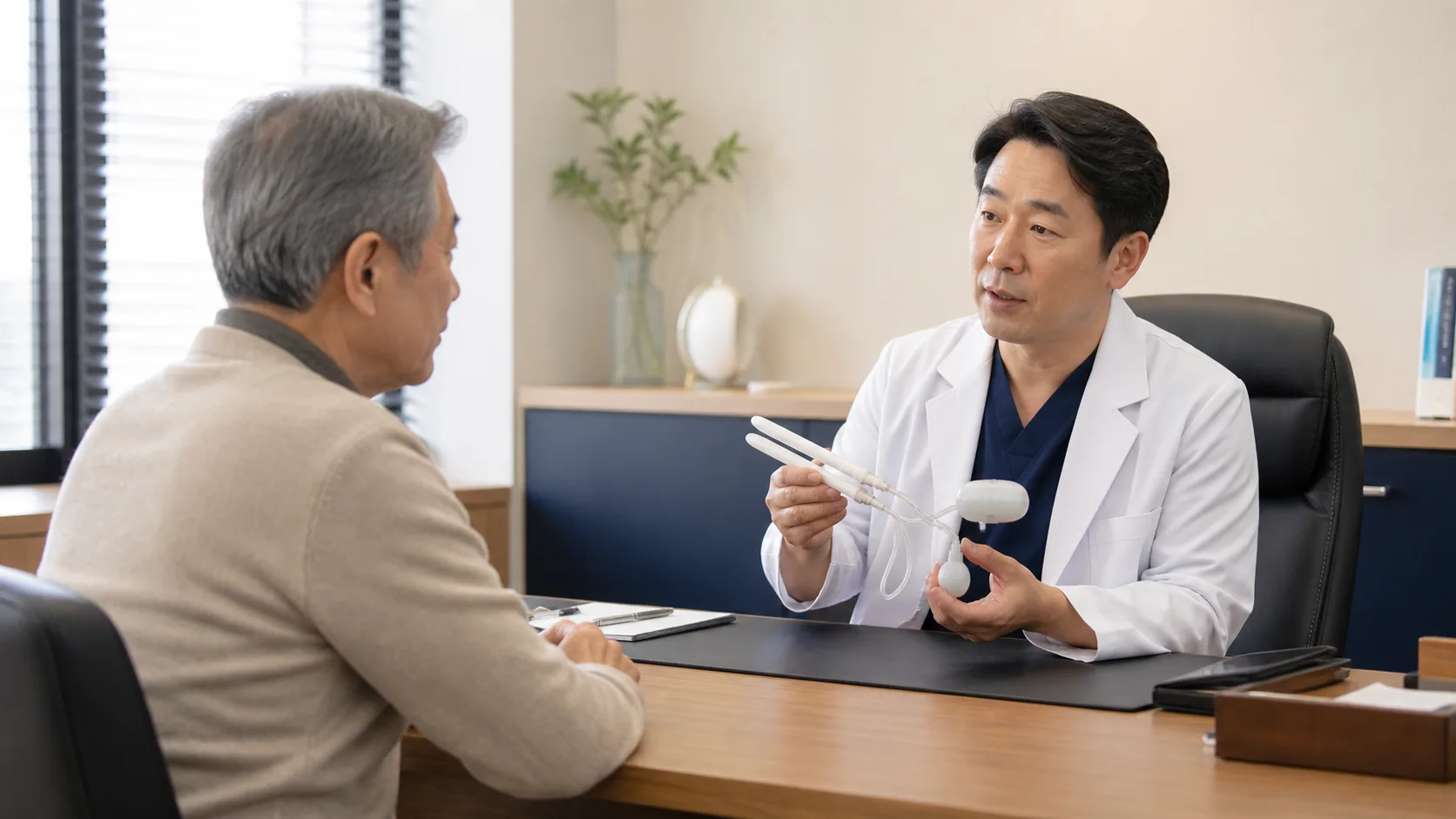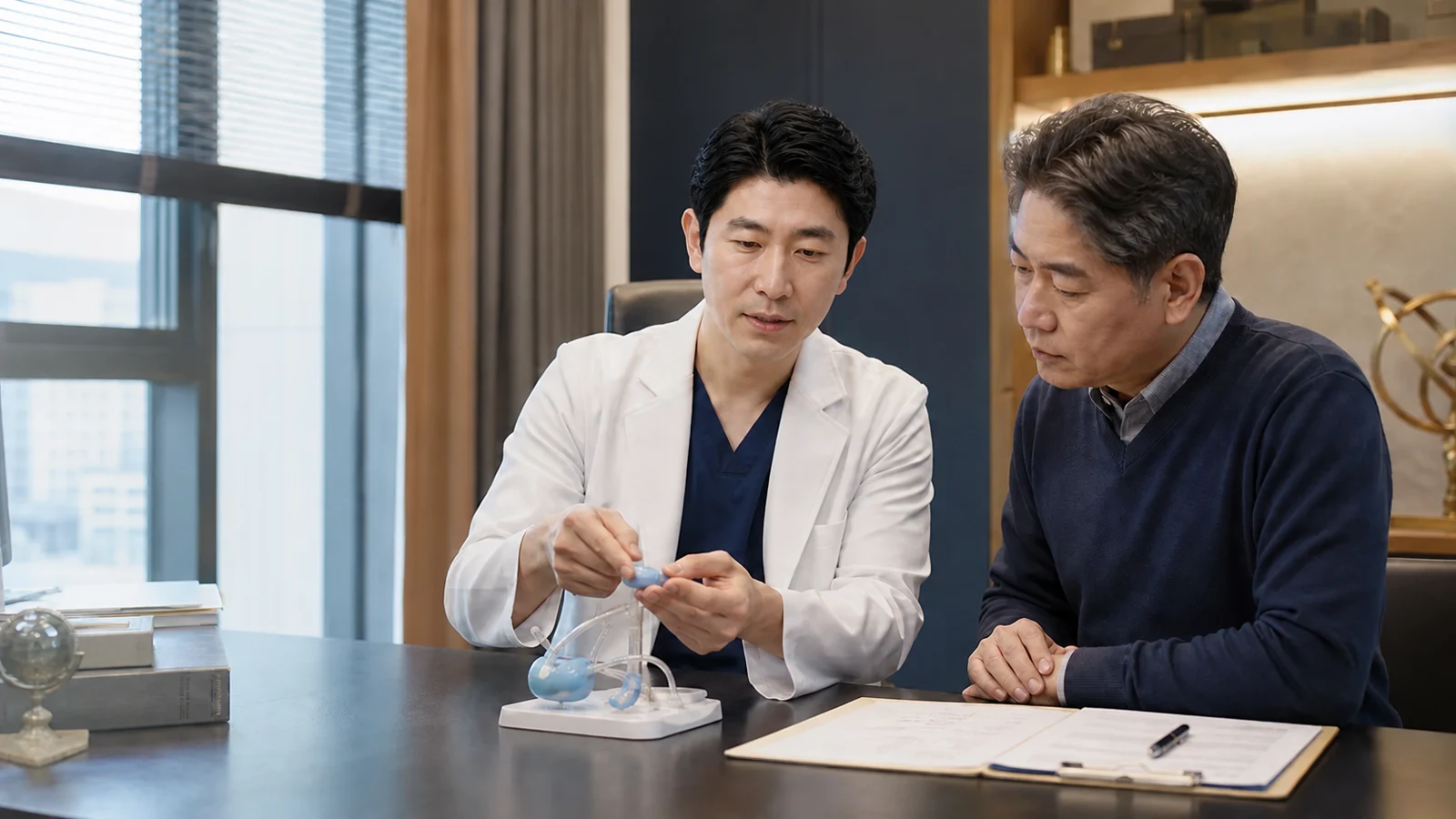
People searching for inflatable penile implants surgery have often already tried oral medications or injectable treatments but did not achieve the desired rigidity, or are looking for other methods due to side effects and inconvenience. This surgery has the advantage of allowing mechanical rigidity when needed, but it is an irreversible treatment that involves placing a device inside the body.
Before making a decision, you should check not only the success stories but also whether other treatments have been sufficiently reviewed, how the risk of infection is reduced, and how recovery and device usage training are conducted.
It is a device in which three parts move together.
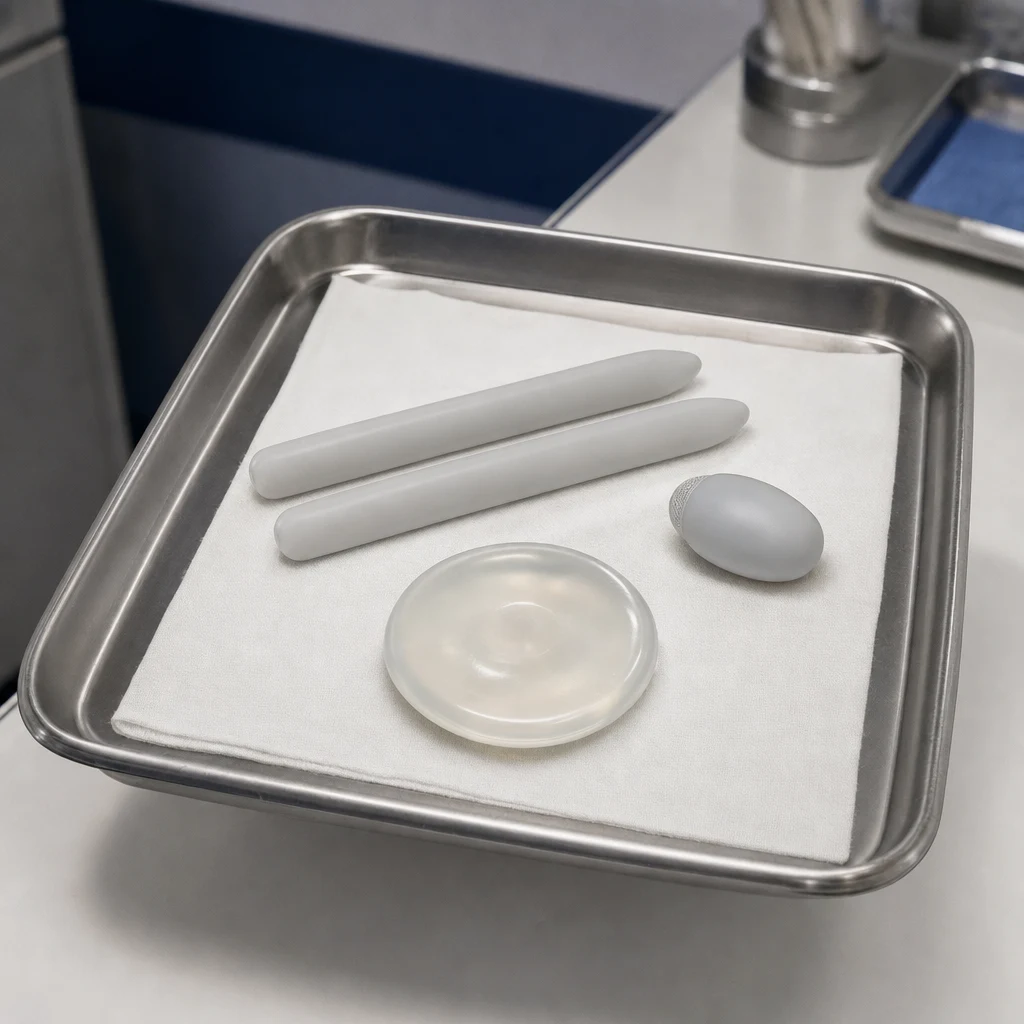
A typical three-piece inflatable implant consists of a cylinder in the corpora cavernosa, a pump in the scrotum, and a reservoir in the abdomen. Pressing the pump moves the fluid from the reservoir into the cylinder, creating rigidity, and activating the release mechanism allows it to relax again. There are also two-piece or malleable implants, but the choice depends on hand dexterity, previous abdominal surgeries, anatomical conditions, and the desired sensation.
Implants are not regenerative treatments that restore blood flow or nerves. Removing the device after insertion does not return the penis to its previous natural erection state. It is important to test a real model of the pump before surgery and check whether it can be operated with hand strength and joint condition.
First, we look at less invasive treatments

Treatments for erectile dysfunction include lifestyle changes and management of chronic diseases, PDE5 inhibitors, vacuum erection devices, and intracavernosal injections. If you are taking nitrate drugs or have a poor response to medication, if severe erectile dysfunction persists after prostate or pelvic surgery, or if you have both erectile dysfunction and Peyronie’s disease, implants can be considered.
Conversely, if there is active skin or urinary tract infection, or if diabetes is not well controlled, it may be possible to manage the risk factors first rather than rushing into surgery. Anticoagulants and antiplatelet agents should not be stopped arbitrarily and must be adjusted together by the prescribing physician and the surgical medical team. Understanding the purpose of the surgery, how it is performed, and the recovery period can affect satisfaction not only for the patient but also for their partner.
Infection and mechanical failure are key risks

Implant infection is a significant complication that, once it occurs, cannot be resolved with antibiotics alone and may require device removal or replacement. The EAU guidelines report low infection rates for first-time implantation surgeries in low-risk patients, assuming proper antibiotic prophylaxis and surgery performed by experienced institutions, but they explain that the risk can vary under conditions such as diabetes, spinal cord injury, or reoperation.
Other possible issues include bleeding and hematoma, persistent pain, problems with the position of the cylinder or reservoir, erosion toward the skin or urethra, and mechanical failure over time. Keep a record of the implant model and manufacturer, and share this information with medical staff before tests such as MRI. It is safer to ask specifically about expected durability and replacement procedures in case of failure rather than relying on the term ‘lifetime guarantee.‘
Recovery is the time when wounds and swelling go down

In the early stages, swelling, bruising, tightness, and pain may appear around the scrotum and penis. Wound care, showering, driving, returning to work, and resuming exercise vary depending on the scope of the surgery and individual condition, so discharge instructions should be given first. If swelling suddenly increases, the wound opens, or you experience warmth, pus, fever, or increasing pain, contact a medical facility immediately.
The use of the pump is learned after the wound has stabilized, according to the instructions of the medical staff. Operating it too early or resuming sexual activity prematurely can hinder recovery. Conversely, if you do not sufficiently learn how to operate the device at the designated time, you may experience difficulties when using it in practice, so it is advisable to schedule the training in advance.
Write down these questions before the surgery

- Considering the cause of my erectile dysfunction and my response to treatments so far, is surgery appropriate?
- What type of device do you recommend, and can I operate it with my hands?
- How do diabetes, smoking, medications, and previous pelvic surgeries affect risk?
- How is infection prevention carried out before and after surgery?
- When can I resume work, driving, exercise, and sexual activity respectively?
- Who should I contact if I suspect a malfunction or infection, and what would revision surgery involve?
Inflatable implant surgery is neither a procedure that ‘restores’ erectile function to its original state nor a procedure that increases length. It is a treatment to decide on only after comparing it with other treatments and when one can accept its irreversibility, the possibility of infection and reoperation, and the manual dexterity required to use the device.
Referenced Medical Information
- European Association of Urology (EAU) Guidelines on the Management of Erectile Dysfunction
- European Association of Urology (EAU) Penile Curvature Guidelines
This article is intended to provide general health information and does not replace diagnosis or treatment. The suitability and risks of surgery vary depending on an individual’s condition, medications, and surgical history.