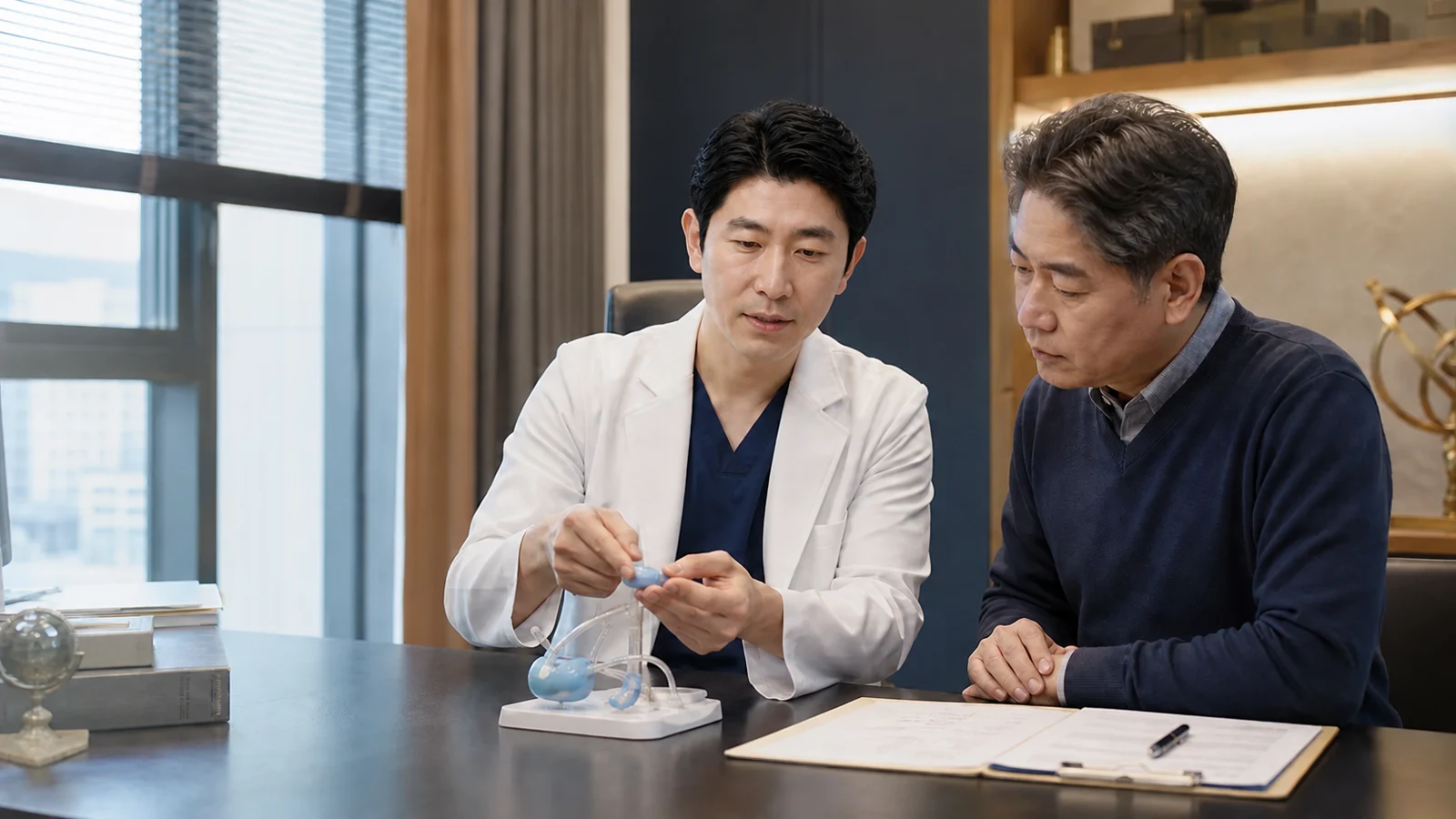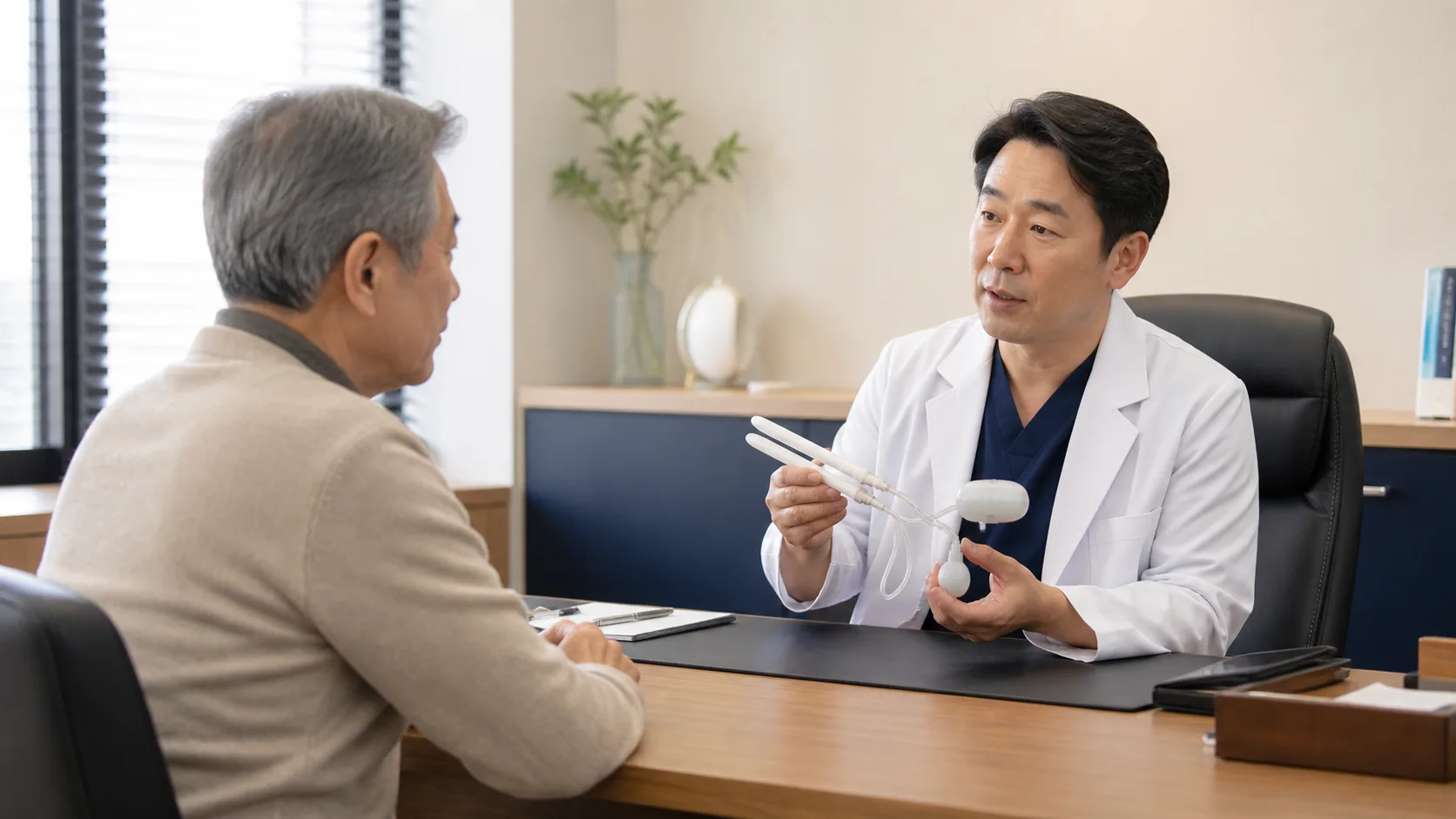
People seeking consultation for Samseong Station inflatable penile implants often have already experienced multiple treatments. Surgery is considered when oral medications are not effective enough or are difficult to use due to side effects, and injection treatments are not a practical option.
An inflatable penile prosthesis is a device that is operated when needed to create the rigidity necessary for sexual intercourse. Although it is a treatment with reported satisfaction, since it is an irreversible surgery involving placing a device inside the body, you should first check whether you have thoroughly considered other options in your situation rather than whether surgery is possible.
Implants are not a treatment that restores natural erections
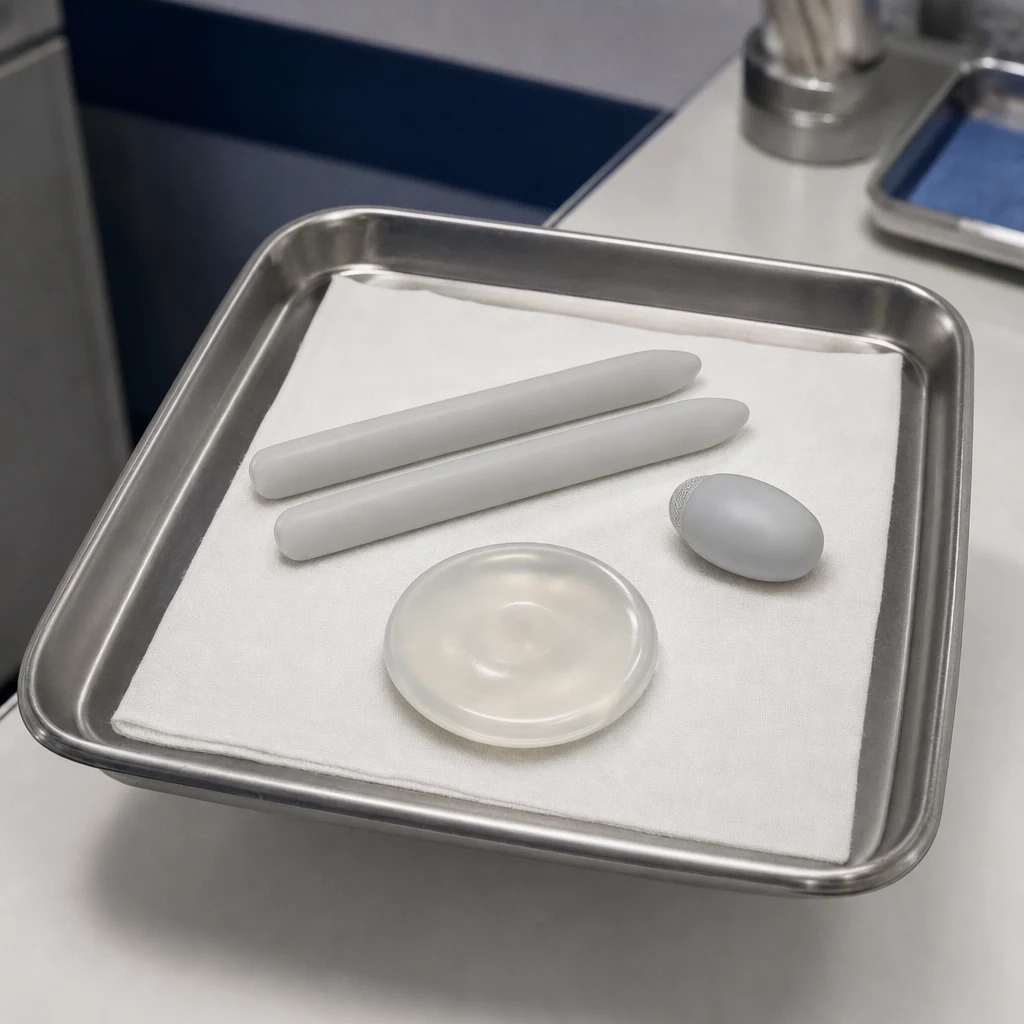
A typical three-piece inflatable implant consists of a cylinder inside the penis, a pump in the scrotum, and a reservoir in the abdomen. Pressing the pump sends fluid from the reservoir to the cylinder, creating rigidity, and activating the release mechanism allows the fluid to return, causing relaxation.
This device does not restore blood flow or nerve function, but mechanically provides rigidity. Since the cavernous tissue of the penis is replaced during the insertion process, it is difficult to return to the previous natural erectile state if removed. Therefore, you must fully understand the irreversibility, device usage, and the possibility of future replacement before surgery.
Consider when other treatments are not sufficient

Erectile dysfunction treatment involves several steps, including evaluation of the cause, lifestyle adjustments, oral PDE5 inhibitors, vacuum erection devices, and intracavernosal injections. Cardiovascular condition, medications, history of prostate surgery or pelvic treatment, diabetes, and neurological disorders also influence the choice.
Implants are considered when these methods are ineffective or contraindicated, and when the patient prefers surgery. They can also be an option when severe Peyronie’s disease is accompanied by erectile dysfunction. Conversely, if there is an active skin or urinary tract infection, or if blood sugar and overall health are not adequately managed, risk factors may need to be addressed first.
Infections and mechanical failures must be explained

Postoperative infection is an important complication that, even if uncommon, may require device removal and reoperation if it occurs. Individual factors such as diabetes control, smoking, skin condition, previous implant surgeries, and spinal cord injury affect the risk. Before surgery, urinary and skin infections, as well as ongoing anticoagulant and antiplatelet medications, are also checked.
Bleeding, hematoma, pain, erosion or displacement of the device are possible, and mechanical parts may fail over time. When undergoing tests such as an MRI after inserting the implant, you should inform medical staff of the device information and check the manufacturer’s instructions.
The surgery plan includes the recovery schedule and device training

In the beginning, swelling, bruising, and pain may occur, and activities should be adjusted until the wound heals. Training on operating the pump and the timing for resuming sexual activity depend on the condition of the wound and the medical staff’s judgment. Rather than just looking at the discharge date, it is better to specifically ask about the schedule for returning to work, driving, exercising, showering, and practicing with the device.
In consultation, check the structure and purpose of the device to be used, a realistic explanation of the expected size and length, the infection prevention process, where to contact in case of a problem, and the long-term follow-up plan. Rather than comparing surgical experience with simple numbers, it is important to listen to how they assess your fibrosis or previous surgical history and incorporate it into the plan.
The inflatable penile implant surgery at Samseong Station is not a treatment that must be done simply because it is the ‘last option.’ It is a treatment to be decided after comparing the pros and cons of other methods and surgeries, and when one can accept the irreversibility and the possibility of reoperation.
Referenced Medical Information
- European Association of Urology (EAU) Guidelines on the Management of Erectile Dysfunction
- European Association of Urology (EAU) Penile Curvature Guidelines
This article is intended to provide general health information and does not replace diagnosis or treatment. Treatment options and surgical risks vary depending on an individual’s illness, medications, and surgical history.