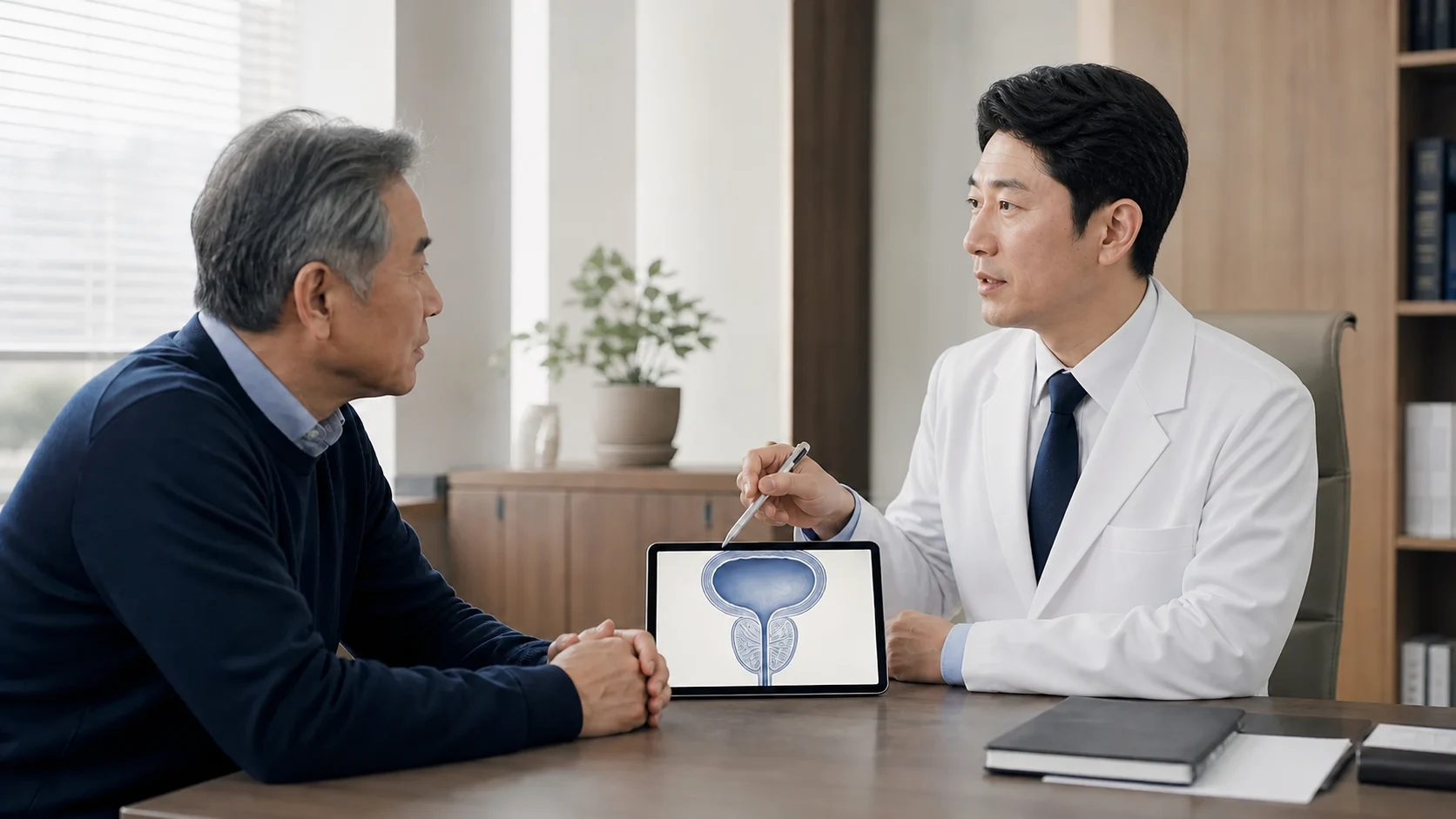
Hello. This is Seoul Newgen Urology Clinic. If you return home with a temporary urinary catheter after Rezūm water vapor therapy, it is natural to wonder how to move around and wash safely. Here are five key home care principles to check, from maintaining proper drainage to preparing for your scheduled removal appointment.

The portrait is an actual clinic-owned photograph of Dr. Ji Hyun Park. The cover and section scenes are AI-generated educational images, not actual patients or clinical records. Equipment and props do not represent this clinic’s facilities or specific test results.
First Confirm Why the Catheter Is Needed and Your Removal Date

Rezūm uses water vapor to treat enlarged prostate tissue. Immediately after the procedure, temporary swelling or healing changes can narrow the urinary passage, making a short-term catheter necessary. Having a catheter does not mean the procedure failed, and it is separate from the timeline used to judge long-term treatment results.
How long the catheter stays in place and when it will be removed depend on your individual prostate condition and the clinical plan of the treating facility. Do not rely on fixed day counts found online; confirm your own scheduled removal date first. Before going home, make sure you have received home care instructions, necessary spare supplies, and the clinic contact number for urgent questions.
Keep the Tubing Unkinked and the Drainage Bag Below the Bladder
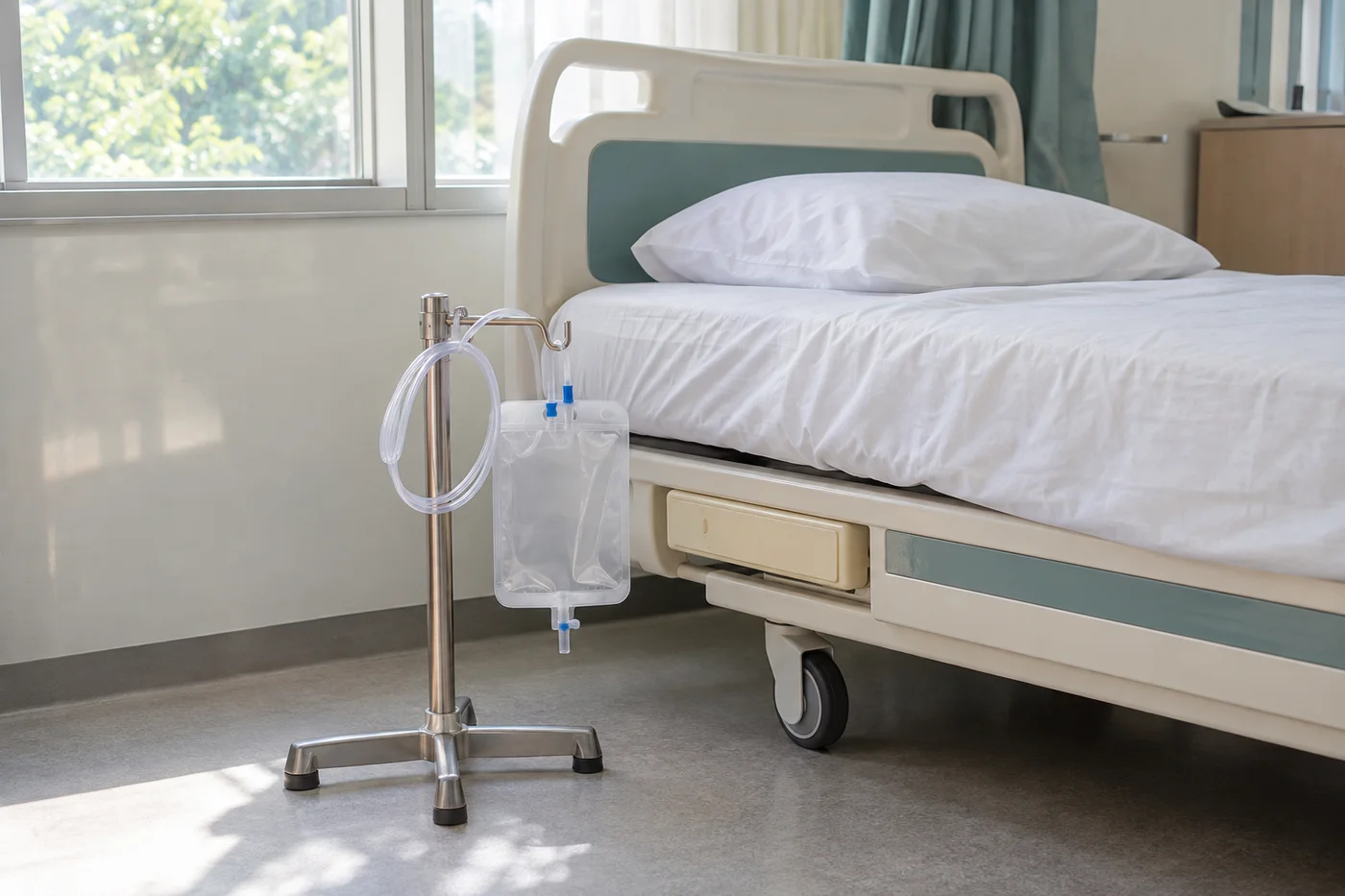
For urine to drain smoothly, the tubing must remain free of kinks or twists and should not be pulled when you move. If you use a drainage bag, keep it positioned below the level of your bladder at all times to prevent backflow, and hang or support it so that it does not rest directly on the floor.
Follow the specific instructions given at discharge regarding how to secure the tube to your leg, how to connect leg or night bags, and when to empty them. Drainage bag systems and catheter valve systems work differently. Even if you feel uncomfortable, do not switch connection methods or alter the equipment on your own without medical guidance.
Handwashing and Guided Hygiene Care Are Essential

Washing your hands thoroughly with soap and water before and after touching the catheter or drainage bag is the most fundamental step in preventing infection. Clean the area where the catheter enters the urethra using mild soap and water as instructed. Never disconnect the closed system on your own or inject antiseptic or flushing solutions into the tube.
Unless you have individual fluid restrictions due to heart or kidney conditions, follow the hydration advice provided to you without forcing excessive water intake. Do not take leftover antibiotics at home simply because your urine looks cloudy or has an odor. If you were prescribed medications after the procedure, follow the instructions and do not stop them on your own.
If Urine Flow Drops or Leaks Around the Tube, Check for Blockage First
If urine is not draining into the bag, first check whether clothing or body position has caused a visible kink in the tubing or whether the bag has been raised above your bladder. If correcting these issues does not restore flow, or if you develop lower abdominal pain and fullness, do not drink extra water and wait; contact the clinic or seek medical care immediately.
Urine leaking around the outside of the catheter can happen due to bladder spasms, but it can also be a sign of blockage. Do not push the catheter deeper, pull it out, or try to flush liquid into the tube to clear it. Seek prompt medical evaluation if you develop fever, chills, new severe pain, bright red bleeding, or large blood clots.
Prepare for the Voiding Check After Scheduled Catheter Removal

When you visit the clinic on your scheduled date to have the catheter removed, the team may check whether you can urinate on your own and measure how much urine remains in your bladder afterward. Even if the catheter feels uncomfortable, never attempt to remove it yourself at home, as this can injure the urethra and prostate.
In some cases, if swelling has not subsided enough after removal and passing urine remains difficult, a temporary catheter may need to be placed again. Because this can still be part of the recovery process, do not assume early on that long-term treatment has failed. If you cannot urinate at all or develop worsening lower abdominal pain after returning home following removal, seek medical care right away.
Related reading: Urinary Discomfort After Rezūm: What to Watch During Recovery